 how-to
Book Custom Furniture Upholstery Service: 2026 Guide
Table of Contents
- Why Book Custom Upholstery Service Instead of Buying New
- The Upholstery Service Booking Process: From Quote to Completion
- Furniture Reupholstery Cost: What Affects Your Quote
- Custom Upholstery Fabric Selection: Choosing the Right Material
- How to Choose an Upholstery Provider You Can Trust
- Residential and Commercial Upholstery Services: What Gets Covered
- Turnaround Times and Project Logistics
- Frequently Asked Questions
Last Updated: October 17, 2026
Why Book Custom Upholstery Service Instead of Buying New
When you book custom furniture upholstery service, reupholstering a quality frame costs less than replacing it and keeps a piece you know fits your space. When you book custom furniture upholstery service, you pay for labor and fabric, not a new frame, springs, and delivery. That math favors reupholstery whenever the frame is solid.
At Creative Custom Upholstery, we've spent more than 45 years watching that math play out in living rooms, restaurants, and boat cabins. This guide covers when reupholstery makes sense, how booking works, what drives your quote, and how to pick a provider.
When Reupholstery Makes Sense
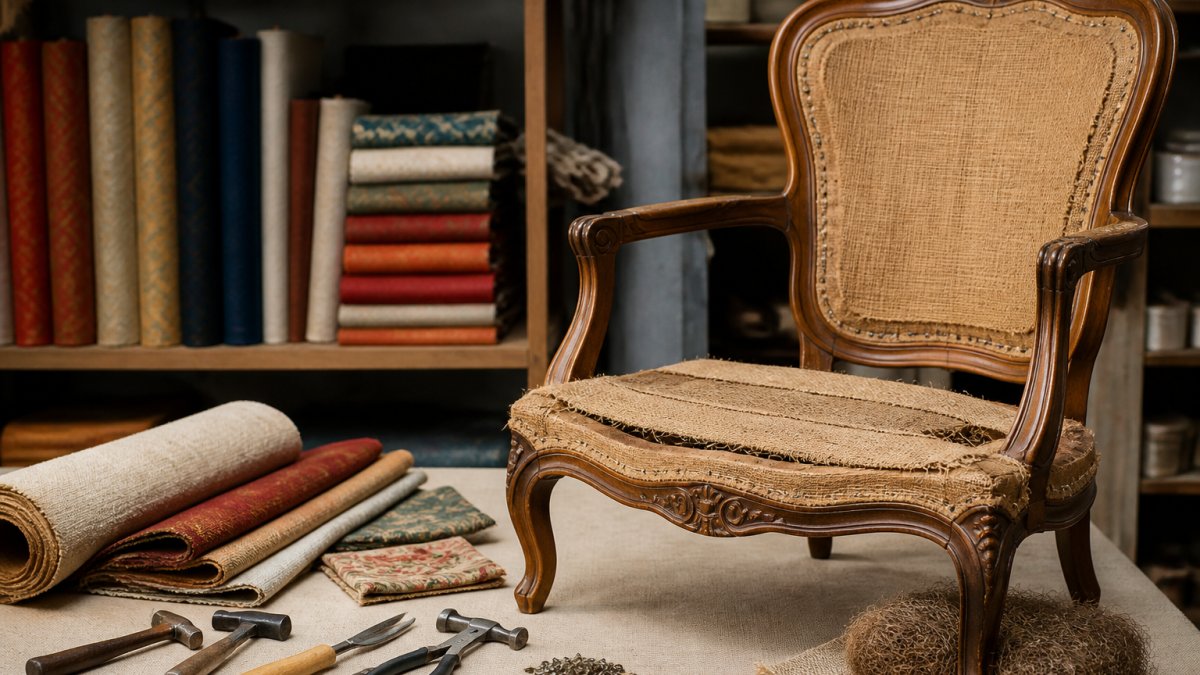
Solid hardwood frames, eight-way hand-tied springs, and quality joinery are worth preserving. Mass-market furniture rarely has any of the three, which is why older pieces often outlast newer ones.
Reupholstery is the right call when:
- The frame is hardwood and still square, with no wobble at the joints
- The piece carries sentimental value, like a family heirloom or a vintage find
- The shape fits your room and you can't find a replacement that matches
- You want custom upholstery fabric that isn't available on any showroom floor
A common mistake is judging a piece by its fabric. Torn vinyl or faded cotton tells you nothing about what's underneath. Sit on it, twist the arms, and lift one corner. If the frame holds firm, you have a candidate.
When Buying New Is the Better Call
Particleboard frames, cracked joinery, and sagging webbing usually mean replacement. Once structural repair approaches the price of a comparable new piece, reupholstery stops being the smart move.
Walk away from reupholstery when:
- The frame flexes or creaks when you shift your weight
- Water damage, pest damage, or rust has reached the frame itself
- The piece was inexpensive to begin with and holds no sentimental weight
- You need a different size or configuration entirely
The Upholstery Service Booking Process: From Quote to Completion
The upholstery service booking process runs through five stages: quote request, assessment, fabric selection, deposit, and build. Most providers handle the first three before you commit, so you can gather real numbers without pressure.
Stage 1: Prepare Before You Reach Out
A few minutes of prep speeds up the whole process. Clear the piece, remove cushions, and vacuum debris so photos show actual condition. Measure at the widest points, note seat height, and photograph loose legs or protruding springs rather than fixing them yourself.
Have a rough budget and a sense of when you need the piece back; both shape the quote more than most people expect.
Stage 2: Request a Quote
Send photos and dimensions through the shop's preferred channel. Front, back, and underside shots plus a close-up of any damage give an estimator enough to work from. A good shop responds with a range and explains what could move it.
Stage 3: Assessment and Fabric Selection
For straightforward pieces, photos and measurements often suffice. For complex or antique pieces, a shop may want to see the furniture in person before committing to a number. This is also when you review swatches, either from the shop's library or sourced to your specification.
Stage 4: Approve the Estimate and Pay a Deposit
Once you approve the written estimate, a deposit typically covers materials and locks your slot in the schedule. Ask what it covers and whether it is refundable before work starts.
Stage 5: Drop Off or Arrange Pickup
Some shops collect larger pieces like sofas and sectionals. Confirm whether pickup and delivery are included, charged separately, or limited to a service radius. For commercial jobs, ask whether work can be scheduled around your operating hours.
What to Include in Your Quote Request
A complete quote request gets you an accurate estimate on the first pass. Vague requests get vague numbers, and vague numbers turn into surprise invoices.
Send these details and you will get a faster, tighter quote:
- Photos of the piece from every angle, including the underside
- Rough dimensions: width, depth, height, and seat height
- The furniture type: sofa, armchair, bench, ottoman, dining chair, booth
- Your preferred fabric direction, if you have one
- Any structural concerns you have noticed, like wobble or squeaks
- Your timeline, especially if a date matters
- Your location, so the shop can confirm service coverage and pickup logistics
What Happens After You Book
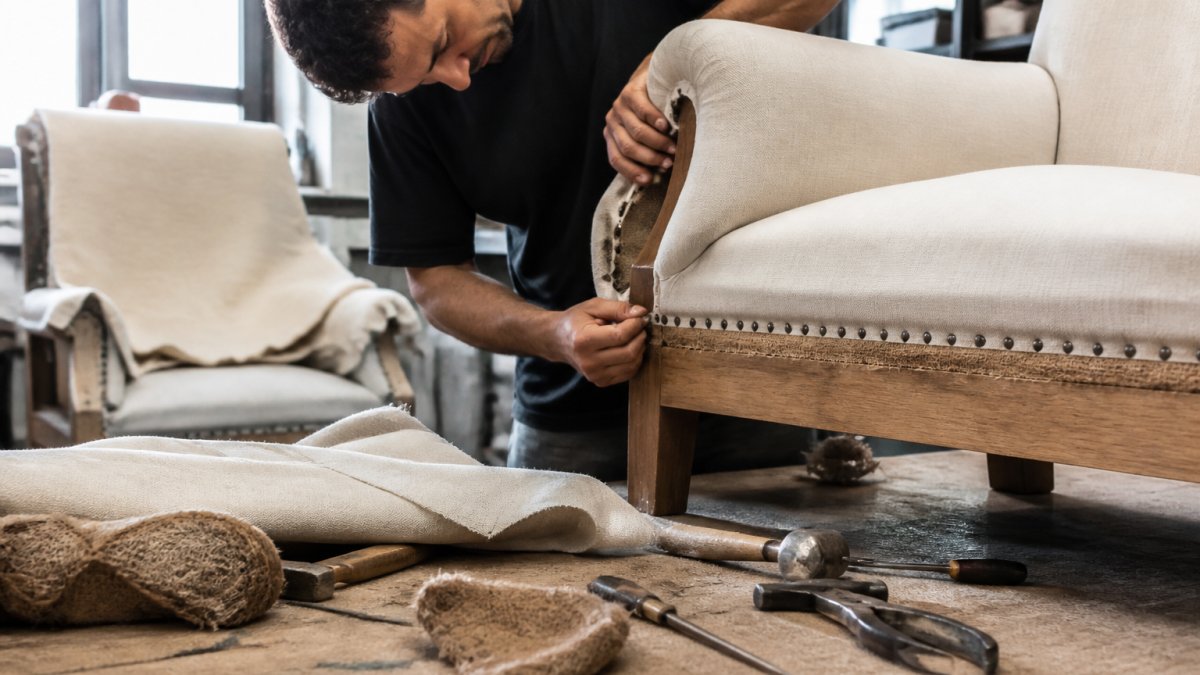
Once you book, your piece gets stripped to the frame and inspected. Worn webbing, broken springs, and loose joints get repaired before any new material goes on.
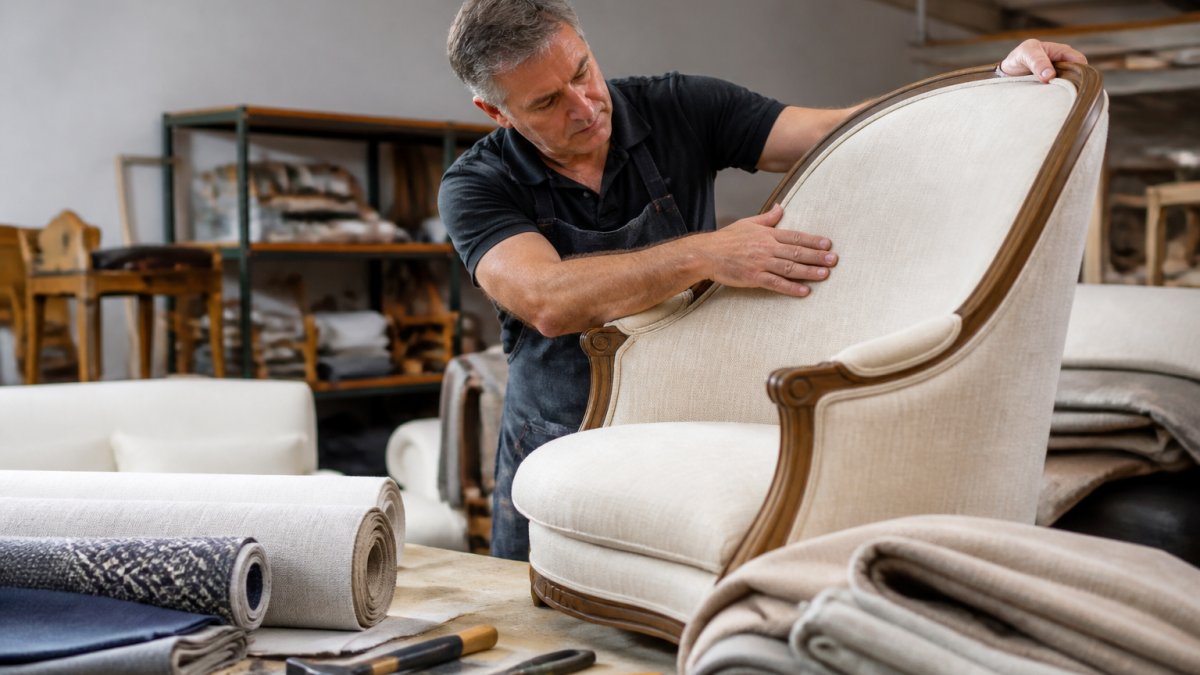
The shop then cuts and fits new foam and batting, applies your chosen fabric, and rebuilds or replaces cushions depending on condition. Ask for photos at key stages.
How to Approve the Work and Close Out the Project
Before final payment, inspect the piece in person or request detailed photos. Check seams, pattern alignment, cushion fit, and that the frame no longer wobbles. Get the warranty in writing, including coverage and duration, and confirm the delivery window and who covers transit damage.
Furniture Reupholstery Cost: What Affects Your Quote
Furniture reupholstery cost depends on four things: labor hours, fabric yardage, frame repair, and complexity. There is no flat rate because no two jobs strip down the same way.
The factors that move your number most:
| Cost Factor | What Drives It | Typical Impact |
|---|---|---|
| Labor hours | Piece size, tufting, piping, pattern matching | Largest single factor |
| Fabric yardage | Width, repeat pattern, number of cushions | Scales with piece size |
| Frame repair | Springs, webbing, joint regluing | Varies by condition |
| Complexity | Channeling, nailhead trim, curved arms | Adds skilled handwork |
Sample Cost Ranges by Furniture Type
Exact pricing depends on your piece, so a written quote is the only reliable number.
How Fabric Choice Moves the Number
Fabric is the most visible cost lever. A mid-grade woven may cost a fraction of a designer print, and a large pattern repeat wastes yardage because the shop must match the design across seams. Leather and performance fabrics sit higher still. Ask for fabric cost broken out separately from labor.
How Frame Repair Changes the Quote
A solid frame needs no repair, so the quote stays close to labor plus fabric. Broken springs, sagging webbing, or loose joints add repair hours before upholstery begins. That is why two identical-size sofas can land far apart: one is a re-cover, the other a rebuild.
Repair Versus Reupholstery: A Decision Guide
Before you book, decide whether you need a repair, full reupholstery, or replacement. Use these questions:
- Is the frame solid? If it is hardwood and square, reupholstery is usually worth it. If it flexes or creaks, repair costs climb fast.
- Does the piece have sentimental or market value? Heirlooms and quality vintage pieces justify more spend than mass-market items.
- How does the repair cost compare to new? Once structural repair approaches the price of a comparable new piece, replacement often wins.
- Do you need a different size or configuration? If so, reupholstery will not solve the problem.
A quality frame with worn fabric is the best reupholstery candidate; a particleboard frame with torn fabric is the worst. The frame, not the fabric, decides.
Request a quote and you will get a written estimate with the fabric cost broken out separately from labor, so you can compare options on equal footing.
Custom Upholstery Fabric Selection: Choosing the Right Material
Custom upholstery fabric selection comes down to matching material to use, not chasing the prettiest swatch. A fabric perfect for a guest room chair will fall apart in a family kitchen.
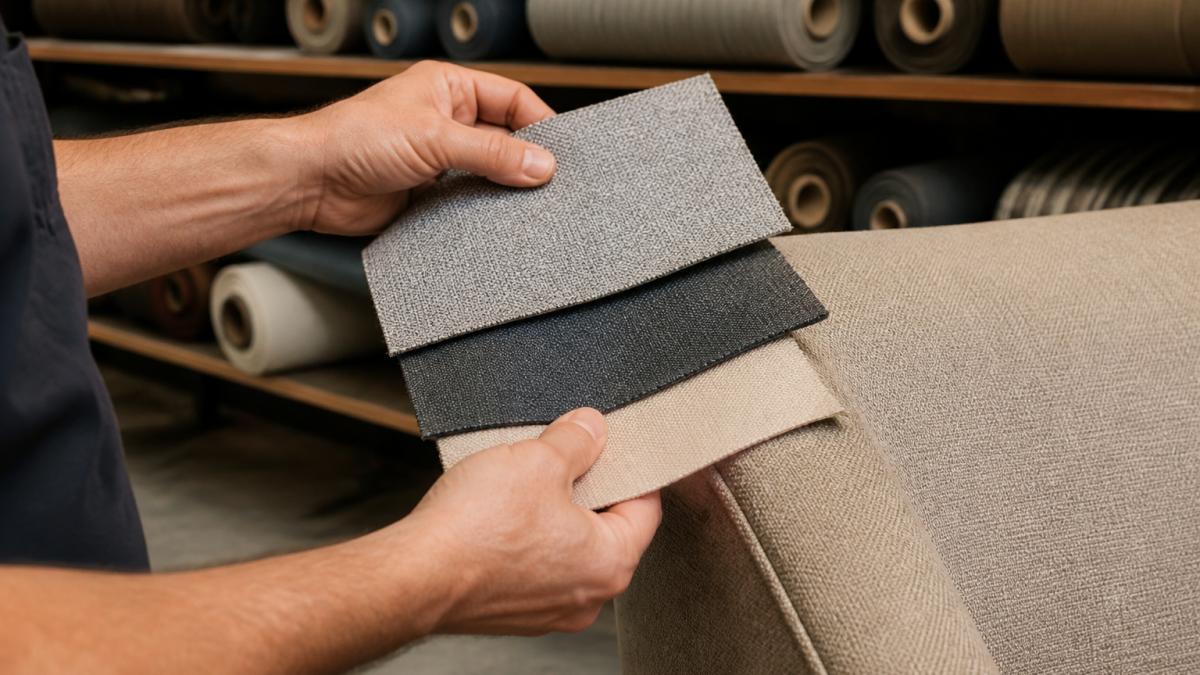
Match the material to the room:
- Living rooms and family spaces: tightly woven synthetics and performance blends resist spills and daily wear
- Formal or low-traffic rooms: cotton, linen, and velvet give you texture and color depth
- Dining chairs and benches: leather and vinyl wipe clean and hold up to constant use
- Outdoor cushions: marine-grade and solution-dyed fabrics handle sun and moisture
- Marine and automotive: UV-resistant vinyl and marine-grade thread prevent cracking and seam failure
Ask about the abrasion rating before you commit; higher double-rub counts suit heavier use, and any supplier can give you the number. Ordering correct yardage is the shop's job, calculated from the piece's actual dimensions.
How to Choose an Upholstery Provider You Can Trust
Choose a provider on evidence, not price alone. The cheapest quote usually reflects less labor, thinner materials, or skipped frame repair, and you'll feel the difference within a year.
Ask these questions before you hand over your furniture:
- How many years has the business been operating, and is it family-owned?
- Can you show photos of recent completed projects?
- Do you strip to the frame, or work over the old material?
- What's your policy if a seam fails or the fabric sags?
- Do you handle the specific furniture type I have?
A shop that answers all five without flinching is worth the drive. One that dodges the frame question is not.
Range matters too. A provider that only does residential sofas will struggle with a restaurant booth or a boat bench, so look for a shop covering the categories you need.
Residential and Commercial Upholstery Services: What Gets Covered
Residential and commercial upholstery services cover different furniture but follow the same craftsmanship standard. What changes is the wear expectation, not the technique.
Residential upholstery typically includes:
- Sofas, couches, and sectionals
- Armchairs, dining chairs, and accent chairs
- Benches, ottomans, and window seats
- Custom cushions for indoor and outdoor use
Commercial upholstery typically includes:
- Restaurant booths and banquettes
- Bar stools and dining seating
- Office and waiting room chairs
- Custom awnings and outdoor covers
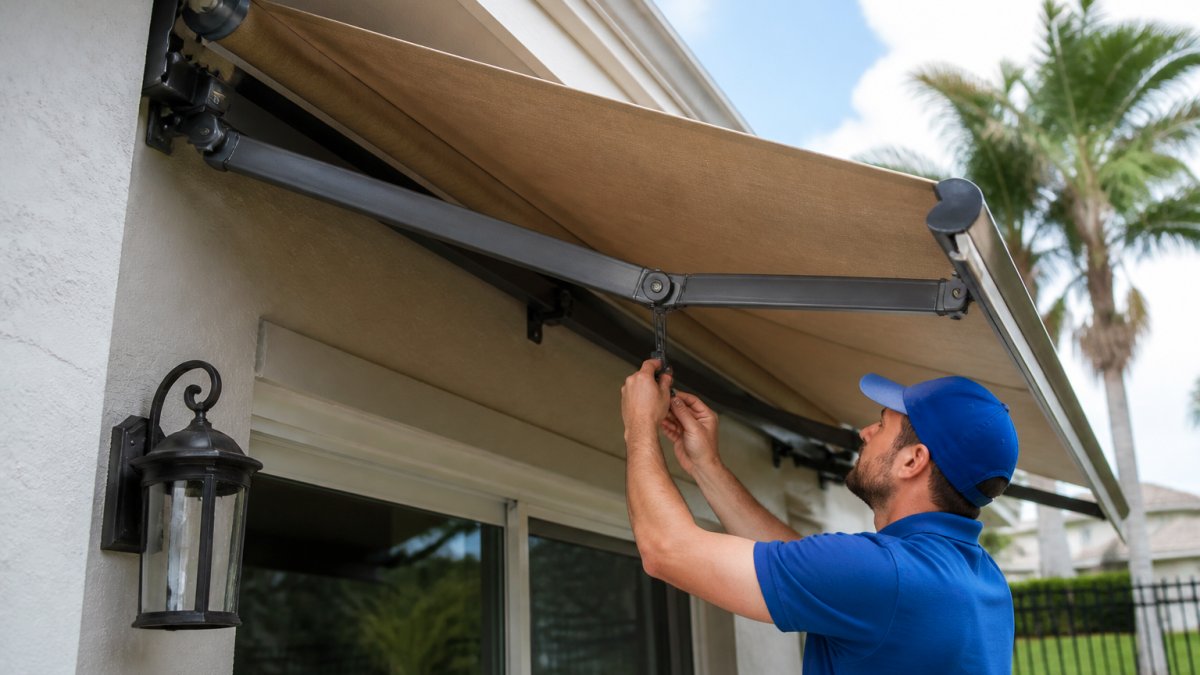
Beyond furniture, specialty work covers automotive and motorbike seats, marine upholstery, and awning repair. A stuck motorized awning is often a mechanism or fabric issue rather than a full replacement, so get it assessed first.
Turnaround Times and Project Logistics
Turnaround depends on scope, fabric availability, and your spot in the schedule. A single dining chair and a full sectional are not the same job, and shops quoting one blanket timeline are guessing.
A rough guide to what to expect:
- Single chair or ottoman: shortest turnaround, often completed within days once fabric arrives
- Sofa or sectional: longer, because stripping, frame repair, and cushion rebuild take real hours
- Full dining set: longer still, since each chair is its own small project
- Commercial jobs: scheduled around your operating hours to avoid closing your space
Fabric lead time is the wild card. In-stock fabric keeps things moving; a special order adds weeks before work starts. If you have a hard deadline, say so at the quote stage, not after booking.
Frequently Asked Questions
What information should I provide when requesting an upholstery quote?
Include clear photos of the furniture from multiple angles, approximate dimensions, the type of piece (sofa, chair, ottoman, boat seat), and any known frame damage. Mention your preferred fabric style or color direction and whether you need new foam or cushion replacement. The more detail you provide, the more accurate your custom upholstery quote will be. A reputable shop may also ask to inspect the piece in person before finalizing pricing.
Is it cheaper to reupholster or buy new furniture?
It depends on the piece. Quality hardwood frames often outlast anything you can buy at a similar price point, so reupholstery can be the smarter investment. Mass-produced furniture with particle board frames may not be worth the cost. Consider the frame condition, sentimental value, and whether the piece fits your space. For vintage or heirloom items, reupholstery is usually the better path.
How do I choose fabric for custom upholstery?
Start with how the piece will be used. High-traffic family sofas need durable woven fabrics or performance blends. Marine and outdoor cushions require UV-resistant, water-repellent materials. For vintage restoration, look for fabrics that match the original era's texture and weight. Request samples to see how colors look in your lighting. A shop with decades of experience can guide you toward fabrics that balance appearance, comfort, and longevity.
How long does furniture reupholstery usually take?
Timelines vary based on project complexity, fabric availability, and shop workload. A simple dining chair might take a few days, while a full sofa with frame repair and custom cushions can take several weeks. Marine and automotive projects may take longer if specialty materials need ordering. Ask about turnaround time when you book custom upholstery service, and confirm whether the shop can meet your deadline before committing.
Your furniture is only as good as the frame and the hands working on it. If you have a vintage couch, a boat bench, a restaurant booth, or a set of dining chairs that deserve better, Creative Custom Upholstery can help. We bring over 45 years of experience, family-owned craftsmanship, and a full range of services that covers furniture, indoor and outdoor cushions, automotive and marine seats, and awnings. Get started with Creative Custom Upholstery and request a quote for your next project.