 blog
7 Marine Grade Vinyl vs Leather Seat Facts You Need
Last Updated: October 31, 2026
Quick Summary
Marine vinyl outperforms leather for boat seats because it sheds water, resists UV and mildew with built-in additives, and wipes clean with soap and water. Leather absorbs moisture, dries and fades in sun, and needs regular conditioning, so it suits only dry, enclosed cabins. For open boats and wet, sunny storage, choose marine-grade vinyl.
- Marine-grade vinyl is PVC upholstery with UV inhibitors, mildew additives, and a protective top coat.
- Full-grain leather absorbs water and is poor for open boats; top-grain suits enclosed cabins only.
- Hydrolysis, the breakdown of PVC under moisture and heat, is marine vinyl's hidden failure mode.
- Clean vinyl monthly in boating season with mild soap and warm water, then dry fully.
- Covered storage and consistent drying add more service life than upgrading vinyl grade.
Table of Contents
- Marine Grade Vinyl vs Leather Seats: The Core Differences
- Boat Seat Upholstery Materials: A Side-by-Side Comparison
- Marine Vinyl Durability and Lifespan: What to Expect
- Marine Vinyl vs. Regular Vinyl: Why the Grade Matters
- How to Clean Marine Vinyl Boat Seats (and Keep Leather Alive)
- Total Cost of Ownership: Marine Vinyl vs Leather Over Time
- Which Material Fits Your Boat, Car, or Home Seating?
- Request a Quote for Marine or Leather Upholstery
- Frequently Asked Questions
Marine Grade Vinyl vs Leather Seats: The Core Differences
Marine grade vinyl vs leather seats comes down to one question: which material survives your environment? Marine-grade vinyl is a PVC-based upholstery coated with plasticizers, UV inhibitors, and mildew-resistant additives, built for wet, sun-baked settings. Leather is animal hide, tanned and finished for comfort and prestige. Over 45 years of upholstery work, we have seen how often buyers choose on looks alone.
What Marine-Grade Vinyl Actually Is
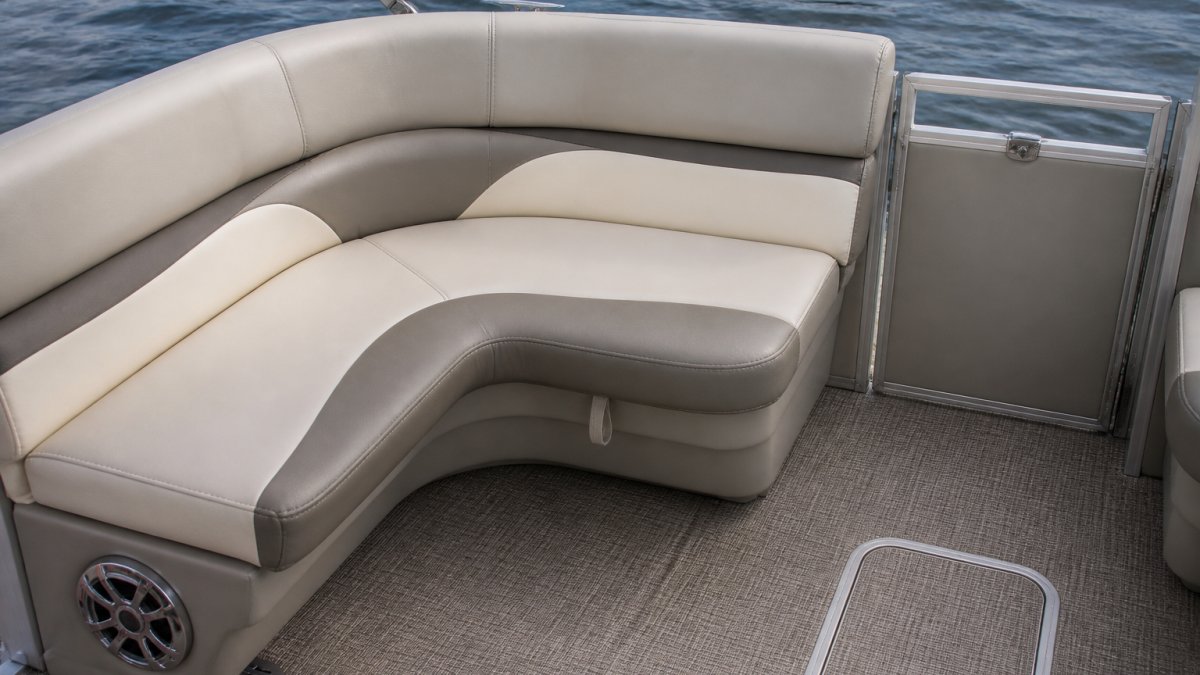
Marine-grade vinyl is a synthetic upholstery fabric designed for moisture, salt, and sun exposure.
The construction matters more than the marketing. A quality marine vinyl has a fabric backing for tear strength, a flexible PVC skin, and a protective top coat. Cheap versions skip the UV inhibitors, and that is where sun fading starts.
Leather Types and Marine Suitability
Not all leather belongs on a boat. Genuine leather is full-grain or top-grain hide with natural breathability and a soft feel. PU leather is a polyurethane-coated synthetic that mimics the look at a lower cost but cracks faster under UV.
Marine suitability varies sharply by type:
- Full-grain leather: durable but absorbs water and needs heavy conditioning; poor for open boats
- Top-grain leather: good for enclosed cabins with climate control
- PU leather: budget option, shortest lifespan in sun and salt
A common mistake is assuming "leather" means one thing. It does not.
Boat Seat Upholstery Materials: A Side-by-Side Comparison
Here is how the two materials stack up across the factors that decide real-world performance.
| Factor | Marine-Grade Vinyl | Leather |
|---|---|---|
| Water resistance | High; sheds water | Low to moderate; absorbs if untreated |
| UV resistance | High with inhibitors | Moderate; fades and dries |
| Mildew resistance | Built-in additives | Poor in damp conditions |
| Abrasion resistance | High | Moderate to high |
| Comfort and feel | Firm, wipes clean | Soft, breathable, premium |
| Maintenance | Soap and water | Regular conditioning |
| Best for | Open boats, work boats, fishing vessels | Enclosed cabins, classic cars, home seating |
Marine Vinyl Durability and Lifespan: What to Expect
Durability claims are only useful if you know what is being measured. Most comparisons say marine vinyl 'lasts longer' without defining the test. A more honest approach is to compare named performance measures and then explain why results vary by product grade.
The performance measures that actually matter
When a marine-grade vinyl is specified, the meaningful benchmarks are:
- UV exposure hours: Accelerated weathering tests (often using a QUV or xenon-arc apparatus) report how many hours a material withstands before noticeable color shift or surface degradation. Marine-grade vinyls are typically formulated with UV inhibitors and stabilizers to extend this window; commodity vinyls often are not.
- Abrasion cycles: Taber abrasion or Wyzenbeek testing reports cycles to visible wear. Higher cycle counts indicate better resistance to rubbing, boarding traffic, and gear drag.
- Hydrolysis resistance: This is the hidden failure mode. Hydrolysis is the breakdown of PVC under prolonged moisture and heat, and it shows up as tackiness, cracking, or delamination. Marine-grade vinyls are formulated to resist it; automotive and furniture vinyls frequently are not.
Why the grade, not the category, decides lifespan
Two products can both be labeled 'marine-grade vinyl' and perform very differently. The label is not a single standardized certification; it is a marketing and specification term that varies by manufacturer. What separates a long-lived vinyl from a short-lived one is the formulation and construction:
- Top coat: A quality vinyl has a protective top coat (often acrylic or polyurethane) that resists plasticizer migration, staining, and UV attack. Cheap vinyls skip or thin this layer.
- Plasticizer package: Plasticizers keep vinyl flexible. Low-quality or excessive plasticizer can migrate out over time, leaving the surface brittle or tacky.
- Backing: A woven or knit fabric backing provides tear strength and dimensional stability. Weak or non-woven backings fail at seams first.
Leather's failure modes in exposed settings
Leather does not fail the same way vinyl does. In sun and spray, leather's primary risks are:
- Moisture absorption and swelling: Untreated or lightly finished leather absorbs water, which can lead to stiffness, staining, and eventual cracking as it dries.
- UV drying: Sun exposure strips natural oils, causing surface cracking and color fade.
- Mildew feeding: Leather provides organic material that mildew can colonize, especially in humid, poorly ventilated storage.
Coated and treated leathers improve water resistance, but the coating itself can degrade under UV and abrasion. The practical result is that leather in an exposed marine setting usually needs more intervention to reach the same service life as a quality marine vinyl.
What to expect in practice
Lifespan is a range, not a number, and it depends on grade, exposure, and care. Lifespan generally follows these patterns:
- Quality marine vinyl, covered storage, regular cleaning: long service life, with seam and top-coat wear as the first failure points.
- Quality marine vinyl, uncovered, full sun: shorter life, with UV fade and eventual top-coat breakdown.
- Budget or non-marine vinyl, exposed: early failure, often within a few seasons, with cracking at seams and hydrolysis-driven tackiness.
Sun exposure remains the dominant stressor for outdoor seating. If you want the full material breakdown behind these measures, our comparison of marine grade fabric vs outdoor fabric explains how the categories differ.
Marine Vinyl vs. Regular Vinyl: Why the Grade Matters
Regular vinyl, the kind used on indoor furniture and automotive interiors, is not built for the elements. It lacks the UV inhibitors and mildew additives that marine-grade vinyl carries, and its backing is often weaker.
Regular vinyl is not built for open water exposure, which is why grade matters on a boat. Automotive vinyl is suited to car seats shielded by glass and a roof.
How to Clean Marine Vinyl Boat Seats (and Keep Leather Alive)
Cleaning is where these materials diverge most. How to clean marine vinyl boat seats: wipe with mild soap and warm water, rinse, and dry fully before covering. Avoid harsh solvents and abrasive pads, which strip the protective top coat.
Leather needs the opposite discipline: keep it dry, condition it regularly, and never let it sit soaked. Mildew and mold are the enemy of both, but leather gives mold more to feed on. A few practical rules:
- Clean vinyl monthly during boating season
- Condition leather every few months, more in dry heat
- Dry both materials completely before storage
Total Cost of Ownership: Marine Vinyl vs Leather Over Time
The sticker price is only part of the story. Leather generally costs more upfront and requires ongoing conditioning and care. Marine vinyl generally requires less maintenance in wet, sunny conditions.
Where leather wins is feel and resale appeal in enclosed, protected settings. Where vinyl wins is the total cost of ownership in any exposed marine use. Factor in replacement frequency and the gap widens: a material that fails early costs you twice.
Which Material Fits Your Boat, Car, or Home Seating?
Match the material to the environment, not the brochure. The useful question is not 'vinyl or leather' in the abstract but 'which grade of which material fits this exposure profile.' Below is a practical framework by climate, water type, storage, and use case.
By water type and exposure
- Saltwater, open boat, regular use: marine-grade vinyl with UV inhibitors and mildew additives is the default. Salt spray accelerates corrosion at hardware and stresses seams; a quality top coat and strong backing matter more than thickness alone. Rinse after every outing and dry before covering.
- Freshwater, open boat, seasonal use: marine-grade vinyl remains the safer choice, but the margin over treated leather narrows if the boat is covered and dried consistently. Still, mildew risk in humid summer storage favors vinyl.
- Enclosed cabin with climate control: treated or coated leather can work with diligent conditioning, but vinyl is lower-maintenance. If comfort and feel are the priority and the cabin stays dry, leather is viable.
By climate
- Hot, sunny summers: UV exposure is the dominant stressor. Prioritize UV-stabilized marine vinyl and consider covers. Leather dries and fades faster in sustained heat.
- Cold winters with unheated storage: cold-crack resistance matters. A vinyl that stays flexible at low temperatures avoids winter cracking; leather can stiffen and crack if it dries out.
- Humid, rainy coastal climates: mildew and moisture management dominate. Vinyl's built-in additives help, but ventilation and drying do more than any additive.
By use case
- Fishing boats and work boats: marine-grade vinyl. Gear, hooks, and constant spray punish leather.
- Rental and fleet seating: marine-grade vinyl for cleanability and replacement cost predictability.
- Classic cars and daily drivers: leather or automotive vinyl depending on originality and budget. Automotive vinyl is fine behind glass; it is not a substitute for marine-grade vinyl on a boat.
A quick decision rule
If the seat will see sun, spray, or humid storage without consistent drying, choose marine-grade vinyl and invest in the grade and the cover.
Best for marine vinyl: open boats, heavy sun, salt spray, easy cleanup, fleet use. Skip if: you want a soft, breathable feel and the seating stays dry and covered.
Best for leather: enclosed cabins, classic cars, home furniture where comfort leads. Skip if: the seat faces sun, rain, and salt without protection.
Request a Quote for Marine or Leather Upholstery
Choosing between marine-grade vinyl and leather is easier once you match material to environment and budget for the long run. Creative Custom Upholstery has spent over 45 years helping boat owners, car enthusiasts, and homeowners get seating that holds up. As a family-owned business, we offer marine and automotive upholstery services. Ready to price a marine re-cover? Request a quote for your seats today.
Frequently Asked Questions
Is marine vinyl better than leather for boat seats?
For most boat seats, marine-grade vinyl outperforms leather. It resists water, UV fading, and mildew far better than standard leather, and it holds up to saltwater and heavy use. Leather can work in enclosed cabins with low moisture, but it requires more maintenance and is prone to cracking when exposed to sun and spray. Marine vinyl is the practical choice for open boats and fishing vessels.
How long do marine vinyl boat seats last?
With proper care, marine vinyl durability and lifespan depend on sun exposure, cleaning habits, and the quality of the material. Higher-grade vinyl with UV inhibitors and mildew-resistant backing lasts longer. Regular cleaning and conditioning, plus storing the boat covered when possible, can extend that lifespan significantly.
How do you clean and maintain marine vinyl boat seats?
To clean marine vinyl boat seats, rinse with fresh water after each use, then wash with mild soap and a soft brush. Avoid harsh solvents or abrasive pads. For stubborn stains, use a vinyl-specific cleaner. Apply a marine vinyl protectant a few times a season to guard against UV damage. Leather requires different care: use a leather cleaner and conditioner, and keep it out of direct sun.
Can leather be used for boat seats?
Leather can be used for boat seats, but only certain types are suitable. Marine-grade leather or treated leather with water and UV resistance is available, but it costs more and still requires more maintenance than marine vinyl. In open boats exposed to sun, rain, and saltwater, leather is likely to degrade faster. It is best reserved for enclosed cabins or decorative accents.
The right material protects your investment for years, not seasons. Whether you are re-covering sun-cracked boat seats or restoring a classic car interior, our team handles marine and automotive upholstery with the same care. Request a quote from Creative Custom Upholstery and let our 45 years of experience guide your choice.