 comparison
Marine Grade Fabric vs Outdoor Fabric: Key Differences
Last Updated: October 23, 2026
Quick Summary
Marine grade fabric is an outdoor textile engineered for constant exposure to sun, salt, water, and abrasion, while outdoor fabric is built for occasional weather exposure on patios and decks. The core difference is not the fiber itself but the finishing, coating, and testing behind it, which matters most when water sits on the surface for hours rather than minutes.
- Marine grades add water-repellent finishes and stricter abrasion ratings than standard outdoor fabric.
- Abrasion resistance is reported in double rubs, and Wyzenbeek and Martindale numbers are not interchangeable.
- A colorfastness rating of 4 or better is a reasonable target for marine upholstery.
- Order 10 to 15 percent extra fabric beyond your calculated yardage for pattern matching and seams.
- Rinse salt off marine upholstery after every outing, since salt holds moisture against the fabric.
Table of Contents
- Marine Grade Fabric vs Outdoor Fabric: The Core Differences
- Performance Standards and Measurable Specifications
- Water Resistance and Moisture Management
- UV Resistance, Colorfastness, and Fade Resistance
- Choosing the Right Boat Cushion Fabric for Your Project
- Marine Vinyl vs. Fabric: Which Suits Your Seating?
- Sunbrella vs. Olefin Fabric: A Practical Comparison
- How to Clean Marine Upholstery and Outdoor Cushions
- Frequently Asked Questions
Marine Grade Fabric vs Outdoor Fabric: The Core Differences
Marine grade fabric is an outdoor textile engineered for constant exposure to sun, salt, water, and abrasion, while outdoor fabric is built for occasional weather exposure on patios and decks. The core difference is not the fiber itself but the finishing, coating, and testing behind it.
Marine-grade fabric is a textile tested and finished to resist prolonged saltwater exposure, UV degradation, and mildew growth in humid, enclosed spaces. Outdoor fabric is a textile treated for sun and rain resistance in open-air residential settings. Both can use solution-dyed acrylic, but marine grades add water-repellent finishes and stricter abrasion ratings.
The practical gap shows up in three places: how fast water beads off, how the fabric handles trapped moisture under a cushion, and how well color holds after seasons of direct sun. A patio cushion that gets rained on and dries by afternoon performs differently from a boat seat that stays damp under a cover for days.
Here is the comparison at a glance:
| Factor | Marine Grade Fabric | Outdoor Fabric |
|---|---|---|
| Water behavior | Actively sheds water | Moisture resistant, slower to shed |
| Salt exposure | Tested for saltwater | Not typically rated for salt |
| Mildew resistance | Higher, built for trapped moisture | Moderate |
| Abrasion rating | Higher, built for foot traffic and gear | Standard residential |
| Typical use | Boat covers, seating, sprayhoods | Patio cushions, outdoor upholstery |
| Cost | Higher | Lower |
Performance Standards and Measurable Specifications
Measurable specifications separate marketing claims from real performance. When you compare marine grade fabric vs outdoor fabric, look for four numbers: abrasion cycles, UV resistance, hydrostatic head (water pressure resistance), and colorfastness rating.
Abrasion resistance is reported in double rubs, usually from a Wyzenbeek or Martindale tester. Wyzenbeek rubs a fabric back and forth against an abrasive medium; Martindale moves it in a figure-eight pattern.
UV resistance is often expressed as hours of accelerated exposure before a defined color shift, typically measured with a xenon-arc lamp under a recognized testing standard before a defined color shift.
Hydrostatic head measures how much water pressure a fabric resists before water penetrates, reported in millimeters or pascals. A low hydrostatic head suits a breathable cushion fabric that only needs to shed rain; a high one suits a boat cover that must block standing water.
Colorfastness is graded on a scale, commonly 1 to 5, where higher numbers mean less color loss after exposure to light, water, and rubbing. For marine upholstery, a rating of 4 or better is a reasonable target.
Ask for these figures in writing, along with the test standard and the date of the report. A supplier who cannot produce abrasion and colorfastness data is asking you to trust a label rather than a test result.
Water Resistance and Moisture Management
Water resistance is where marine grade and outdoor fabric diverge fastest, and the distinction that matters most is water-repellent versus waterproof. A water-repellent finish makes water bead and roll off the face fabric, but it does not block water under pressure.
Hydrostatic head is the number that separates the two.
Moisture management matters as much as repellency. A fabric that keeps water out but traps humidity underneath will grow mildew in a closed boat cabin. Breathable fabric lets vapor escape, which is why marine upholstery balances repellency with ventilation.
Construction decides whether the face fabric's rating survives the finished product. Seams are the first place water enters: stitched seams wick unless they are sealed, taped, or designed with a lap that sheds water away from the stitch line.
For boat covers and sprayhoods, active water shedding and sealed seams are the priority. For boat seating, you want repellency plus breathability so the cushion dries from the inside out.
UV Resistance, Colorfastness, and Fade Resistance
Sun exposure breaks down fabric at the fiber level, and fade resistance is the visible result. Solution-dyed acrylic holds color because the pigment runs through the fiber rather than sitting on the surface, which is why it dominates both marine and outdoor upholstery. Acrylic canvas resists UV degradation better than most alternatives.
Colorfastness ratings tell you how much color a fabric loses under sustained sun. Marine grades are tested against harsher exposure because a boat seat may face reflected light off water in addition to direct sun. Outdoor cushions fade more slowly under shade or partial cover.
Saltwater exposure adds a second stress. Salt crystals abrade fibers and hold moisture against the surface, so a marine-rated fabric's fade resistance is tested in conditions an outdoor fabric rarely meets.
Choosing the Right Boat Cushion Fabric for Your Project
Choosing boat cushion fabric comes down to exposure, use, and how the cushion is stored. Start with where the cushion lives: open cockpit, covered helm, or enclosed cabin. Then match the fabric's water shedding, breathability, and abrasion rating to that reality.
Use this decision framework:
- Open cockpit seating, full sun and rain: marine-grade acrylic canvas with active water repellency and high UV rating.
- Covered helm or bimini-shaded seats: marine-grade woven fabric with strong colorfastness and breathability.
- Enclosed cabin cushions: breathable marine fabric that resists mildew in still, humid air.
- Patio and dock furniture under cover: outdoor fabric with good moisture resistance is sufficient.
- High-traffic seating with gear and foot contact: prioritize high abrasion ratings over everything else.
Get the yardage right before you order. Measure each cushion panel, add seam allowance, and account for pattern repeat. Our team at Creative Custom Upholstery measures and cuts to avoid that waste, and we work in marine vinyl and fabric alike.
Marine Vinyl vs. Fabric: Which Suits Your Seating?
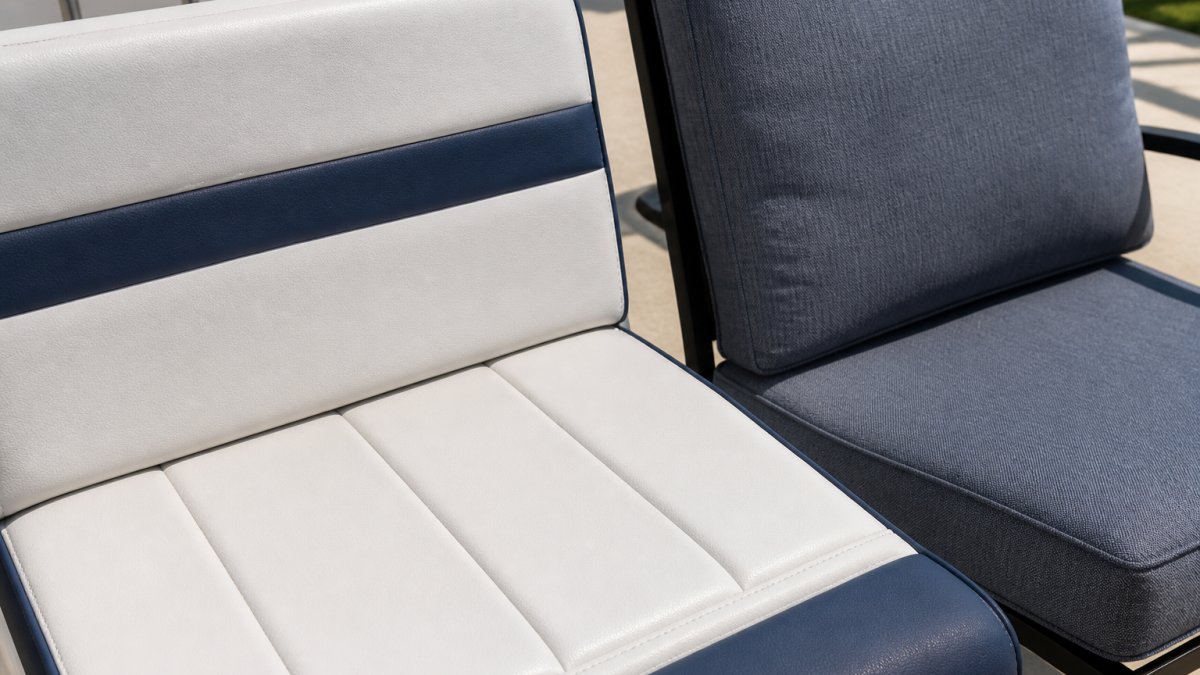
Marine vinyl wins for wipe-clean seating, while fabric wins for breathability and comfort in heat. Marine vinyl is a PVC-coated fabric: waterproof, stain resistant, and easy to clean with a damp cloth. Woven marine fabric is softer, breathes better, and resists mildew when it stays ventilated.
Choose marine vinyl for helm seats, dining benches, and any surface that takes spills, sunscreen, and wet swimwear. Choose woven fabric for seating where comfort and airflow matter more than wipe-down speed. Many boats mix both: vinyl on high-contact seats, fabric on interior cushions.
The trade-off is honest. Vinyl can feel hot and sticky in direct sun and may crack at seams over time if UV resistance is weak. Fabric needs more careful cleaning and dries more slowly if soaked. Neither is universally better; the seat's job decides.
Sunbrella vs. Olefin Fabric: A Practical Comparison
Sunbrella and Olefin both suit outdoor and marine use, but they solve different problems. Sunbrella is solution-dyed acrylic, valued for fade resistance and water repellency. Olefin is a polypropylene fiber that resists moisture and stains well and costs less, but it has lower UV tolerance and softer abrasion performance.
For long sun exposure, acrylic canvas generally holds color longer. For budget-conscious patio cushions under partial shade, Olefin is a reasonable choice. For boat seating that faces salt and constant sun, marine-grade acrylic is the stronger pick.
| Factor | Sunbrella (acrylic) | Olefin (polypropylene) |
|---|---|---|
| UV and fade resistance | High | Moderate |
| Water and stain resistance | Strong, water-repellent finishes | Good moisture resistance |
| Abrasion resistance | High | Lower |
| Best for | Marine seating, awnings, long sun exposure | Budget patio cushions, shaded areas |
| Cost | Higher | Lower |
Sunbrella's guide to choosing marine fabric explains how the manufacturer positions its marine line for sun and salt exposure.
How to Clean Marine Upholstery and Outdoor Cushions
Cleaning marine upholstery takes mild soap, fresh water, and a soft brush, plus prompt drying to stop mildew before it starts. Rinse salt off after every outing, because salt holds moisture against the fabric and speeds wear.
Follow this routine:
- Brush off loose dirt and sand before wetting the fabric.
- Wash with mild soap and lukewarm water using a soft-bristle brush.
- Rinse thoroughly with fresh water to remove soap and salt residue.
- Air dry fully in the open before replacing covers or closing the cabin.
- Treat stubborn mildew with a diluted mild cleaner, then rinse and dry.
- Reapply water repellency treatment when water stops beading.
Avoid harsh solvents and bleach, since they strip protective finishes. For outdoor cushions, the same steps work, with extra attention to drying the underside. Health Canada's household chemical safety guidance is a sensible reference for handling cleaning products safely.
Fabric choice is the difference between seating that survives a decade of sun and salt and cushions that fail in two seasons. At Creative Custom Upholstery, our family-owned shop brings over 45 years of experience to marine and outdoor upholstery, from boat seating and covers to patio cushions and awnings. We measure, cut, and finish each job to get it right the first time, using marine-grade and outdoor fabrics matched to your exposure. Request a quote and let us help you pick the right fabric for your project.
Frequently Asked Questions
Is marine-grade fabric waterproof?
Most marine-grade fabric is water-resistant rather than fully waterproof. It sheds rain and spray well, and solution-dyed acrylic canvas with a fluoropolymer finish beads water on the surface. Seams and stitching can still let water through unless they are sealed. For boat covers that need to block water completely, look for fabrics with a waterproof coating or backing. For seating and cushions, water resistance with good ventilation usually works better because it lets trapped moisture escape.
Can outdoor fabric be used for boat cushions?
Outdoor fabric can work on a boat in sheltered conditions, such as a covered cockpit or a freshwater lake boat stored indoors. It will not hold up as long under constant saltwater exposure, strong UV, and repeated wetting. Marine-grade fabric is built for those conditions with better UV blockers, mildew resistance, and water repellency. If your boat sits outside or sees salt spray, choose marine-grade fabric for boat cushion fabric.
Which fabric is better, Sunbrella or Olefin?
Sunbrella is solution-dyed acrylic, so color goes through the fiber and resists fading under UV. Olefin is a polypropylene fiber that handles moisture well and dries fast. For boat seating and long-life outdoor cushions, Sunbrella is usually the stronger pick.
How do you clean marine upholstery without damaging it?
Rinse marine upholstery with fresh water to remove salt and loose dirt. Mix a mild soap with water, scrub gently with a soft brush, and rinse thoroughly. For mildew, use a diluted mild cleaner, then rinse and dry fully in the sun. Reapply water repellency treatment after cleaning, and brush off debris regularly to keep mold and mildew from taking hold.
What is the difference between marine-grade fabric and outdoor fabric?
Marine-grade fabric is engineered for saltwater, constant moisture, and high UV, with stronger mildew resistance, water repellency, and abrasion ratings. Outdoor fabric is made for patio furniture and general sun and rain exposure, which is less punishing than a boat environment. Marine-grade fabric usually costs more and lasts longer on the water. Outdoor fabric works well for residential cushions, awnings, and covered spaces where salt and constant wetting are not factors.