 listicle
7 Tips for Choosing Outdoor Cushion Fabric
Table of Contents
- Tip 1: Start With Solution-Dyed Acrylic for the Best Fabric for Outdoor Cushions
- Tip 2: Compare Polyester and Olefin Before You Commit
- Tip 3: Choose Water-Resistant Outdoor Cushion Fabric, Not Just Waterproof
- Tip 4: Pick UV-Resistant Fabric for Patio Cushions That Won't Fade
- Tip 5: Check Fabric Weight, Weave, and Abrasion Ratings
- Tip 6: Match the Fabric to Your Climate and Cushion Construction
- Tip 7: Learn How to Clean Outdoor Cushion Fabric Before You Buy
- Frequently Asked Questions
Last Updated: October 18, 2026
Tip 1: Start With Solution-Dyed Acrylic for the Best Fabric for Outdoor Cushions
The best fabric for outdoor cushions is solution-dyed acrylic, and it earns that spot for one reason: the color runs through the entire fiber, not just the surface. That construction is why acrylic fabric holds up to sun, rain, and repeated cleaning better than most alternatives.
Solution-dyed acrylic is a performance fabric where pigment is added to the fiber before it is spun (Sunbrella Fabric Difference). The color cannot wash off or wear away, because it is part of the yarn itself. Brands like Sunbrella built their reputation on this process, and it remains the benchmark for cushions that last.
Here is what makes acrylic worth the investment:
- Strong fade resistance under long hours of direct sunlight
- Water repellency that makes spills bead up for easy wiping
- Mildew resistance when the fabric is allowed to dry properly
- A soft hand that feels comfortable, unlike slick vinyl
- Broad color and pattern range for matching existing patio furniture
Tip 2: Compare Polyester and Olefin Before You Commit
Polyester and olefin are the two workhorse fabrics you will meet constantly, and each has a clear place. Woven polyester is the value pick, while olefin is the budget-friendly option for covered spaces. The useful question is not which is better in the abstract but which wins for your exposure, your traffic, and your budget.
Polyester cushion covers resist shrinking and hold shape well, and modern woven polyester is often treated for water and UV resistance. Olefin, also called polypropylene, sheds water naturally and dries fast, which suits humid conditions. The trade-off is that olefin has lower heat tolerance and can feel rougher against skin.
Here is how the two compare on the criteria that actually decide the purchase:
| Fabric | Strength | Watch Out For | Best For |
|---|---|---|---|
| Solution-dyed acrylic | Fade and water resistance | Higher upfront cost | Full sun, daily use |
| Woven polyester | Value and shape retention | Fades faster in harsh sun | Covered porches |
| Olefin | Fast drying, low cost | Less heat tolerant | Humid, shaded areas |
| Canvas | Classic look, breathable | Needs treatment for water | Awnings, light use |
How to decide between them:
- Start with sun exposure. If the cushion sits in direct sun for most of the day, solution-dyed acrylic is the safer choice because the color is built into the fiber. Woven polyester relies more on topical UV treatments and will show fading sooner under intense light.
- Then check moisture. In humid or rainy conditions, olefin's natural water shedding and fast drying are real advantages. A polyester cover that stays damp longer is more likely to develop mildew if air circulation is poor.
- Then weigh traffic and feel. Polyester holds shape better under repeated use and generally feels smoother. Olefin can feel rougher and has lower heat tolerance, so it is a weaker choice for seating that gets hot in direct sun.
- Finally, confirm the construction. A tight weave and a quality finish matter as much as the fiber name. Ask for the fabric's weight and any water-repellency or UV rating before you commit.
A common pattern is that buyers overpay for acrylic in a shaded spot where polyester would last just as long, or underpay for olefin in full sun where it fades within a season or two. Match the fabric to the exposure first, then to the budget.
Fabric Mill's outdoor fabric guide covers these same performance criteria in more depth if you want to compare weaves side by side.
Tip 3: Choose Water-Resistant Outdoor Cushion Fabric, Not Just Waterproof
Water-resistant outdoor cushion fabric is usually the smarter buy, even though "waterproof" sounds better. Waterproof fabric blocks moisture completely, but it also traps it inside, which is exactly how mold starts.
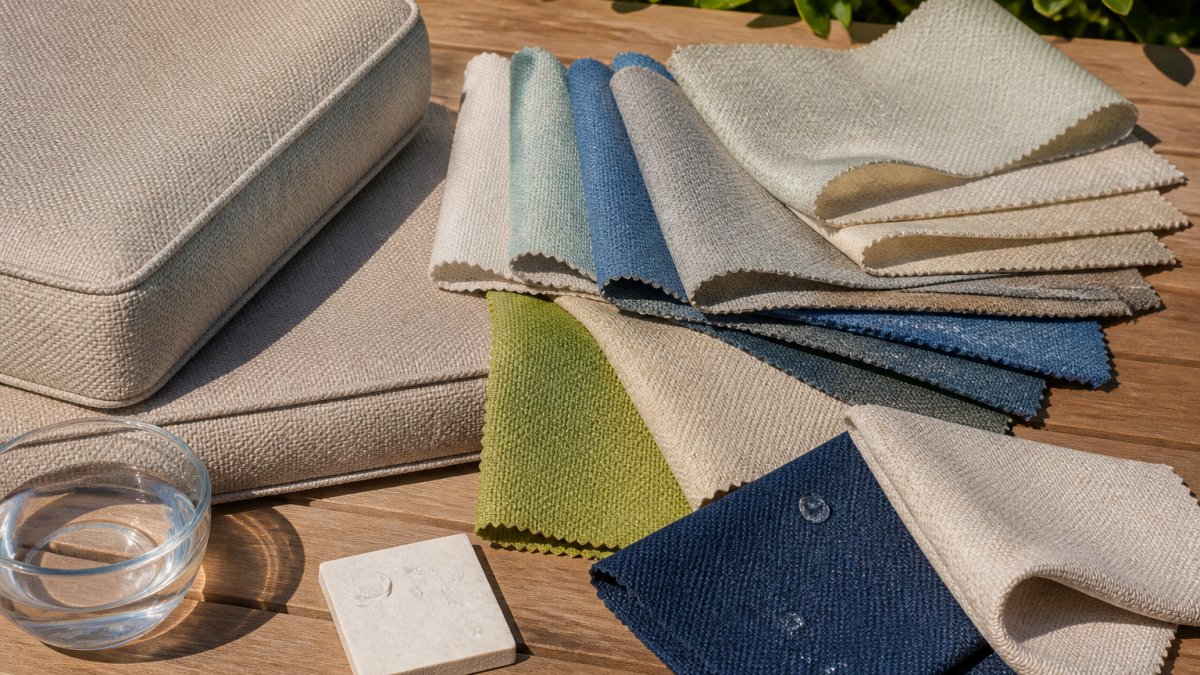
Water resistance means the fabric slows water absorption and lets moisture escape. A water-repellent finish makes rain bead and roll off, while breathability allows trapped humidity to pass through. That balance keeps foam padding dry and cushions fresh.
Most quality outdoor fabrics use a tight weave plus a finish rather than a solid barrier. If a cushion feels plasticky and holds heat, it likely sacrifices breathability for waterproofing. For seating you actually sit on, airflow matters more than a total seal.
Tip 4: Pick UV-Resistant Fabric for Patio Cushions That Won't Fade
UV-resistant fabric for patio cushions protects both color and strength. Sun exposure breaks down fibers over time, and fading is the first visible sign that a fabric is losing the fight.
Colorfastness is the measure of how well a fabric keeps its color under light. Solution-dyed acrylic scores highest here because the pigment is built in. Polyester and olefin rely more on topical treatments, which fade sooner under intense direct sunlight.
Look for fabrics described as UV-stable or rated for fade resistance. Darker and brighter colors show fading faster than light neutrals, so a vivid cushion needs a stronger fabric to stay vivid. Rotating cushions and using shade during peak hours also extends color life.
Tip 5: Check Fabric Weight, Weave, and Abrasion Ratings
Fabric weight, weave, and abrasion resistance tell you how a cushion will hold up in daily use. Heavier fabric generally lasts longer, tighter weaves resist snags, and abrasion ratings show how well a surface handles rubbing.
Fabric weight is measured in grams per square metre, and heavier outdoor fabrics tend to feel more substantial and resist wear. Abrasion resistance is tested with a rub test that counts cycles before the fabric shows damage; higher counts suit high-traffic seating. A tight, balanced weave keeps the yarn from pulling and adds to water repellency.
Ask your upholsterer for the spec sheet. A reputable shop will share weight, weave, and test results so you can compare fairly.
Tip 6: Match the Fabric to Your Climate and Cushion Construction
The right outdoor cushion fabric depends on where the cushion lives and how it is built. Climate and cushion construction decide which performance traits matter most, and the same fabric can be the right call in one setting and the wrong one a few steps away.
Match the fabric to the exposure:
- Intense sun: prioritize UV resistance and fade resistance. Solution-dyed acrylic is the benchmark because the color runs through the fiber. Light neutrals hide fading better than vivid colors, so a bright cushion needs a stronger fabric to stay bright.
- Frequent rain: prioritize water repellency and fast drying. Olefin sheds water naturally; a tight weave plus a repellent finish on polyester or acrylic also works. Breathability matters as much as repellency, because trapped moisture is what causes mildew.
- Coastal salt air: prioritize rinse-friendly fabrics and strong water repellency. Salt and moisture combine to stress finishes, so plan on more frequent rinsing and choose a fabric that tolerates it.
- Humid conditions: prioritize mildew resistance and airflow. Avoid waterproof barriers that seal humidity inside the cushion.
- Pets and high-traffic seating: prioritize abrasion resistance and a tight weave that resists snags and claws. Heavier fabric generally lasts longer under rubbing.
Match the fabric to the whole cushion, not just the cover:
A quality cushion pairs performance fabric with supportive foam padding, durable sewing thread, and a breathable cushion insert. Seams, closures, and drainage decide whether water escapes or pools. A great fabric over poor construction still fails, and a mid-range fabric on a well-built cushion often outlasts a premium cover on a weak one.
Ask your upholsterer how the cover, seams, closure, and insert work together for your exposure. We match fabric to the frame, the foam, and the exposure.
AuthenTEAK's guide to outdoor fabric grades explains how fabric grades relate to cost, though price does not follow a universal rule.
Tip 7: Learn How to Clean Outdoor Cushion Fabric Before You Buy
Knowing how to clean outdoor cushion fabric before you buy saves you from unpleasant surprises. Most performance fabrics clean easily, but the care routine differs by material, and some finishes need gentler handling.
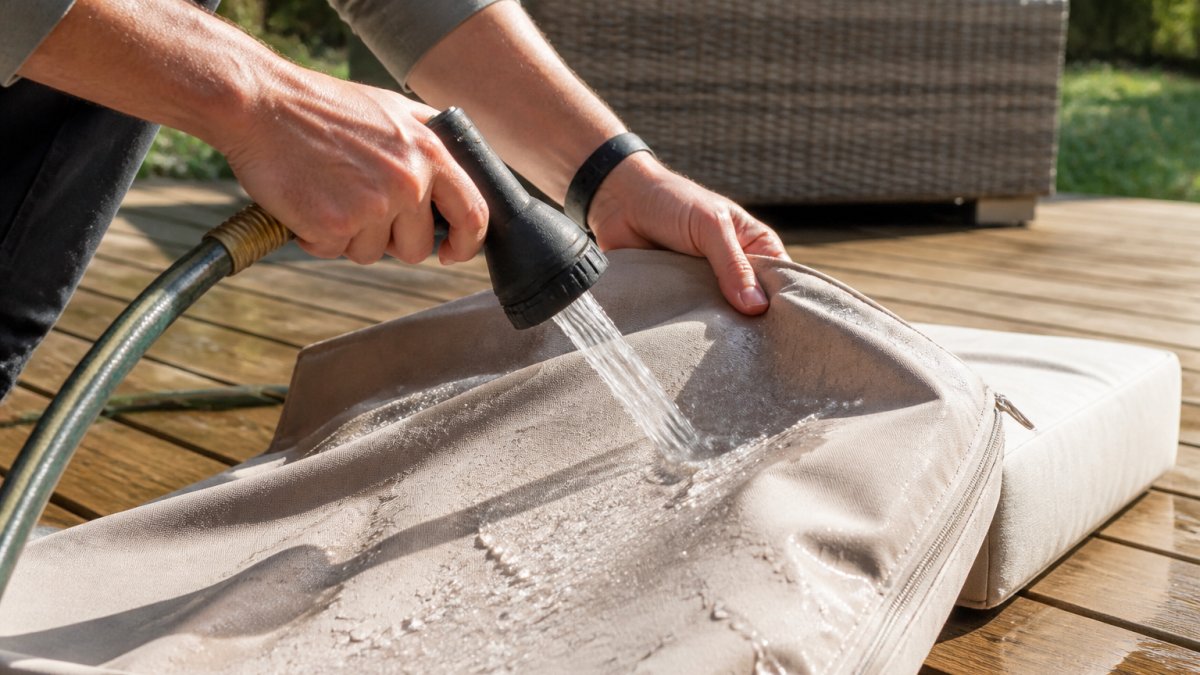
A simple routine keeps cushions looking new:
- Brush off loose dirt with a soft brush while the fabric is dry.
- Rinse with water to lift surface dust.
- Wipe clean with a mild soap solution for stains.
- Rinse again to remove soap residue.
- Let cushions dry fully in the open air before use.
Avoid harsh bleach on colored fabric and never machine-dry a foam insert. Regular maintenance extends fabric lifespan more than any single feature. If a fabric's care instructions sound complicated, that is a sign to keep looking.
Choosing outdoor cushion fabric is a decision most people make once and live with for years, so getting it right the first time matters. At Creative Custom Upholstery, our team brings over 45 years of family-owned experience to every cushion, from marine and automotive seats to custom outdoor pieces. We help you select the right performance fabric, match it to your foam and construction, and finish it with quality workmanship that elevates your space. Request a quote and let us build cushions that hold up season after season.
Frequently Asked Questions
What is the best material for patio furniture cushions?
Solution-dyed acrylic is the strongest all-round choice for outdoor cushion fabric. The color is locked into the fiber before weaving, so it holds up to sun exposure and rain better than piece-dyed fabrics. Woven polyester and olefin are solid budget options, but they typically fade and wear sooner under heavy direct sunlight. If your cushions sit in full sun or near a pool, pay the difference for acrylic; if they live under a covered porch, polyester can be enough.
Are water-resistant or waterproof fabrics better for outdoor cushions?
Water-resistant outdoor cushion fabric is usually the better pick. It slows rain absorption and lets the cushion dry, while fully waterproof covers can trap moisture inside the foam padding, which encourages mildew. Look for a tight weave with a water-repellent finish, and make sure the cushion has some airflow. If a cushion gets soaked, stand it on edge so water drains and both sides dry evenly.
Which outdoor cushion fabrics resist fading in sunlight?
UV-resistant fabric for patio cushions starts with solution-dyed acrylic, which holds color under long sun exposure far better than piece-dyed polyester. Olefin also resists fading reasonably well but softens with heat. Whatever you choose, check that the fabric is rated for outdoor exposure and pair it with UV-stable sewing thread, since thread often fails before the fabric does. Rotating cushions and using a cover during peak sun extends colorfastness.
How do you clean and maintain outdoor cushion fabric?
Rinse with water and wipe clean with mild soap, then rinse again and let the cushion air dry fully on both sides. Avoid harsh bleach unless the fabric maker allows it, and never put outdoor cushion covers in a hot dryer. Brush off debris weekly, rinse monthly during patio season, and store cushions dry rather than damp. Prompt cleaning of spills and pollen keeps stain resistance working and adds years to the fabric lifespan.