 ultimate-guide
Restoring Vintage Family Heirloom Furniture: 2026 Guide
Table of Contents
- Why Restoring Vintage Family Heirloom Furniture Matters
- Furniture Restoration vs. Refinishing: Know the Difference
- Assessing Structural Integrity Before You Touch a Tool
- Preserving Antique Furniture Value During Repair
- Reupholstering Vintage Furniture: What Changes and What Stays
- Vintage Sofa Upholstery Fabric Ideas That Fit the Era
- When to Hire a Professional vs. DIY
- Frequently Asked Questions
Last Updated: October 19, 2026
Why Restoring Vintage Family Heirloom Furniture Matters
Restoring vintage family heirloom furniture means returning a piece to sound, usable condition while keeping the marks, materials, and history that give it meaning.
That distinction matters more than most people expect. A dresser your grandmother bought in the 1950s carries value in two columns: market value, which an appraiser can estimate, and provenance, the documented story of who owned it and when.
Patina, Provenance, and Historical Value
Patina is the surface change that develops on wood and metal through decades of handling, light, and air. It is not damage; on a period piece it's often the strongest signal of age, and removing it can cut value sharply.
Provenance works the same way: a maker's label, dated repair note, or receipt tucked in a drawer all add to the record.
Furniture Restoration vs. Refinishing: Know the Difference
Restoration preserves original material and repairs only what is failing. Refinishing removes the existing surface, usually down to bare wood, and applies a new finish.
Refinishing has its place: a mass-produced 1970s table with a cracked lacquer top is a fine candidate, while a handcrafted piece with original shellac and intact patina is not.
| Approach | What Happens | Best For | Risk |
|---|---|---|---|
| Conservation | Stabilize and clean only | Museum-grade or rare pieces | Minimal |
| Restoration | Repair damage, keep original finish | Most heirlooms | Moderate |
| Refinishing | Strip and reapply finish | Low-value or badly damaged pieces | High |
If the piece is upholstered, the decision gets more complicated because fabric and frame age together, a specialist assessment helps.
Assessing Structural Integrity Before You Touch a Tool
Structural integrity is the piece's ability to bear load and stay square. Check it before any cosmetic work, because a wobbly frame will undo every finish you apply.
Then work through the frame methodically:
- Test every joint by hand for movement
- Look for splits along the wood grain, especially at leg tops
- Tap veneer gently; a hollow sound means it has lifted
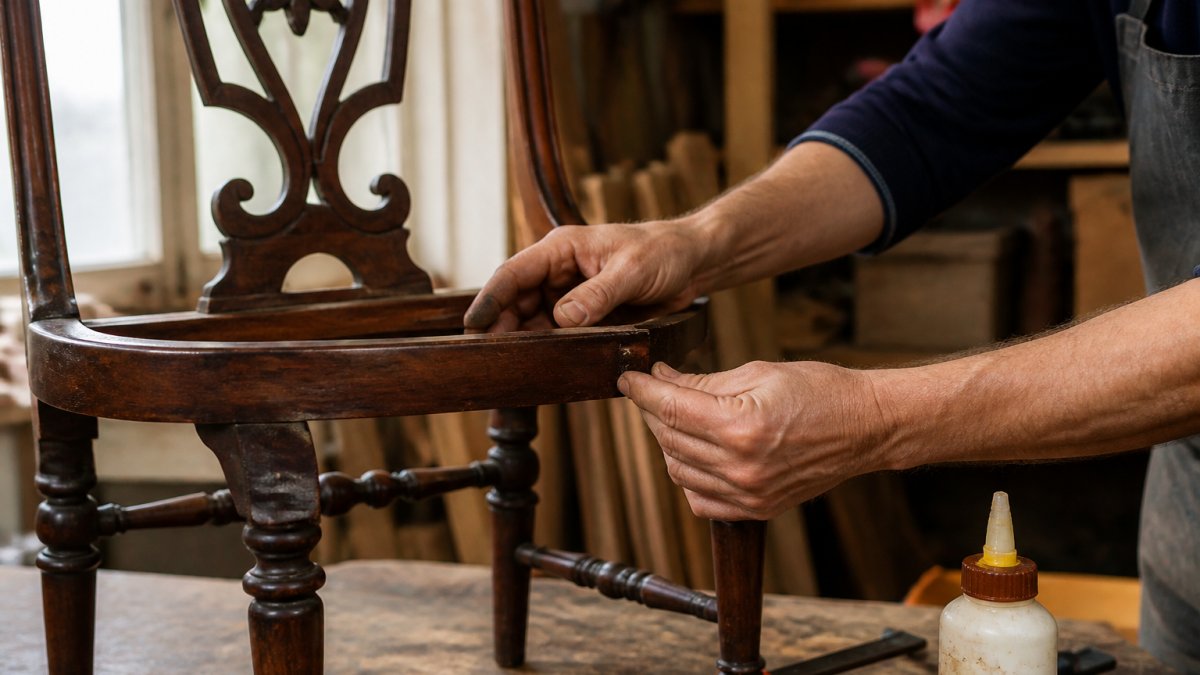
Joints, Veneer, and Hidden Damage
Loose joints are the most repairable problem you'll find. Work wood glue into the joint with a thin brush or syringe, clamp it firmly, and leave it undisturbed for a full day.
Veneer is where DIY work goes wrong. Lifted veneer can be reactivated with heat and moisture or glued and clamped flat, but brittle veneer cracks under pressure, so use a caul between clamp and surface.
Preserving Antique Furniture Value During Repair
Preserving antique furniture value comes down to reversibility: every repair should be one a future conservator could undo without damaging the original material. That single principle separates value-preserving work from value-destroying work.
But first you need to know what you're protecting: decide whether the piece is a candidate for DIY at all. A high-value antique restored by an amateur can lose a large share of its market value overnight, and no finish you apply later will bring it back.
Appraisal vs. Sentimental Value: Run the Test First
Sentimental value and market value are separate columns that call for different decisions, a piece can be priceless to your family and worth little on the open market, or the reverse. Before touching a tool, work through this screen:
- Maker's mark or label. A stamped signature, paper label, or branded drawer bottom can move a piece from 'old furniture' to 'catalogued antique.' Photograph it and search museum and heritage databases before you sand anything.
- Construction signals. Hand-cut dovetails, mortise-and-tenon joints, and solid secondary woods (poplar, pine, chestnut) suggest pre-industrial or small-shop work. Machine-cut dovetails and particleboard point to mass production.
- Original finish and hardware. Original shellac, untouched patina, and matching period hardware are value multipliers. Replaced pulls or a stripped top are permanent records of alteration.
If two or more of those signals are present, treat the piece as high-value until an appraiser tells you otherwise. In that case, clean only, do not strip, sand, or refinish.
How to Get a Real Valuation
For anything you suspect is significant, hire a credentialed appraiser rather than relying on online listings. Look for one accredited through a recognized Canadian appraisal association, and ask for a written report stating the intended use (insurance, estate, or resale), because value can differ by purpose.
For lower-stakes pieces, a paid verbal opinion from an auction house or a specialist dealer is often enough to tell you whether to proceed with DIY work.
The Reversibility Rules
Once you've confirmed the piece is a reasonable DIY candidate, every repair should still pass the reversibility test:
- Use reversible adhesives such as hide glue where the original used them
- Keep original hardware, even if it's tarnished; clean it gently rather than replacing it
- Save every removed piece, including screws and labels
Sourcing period-accurate hardware is the gap most guides skip. Reproduction brass pulls and escutcheons are widely available from specialist suppliers, and matching the original style keeps a piece coherent. Where original hardware survives, keep it. A replaced handle is a permanent record that the piece was altered.
Reupholstering Vintage Furniture: What Changes and What Stays
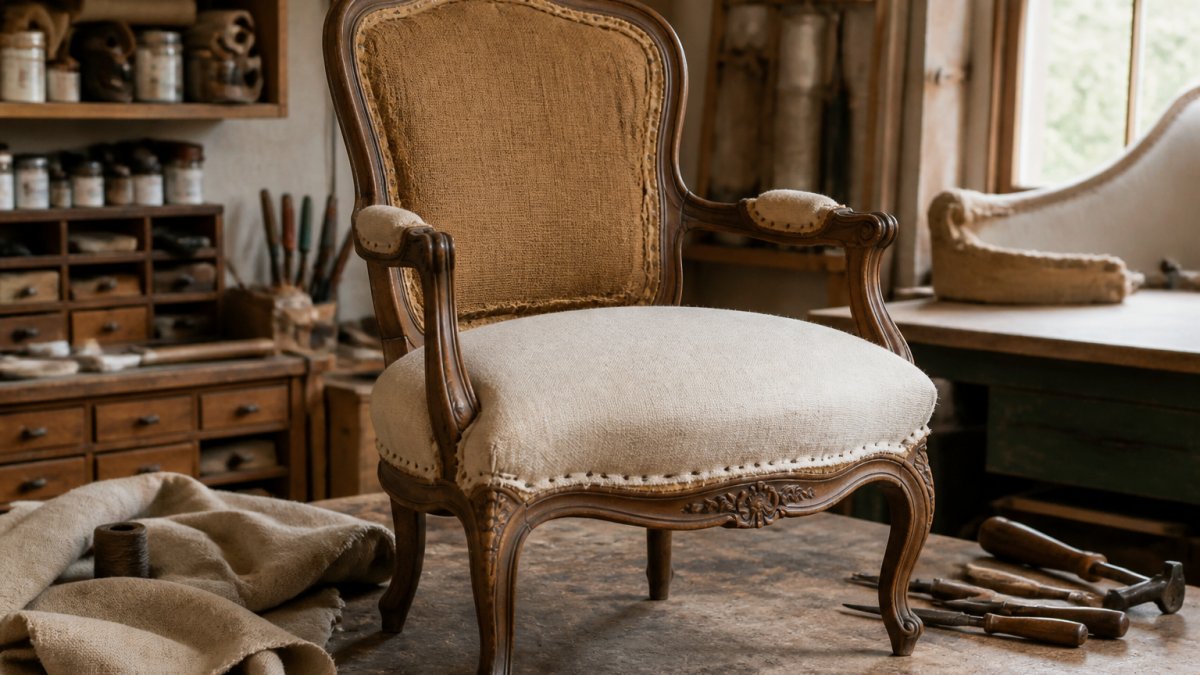
Reupholstering vintage furniture replaces worn fabric and failing padding while keeping the frame, springs, and shape.
Here's what most people miss: the frame decides everything. A well-built hardwood frame with sound springs is worth reupholstering.
Fabric choice drives both look and lifespan. Original-era pieces often used wool, cotton velvet, or heavy linen; modern equivalents in similar weaves keep the period feel while handling daily use better.
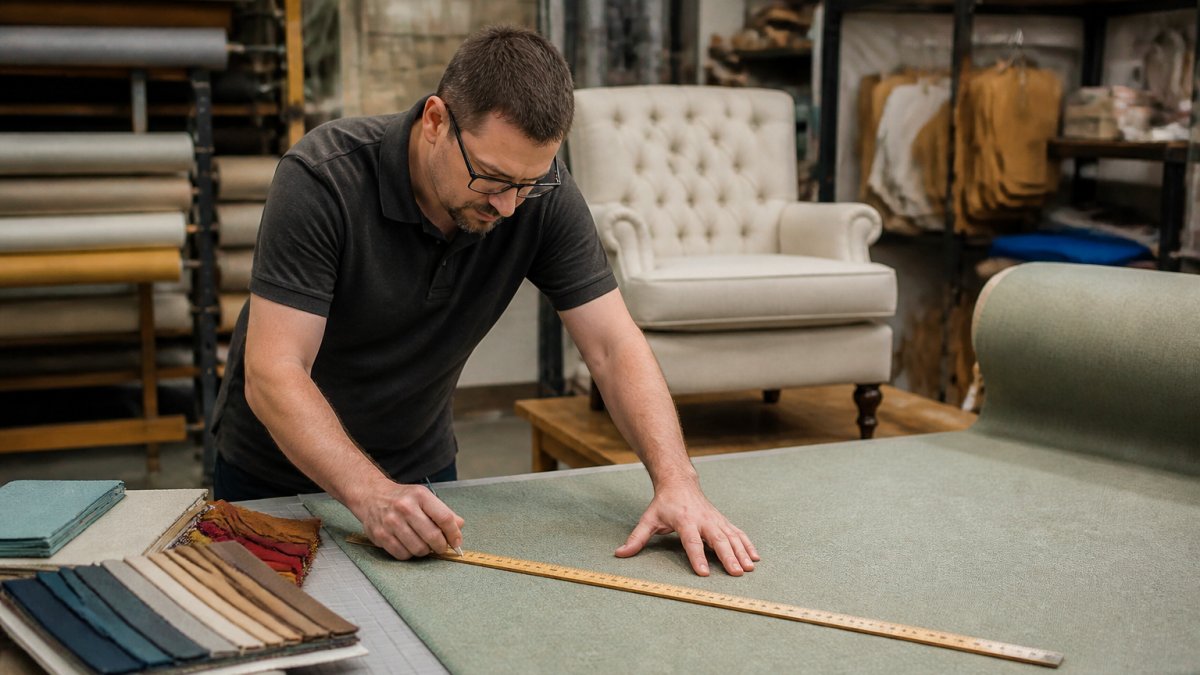
This is where experience pays off: our team measures, matches pattern repeats, and orders with a margin.
Vintage Sofa Upholstery Fabric Ideas That Fit the Era
Matching fabric to era is part strategy, part instinct. A 1950s sofa wants textured wool or bouclé in a muted tone, a Victorian frame suits deep velvet or damask, and mid-century pieces take well to tight weaves and solid colors.
Consider these directions:
- Velvet for formal period pieces; it wears well and hides seam lines
- Wool tweed for daily-use family sofas; durable and era-appropriate
- Linen blends for relaxed, light-filled rooms
Avoid distressing new fabric to fake age. It rarely convinces anyone and shortens the fabric's life. Choose a period-appropriate weave in a modern-grade cloth and let the frame carry the history.
When to Hire a Professional vs. DIY
Hire a professional when the piece has structural damage, original finish you want to keep, or upholstery with pattern matching.
The honest test is consequence. If a mistake would be reversible, try it yourself; if it would strip value from something your family can't replace, get it assessed.
But consequence isn't only about value. It's also about what's in the finish, the stripper, and the dust, and that's the part most guides leave out.
Chemical and Material Safety: The Step Everyone Skips
Before any stripping, sanding, or refinishing, assume the piece may carry hazards until you've tested for them. Furniture made before the late 1970s can carry lead in paint and sometimes in the finish itself, and older pieces may have been treated with pesticides or finished with materials you don't want in your lungs.
Work through this sequence before you open a can:
- Test for lead. Use a lead test kit on painted surfaces, especially on pieces from before the 1980s. If lead is present, do not sand or dry-scrape, that creates inhalable dust. Wet methods and professional removal are the safer route.
- Identify the finish. Test a hidden spot with denatured alcohol: if it softens, it's likely shellac; if it resists, it may be lacquer or a modern catalyzed finish. Knowing the finish tells you which stripper, if any, is appropriate.
- Ventilate and isolate. Work outdoors or in a garage with cross-ventilation, and keep the area away from children and pets. Solvent strippers and finishes release vapors that accumulate indoors.
- Wear the right protection. Nitrile gloves, safety glasses, and a respirator rated for organic vapors, not a dust mask, are the baseline for solvent work. For sanding, use a respirator rated for fine dust.
- Dispose of waste properly. Stripper sludge, lead-contaminated dust, and solvent-soaked rags are hazardous waste. Check your municipality's household hazardous waste depot rather than putting them in the regular garbage; solvent-soaked rags can self-ignite if bunched together.
The DIY / Professional Decision Matrix
Use this to sort the job before you commit:
| Situation | DIY | Professional |
|---|---|---|
| Loose joint, no finish damage | Yes | , |
| Surface cleaning of intact finish | Yes | , |
| Single drawer pull replacement | Yes | , |
| Suspected lead paint | , | Yes |
| Original finish on a high-value piece | , | Yes |
| Lifted or brittle veneer | , | Yes |
| Upholstery with pattern matching | , | Yes |
| Structural frame damage | , | Yes |
If a job lands in the professional column, get an assessment before you buy materials. A written estimate tells you whether the repair is worth doing at all and protects the piece if the work turns out to be more involved than it looked.
Frequently Asked Questions
Is it worth restoring vintage family heirloom furniture?
It depends on the piece's condition, provenance, and your attachment to it. Solid hardwood pieces with original joinery usually justify restoration, while heavily damaged veneer or water-damaged particleboard may not. Sentimental value matters too: a piece tied to family history often earns repair even when resale value is modest. Get an appraisal before deciding, and weigh repair costs against replacement with a comparable piece.
How do you restore an old family heirloom without damaging its value?
Preserve original finishes and patina wherever possible. Avoid aggressive sanding, which removes the wood's surface history, and never strip a finish that only needs cleaning and waxing. Keep original hardware, labels, and maker's marks intact. For structural repairs, use reversible methods like hide glue so future conservators can undo your work. When in doubt, consult a professional before making irreversible changes to heirloom furniture.
Should you refinish or repaint a family heirloom furniture piece?
Refinishing usually preserves more value than painting. A careful refinish that respects the original stain and wood grain keeps the piece recognizable and collectible. Paint covers grain and original finish, which can reduce antique value significantly, especially on period pieces. Reserve paint for pieces with severe veneer damage or little historical significance, and always test on a hidden area first.
How do you choose upholstery fabric for a vintage heirloom sofa?
Match the fabric to the era and to how the piece will be used. Wool, linen, and cotton velvet suit mid-century and traditional frames, while heavy-duty weaves handle daily family use better than delicate silks. Check the rub count for durability, and order a swatch to compare against the wood tone in your room. If the original fabric survives under the cushions, use it as a color and texture reference for reupholstering vintage furniture.
What is the 100-year rule for antiques?
The 100-year rule is a common guideline stating that an object becomes an antique once it is at least 100 years old. It is a rough benchmark, not a legal standard, and age alone does not guarantee value. Rarity, condition, craftsmanship, and provenance often matter more. A 120-year-old mass-produced table may be worth less than a 70-year-old designer piece, so appraise before assuming age equals worth.
How can you tell whether vintage furniture needs professional restoration?
Warning signs include wobbling joints, lifting veneer, active woodworm, deep cracks, and finishes that flake on contact. If the piece is structurally unstable or has historical significance, a professional assessment is worth the cost. Simple cosmetic issues like dull finish or minor scratches are usually safe to handle yourself. For reupholstering vintage furniture with original webbing or horsehair padding, professional help prevents further damage.
A family heirloom deserves more than a weekend experiment. If the piece matters, let people who have done this for decades handle it. Creative Custom Upholstery brings over 45 years of family-owned experience to furniture, cushions, automotive, marine, and motorbike upholstery, with the craftsmanship to preserve what makes your piece irreplaceable. Request a quote and we'll assess your heirloom before anything is touched.