 blog
Are Classic Upholstery and Interiors Alternatives Worth It?
Last Updated: October 25, 2026
Quick Summary
Classic Upholstery and Interiors alternatives are shops that rebuild furniture rather than recover it, since the named shop's directory listing now shows as permanently closed. Look for a provider that strips the piece, repairs the frame, replaces foam and rebuilds cushions, then confirms it is currently operating before you commit.
- Confirm a shop is active by calling during business hours and checking for reviews from the last 90 days.
- Ask for the double rub wear rating on any fabric and match it to how the piece will be used.
- Planning ranges run roughly $150 to $400 CAD in labor for a simple dining chair, plus fabric.
- Get a written estimate that separates labor, material, and repairs so you can compare shops fairly.
- Ask whether the shop strips the piece to the frame or recovers over the existing cover.
Table of Contents
- Why Homeowners Search for Upholstery Alternatives
- Furniture Reupholstery Services: What a Reputable Shop Actually Delivers
- Vintage Sofa Upholstery Fabric Ideas That Preserve Character
- Upholstery Fabric Durability: Reading Wear Ratings Before You Commit
- The Cost to Reupholster a Chair and What Moves the Quote
- How to Vet an Upholstery Shop: Workmanship, Warranty, and Turnaround
- Request a Quote from Creative Custom Upholstery
- Frequently Asked Questions
Why Homeowners Search for Upholstery Alternatives
A sofa that has held three generations of family dinners deserves better than a curb. That is why so many people search for Classic Upholstery and Interiors alternatives: they want the craft without the uncertainty. The named shop's directory listing now shows as permanently closed, and that single line sends homeowners, restorers, and boat owners looking for a provider they can actually reach.
At Creative Custom Upholstery, we have watched this play out for years. A closed shop leaves a gap, and the gap fills with questions: who can rebuild this frame, who can match this fabric, who will answer the phone?
Below, we break down what a reputable shop delivers, how to read fabric ratings, what moves a quote, and how to vet workmanship before you hand over an heirloom.
Furniture Reupholstery Services: What a Reputable Shop Actually Delivers
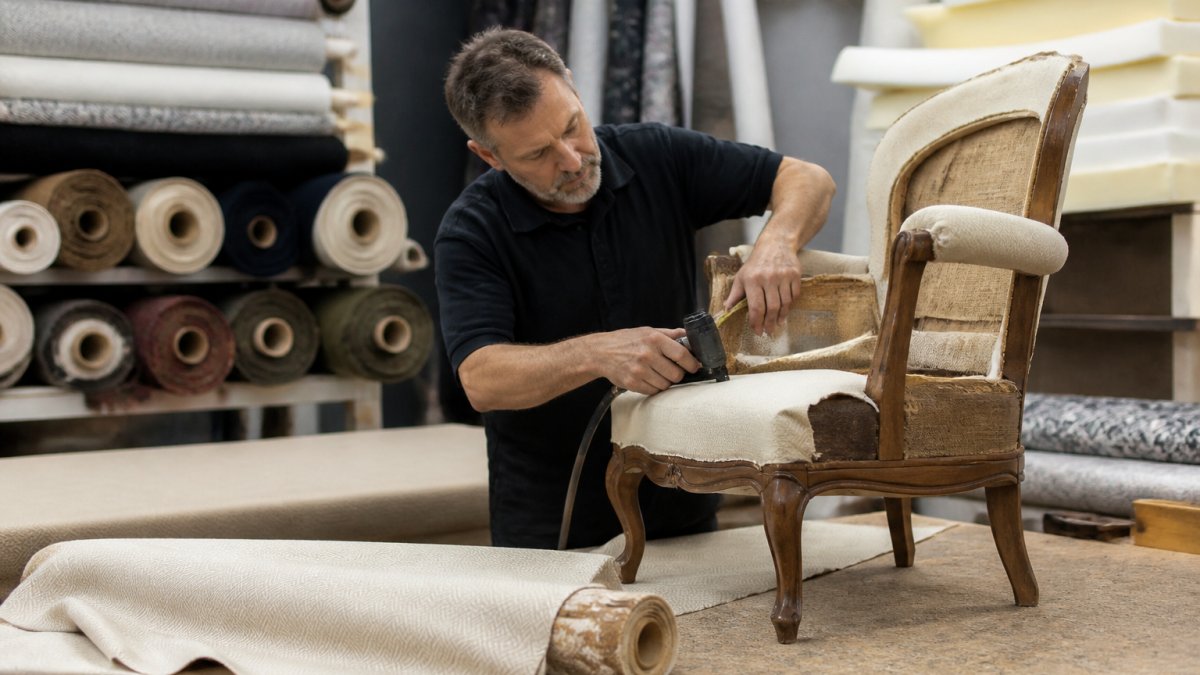
Furniture reupholstery services are the full rebuild of a piece, not a cosmetic cover-up. A reputable shop strips the old fabric, inspects the frame, replaces worn foam, and rebuilds cushions before any new material goes on.
Frame Repair, Foam Replacement, and Cushion Rebuilding
The frame is where a piece lives or dies. A common mistake is skipping structural checks because the fabric looks fine. Loose joints, cracked rails, and sagging webbing all show up the moment the old cover comes off, and fixing them then costs far less than a second teardown later.
Foam replacement matters just as much. Old foam compresses, crumbles, and loses support long before the fabric fails. Rebuilding cushions with fresh, correctly weighted foam restores comfort and keeps the new cover sitting properly.
Residential, Commercial, Automotive, and Marine Work
Not every shop handles every category, and that matters when you are comparing options. Residential work covers sofas, dining chairs, and heirloom pieces. Commercial upholstery covers restaurant booths, banquettes, and seating that takes daily punishment.
For vintage vehicle interiors, the details run deeper than a seat cover. If your project is a boat with cracked vinyl or sun-faded cushions, confirm the shop works with marine-grade materials before you load the seats into the truck.
Vintage Sofa Upholstery Fabric Ideas That Preserve Character
Vintage sofa upholstery fabric ideas should protect the piece's era, not erase it. The right choice echoes the original texture, scale, and color family while upgrading durability.
Start with the piece's era. Mid-century frames suit tight, textured weaves and muted solids. Victorian and Edwardian pieces carry velvet, damask, and deeper tones well.
Texture does more work than pattern. A subtle weave hides wear better than a flat solid and photographs beautifully.
Upholstery Fabric Durability: Reading Wear Ratings Before You Commit
Upholstery fabric durability comes down to one number most buyers never ask about: the wear rating. Fabrics are tested on an abrasion machine, and the result is expressed in double rubs. Higher double rub counts mean the fabric resists wear longer under repeated friction.
General guidance helps here. Light residential use calls for lower double rub counts, while family rooms, commercial seating, and rental properties need substantially higher ratings.
Leather Versus Fabric Versus Performance Weaves
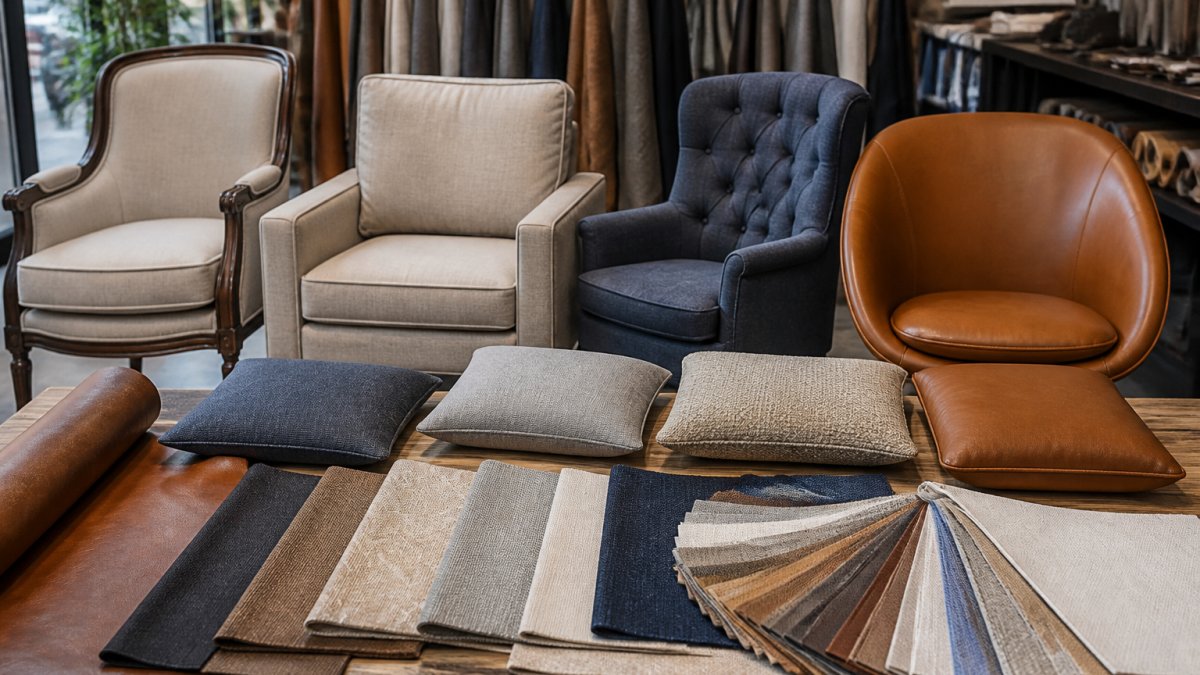
Each material brings a different trade-off. Leather upholstery resists spills and wears in rather than out. Fabric upholstery offers the widest range of color and texture at lower material cost, but it needs fabric care attention over time.
Performance fabric sits in between. Performance weaves and outdoor fabric lines are built for stain resistance and fade resistance, and Sunbrella-style fabric has become a common choice for sunrooms, patios, and commercial spaces. Velvet delivers unmatched richness but demands more careful maintenance.
The Cost to Reupholster a Chair and What Moves the Quote
The cost to reupholster a chair depends on labor hours, fabric yardage, frame condition, and cushion complexity, so no honest shop quotes from a price list. What you can do is understand the drivers, prepare the right information, and compare quotes on the same basis.
Typical cost ranges in Canadian dollars
Treat these as planning ranges, not quotes. Most shops price by the piece and the work required:
- Simple dining chair: roughly $150 to $400 CAD in labor plus fabric
- Armchair or wingback: roughly $500 to $1,200 CAD in labor plus fabric
- Sofa: roughly $1,200 to $3,000 CAD in labor plus fabric, depending on size and cushion count
- Frame repair or rebuild: adds labor on top of the upholstery charge
- Marine or automotive seats: priced per seat and heavily dependent on material and fit
Fabric is usually billed separately by the yard, and pattern repeat can push yardage up. Ask for the yardage estimate and the fabric price per yard so you can see the material line clearly.
What moves the quote most
- Frame condition: repairs and re-gluing add labor before any fabric goes on
- Foam and cushion work: re-foaming and rebuilding change the material and time required
- Fabric choice: yardage, pattern repeat, and durability rating all affect material cost
- Detail work: piping, tufting, nailhead trim, and skirt options add hours
- Turnaround pressure: rush timelines can affect scheduling and price
What to bring to a quote
Come prepared so the shop can price accurately:
- Photos of the piece from several angles, including the underside
- Dimensions and the number of cushions
- A note on any frame damage, sagging, or odor
- Your fabric preference or a budget range for material
- Whether you need pickup and delivery
Ask for a written estimate that separates labor, material, and any repairs. That breakdown is what lets you compare two shops fairly.
For a closer look at how these factors stack up on period pieces, our breakdown of antique chair upholstery cost walks through what to expect. If you are still deciding whether the piece is worth restoring at all, a direct upholstery repair versus furniture replacement cost guide helps you weigh the two paths before committing.
How to Vet an Upholstery Shop: Workmanship, Warranty, and Turnaround
Vetting an upholstery shop is less about the sales pitch and more about the questions you ask and the evidence you collect before any fabric is cut. The named shop's directory listing showing as permanently closed is a reminder that a polished website is not proof a business is still operating. Verify first, then compare.
Step 1: Confirm the business is currently operating
Before you invest time in a quote, confirm the shop is active and reachable:
- Phone test: Call during posted business hours and note whether a person answers or a voicemail box is full. A full mailbox is a warning sign.
- Recent activity: Check the shop's social media and Google Business Profile for posts, photos, or reviews from the last 90 days. A profile with no activity for a year may be dormant even if the site still ranks.
- Directory cross-check: Compare the address and phone number across at least two independent listings. Conflicting hours or a disconnected number suggest the listing is stale.
- In-person visit: For high-value pieces, visit the workshop. A working shop has fabric rolls, foam stock, and pieces in progress.
Step 2: Compare providers on the same criteria
Build a simple comparison sheet and score each shop the same way. The criteria that matter most:
| Criterion | What to record |
|---|---|
| Location and service area | Workshop address, pickup and delivery availability, travel radius |
| Services offered | Residential, commercial, automotive, marine, cushions, awnings |
| Materials | Fabric brands and sample availability, foam grades, marine-grade vinyl |
| Turnaround | Quoted lead time in writing, deposit and scheduling terms |
| Warranty | What is covered, for how long, and what voids it |
| Workmanship evidence | Portfolio photos, in-person samples, references |
| Customer feedback | Recent reviews, repeat clients, complaint patterns |
Ask each shop the same five questions so the answers are comparable: How do you handle frame repair? Do you replace foam and webbing as standard? Can I see a recent piece in person? What does your warranty cover? What is the realistic lead time?
Step 3: Judge workmanship on specifics
Workmanship shows in pattern matching, seam alignment, and how the cover sits on the frame. Look closely at corners, cushion edges, and where piping meets the frame, because shortcuts show there first. Ask whether the shop strips the piece to the frame and inspects joints, or recovers over the existing cover. A shop that rebuilds will explain the frame and foam steps without prompting.
Step 4: Get warranty and turnaround in writing
Ask what the shop covers if a seam fails or foam compresses early, how long the coverage lasts, and what voids it. Get the lead time and deposit terms in writing, and ask what could shift the date. A shop that quotes a realistic turnaround and explains the variables is more trustworthy than one promising a date it cannot hold.
Request a Quote from Creative Custom Upholstery
Choosing among Classic Upholstery and Interiors alternatives really comes down to one thing: finding a shop that rebuilds rather than recovers, and that stands behind the work.
We are a family-owned and operated business with over 45 years of experience, and our range covers furniture, indoor and outdoor cushions, automotive and motorbike seats, marine upholstery, and awnings.
Get started with Creative Custom Upholstery and bring your furniture, seating, or marine cushions back to life with workmanship built to last. Our guide to booking custom furniture upholstery service walks you through the next steps.
Frequently Asked Questions
What is the average cost to reupholster a chair in Canada?
There is no single national rate, and any shop quoting a flat figure before seeing your piece is guessing. The cost to reupholster a chair depends on the frame condition, whether foam and webbing need replacing, the fabric you choose, and the labour hours involved. A simple dining chair sits at the low end; a wingback with springs and a tight seat sits much higher. Ask for an itemized quote that separates labour, materials, and any frame or foam work so you can compare shops fairly.
How do I choose an upholstery shop for a vintage sofa?
Ask three things before booking: whether they have worked on pieces of similar age, whether they will preserve the original frame and spring system rather than replacing it, and whether they can show photos of recent restoration work. A shop that specializes in furniture reupholstery services should also explain how they handle fabric matching on heirloom pieces. Visit the workshop if you can. Seeing how a team handles foam replacement and seam alignment tells you more than any website copy.
Can a vintage sofa be reupholstered without changing its original character?
Yes, and that is usually the goal. The frame, spring construction, and silhouette stay intact while the cover and padding are renewed. Fabric choice is where character is preserved or lost: a period-appropriate weave, matched piping, and the original cushion shape keep the piece recognizable. Discuss vintage sofa upholstery fabric ideas with your upholsterer before ordering yardage, and ask them to confirm the repeat and direction so the pattern lands correctly on every cushion.
Is reupholstery cheaper than buying new furniture?
Often, yes, particularly when the existing frame is solid hardwood rather than particleboard. A quality frame outlasts most new retail furniture, so paying for labour and fabric on a good piece usually beats replacing it with something built to a lower standard. That said, upholstery fabric durability and the extent of foam or spring repair both affect the total. Get a quote first, then compare it against the cost of a new piece of comparable construction, not a discount import.