 how-to
7 Ways to Prevent Sun Damage on Outdoor Cushions
Last Updated: October 26, 2026
Quick Summary
Preventing sun damage on outdoor cushions means blocking UV rays before they reach the fabric, using shade, breathable covers, and fabric guard sprays reapplied each season. Move outdoor cushions out of direct sun during the hottest hours, roughly 10 a.m. to 4 p.m., and rotate them weekly so one side does not take all the light.
- UV light attacks dye molecules first, then weakens and thins the fibers themselves.
- Choose a breathable cover, since a waterproof cover that traps moisture can cause mildew.
- Solution-dyed acrylic holds color far better than cotton or standard indoor upholstery.
- Clean with mild dish soap and lukewarm water, rinse fully, and dry in the shade.
- Replace cushions when foam is crumbling, seams are splitting, or fabric tears under light pressure.
Table of Contents
- Why Outdoor Cushions Fade and Break Down in the Sun
- How to Keep Patio Cushions From Fading
- Protect Outdoor Cushions From UV Rays With Covers and Sprays
- Best Fabric for Fade-Resistant Outdoor Cushions
- How to Clean Outdoor Cushions Safely
- Storage and Seasonal Care for Long Cushion Life
- When to Repair or Replace Sun-Damaged Cushions
- Request a Quote for Custom Sun-Resistant Cushions
- Frequently Asked Questions
Why Outdoor Cushions Fade and Break Down in the Sun
Sun damage on outdoor cushions is the breakdown of fabric dyes and fibers caused by ultraviolet light, moisture, and trapped heat working together. Preventing sun damage on outdoor cushions starts with understanding what the sun actually does to them.
UV Radiation and Fabric Degradation
UV light attacks the dye molecules first. Colors fade, then the fibers themselves weaken and thin. A cushion that looks fine in June can feel thin and rough by September. That is UV damage at work, and it never reverses.
Moisture, Mildew, and Heat Buildup
Sun alone is not the only enemy. Morning dew soaks into the fabric, and the afternoon sun bakes that moisture into the fibers. This cycle feeds mildew and speeds up fading. Heat trapped under a wet cover does even more harm. The Canadian Centre for Occupational Health and Safety guidance on UV exposure explains how UV radiation degrades materials over time, and fabric is no exception.
How to Keep Patio Cushions From Fading
The fastest way to keep patio cushions from fading is to block UV rays before they reach the fabric. Shade, covers, and the right spray all help. But timing matters more than most people think.
Here is how to approach it:
- Move cushions out of direct sun during the hottest hours, roughly 10 a.m. to 4 p.m.
- Rotate cushions weekly so one side does not take all the light.
- Use a shade sail or umbrella over seating areas.
- Apply a fabric guard spray while the fabric is clean and dry.
- Bring cushions inside during long stretches of harsh weather.
The common mistake is waiting until fading shows. By then, the dye is already gone.
Protect Outdoor Cushions From UV Rays With Covers and Sprays
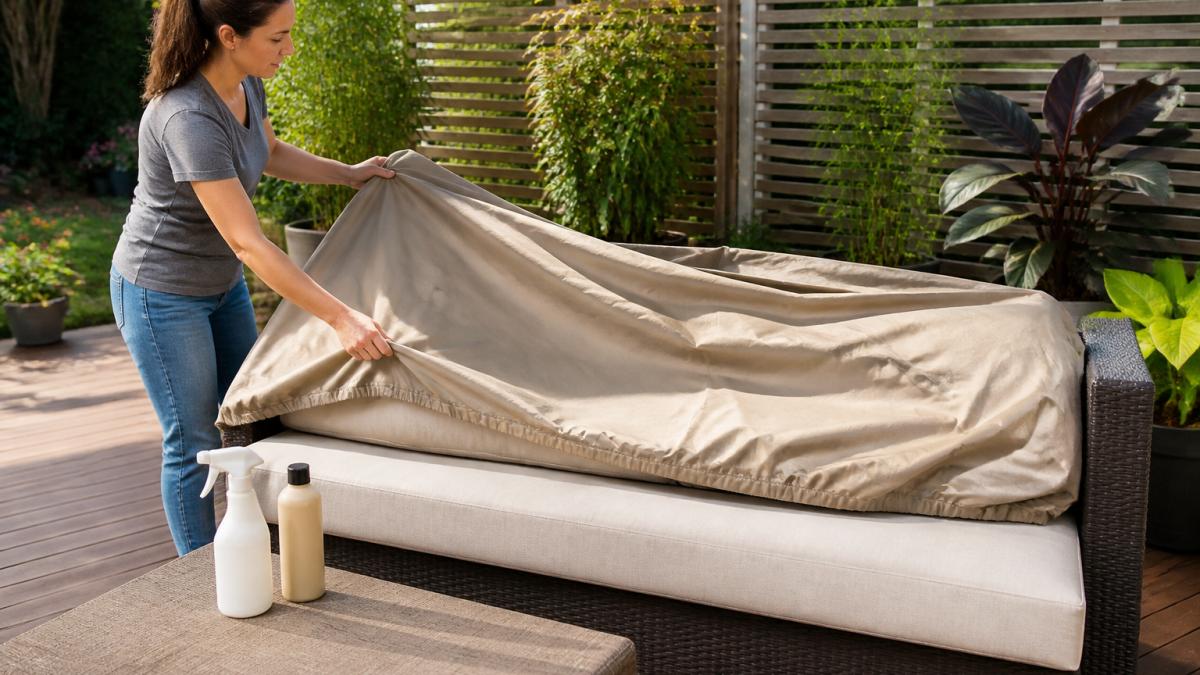
To protect outdoor cushions from UV rays, use a physical barrier first and a chemical spray second. Covers block light. Sprays slow the damage that light causes. Neither one works well on its own.
Choosing the Right Protective Cover
Look for a cover that breathes. A waterproof cover that traps moisture can cause mildew, which is worse than fading. Fit matters too. A loose cover flaps in the wind and lets rain in at the edges.
Fabric Guard Sprays and Their Limits
Fabric guard sprays add a thin layer that slows UV damage and helps water bead off. They are not permanent. Most need reapplication each season, and some need it more often. A spray will not rescue fabric that is already thin or cracked.
Watch out: spraying a dirty cushion seals in grime and can stain the fabric. Always clean and dry the cushion first.
Best Fabric for Fade-Resistant Outdoor Cushions
The best fabric for fade-resistant outdoor cushions is a solution-dyed acrylic or a tightly woven polyester blend made for outdoor use. These fabrics hold color far better than cotton or standard indoor upholstery. If you want to go deeper, our guide on choosing outdoor cushion fabric walks through the trade-offs in detail.
Solution-dyed acrylic is a strong pick for most patios. The color runs through the fiber, not just on the surface, so it resists fading longer. Polyester blends can cost less and still perform well in partial shade.
Marine-grade fabric is another option, and it holds up against sun and water alike. To see how it compares, read marine grade fabric vs outdoor fabric.
| Fabric Type | Fade Resistance | Best For | Watch Out For |
|---|---|---|---|
| Solution-dyed acrylic | High | Full-sun patios | Higher cost |
| Outdoor polyester blend | Medium to high | Shaded decks | Slower to dry |
| Marine-grade vinyl | High | Docks and poolsides | Can feel stiff |
| Cotton or indoor fabric | Low | Covered porches only | Fades fast |
How to Clean Outdoor Cushions Safely
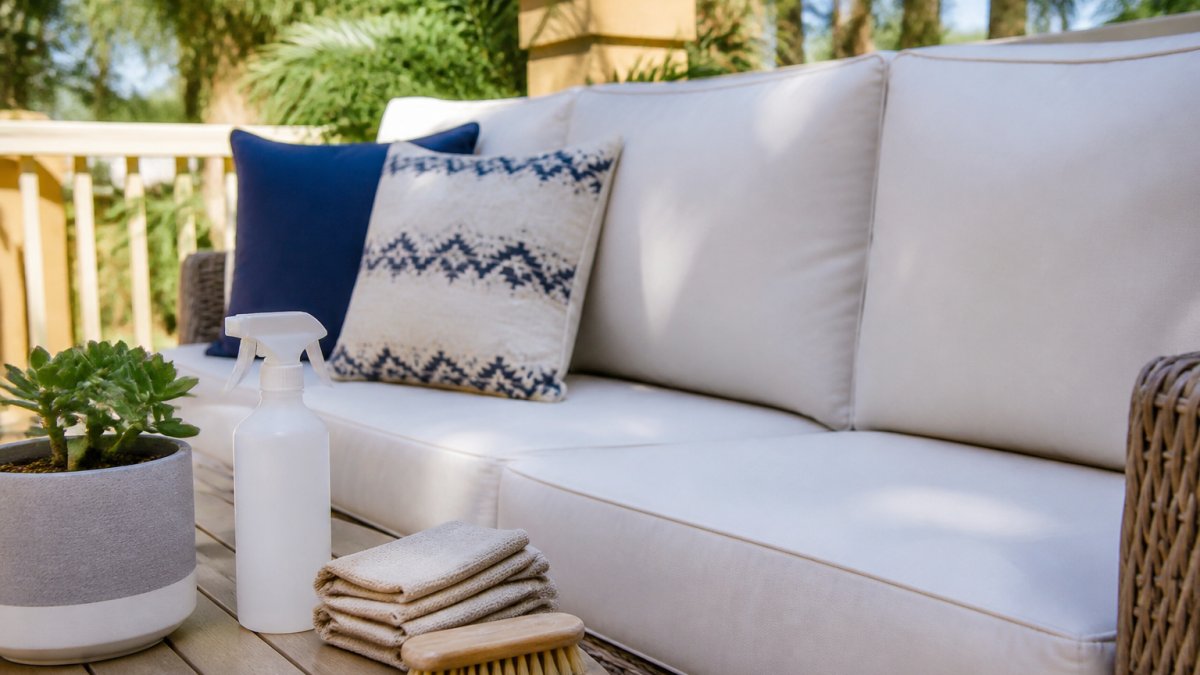
Cleaning outdoor cushions safely means using mild soap, lukewarm water, and a soft brush, then rinsing fully and drying completely. Harsh cleaners strip the protective finish and leave fabric open to sun damage.
Follow these steps:
- Brush off loose dirt while the cushion is dry.
- Mix a few drops of mild dish soap into a bucket of lukewarm water.
- Scrub gently with a soft brush. Skip the pressure washer.
- Rinse until the water runs clear.
- Stand cushions on edge to dry in the shade, not direct sun.
Never machine-dry a cushion. Heat shrinks covers and cracks the foam inside.
Storage and Seasonal Care for Long Cushion Life
Storing cushions properly through the off-season adds years to their life. Clean them first, dry them fully, and keep them somewhere dry with airflow. A damp cushion sealed in a bin grows mildew fast.
A simple seasonal routine works well:
- End of season: clean, dry, and store cushions indoors.
- Start of season: inspect seams and foam, then reapply fabric guard.
- Monthly: vacuum crumbs and rotate cushions.
- After storms: shake off water and let cushions air dry.
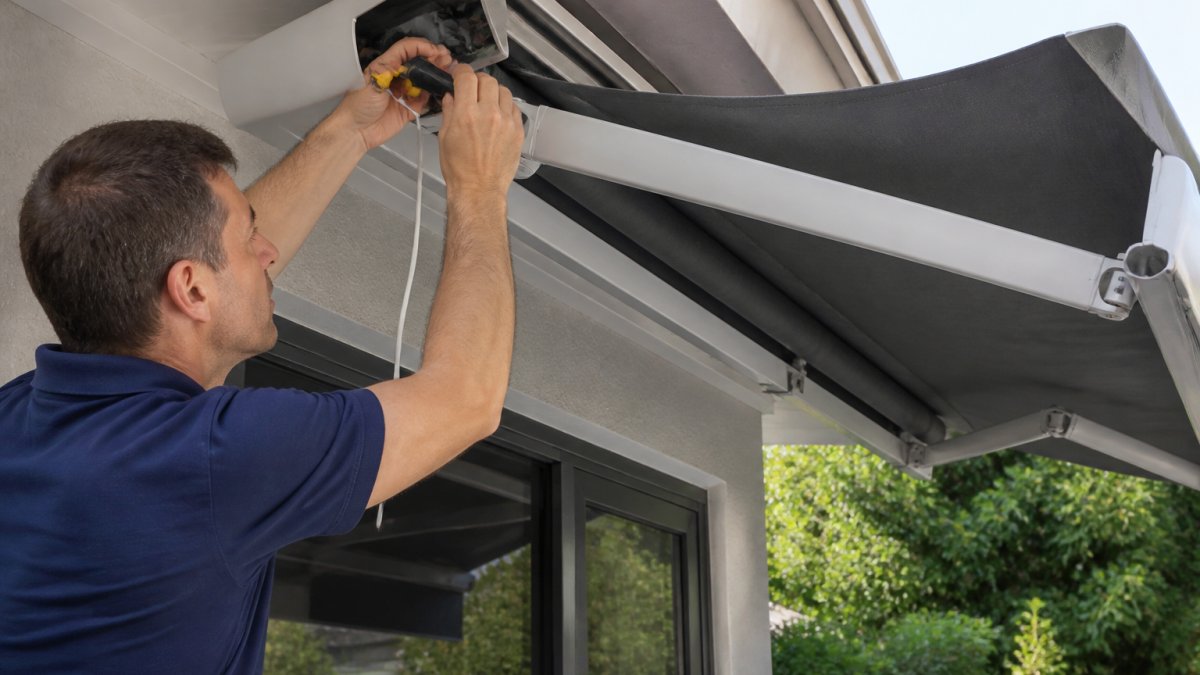
For awnings and larger covers, check the fabric for wear before the season starts. Small repairs now save bigger ones later.
When to Repair or Replace Sun-Damaged Cushions
Repair makes sense when the frame and foam are sound and only the cover has faded. Replace when the foam is crumbling, seams are splitting, or the fabric tears under light pressure.
Signs it is time to act:
- Fabric feels thin or rough to the touch
- Color has faded unevenly across the cushion
- Seams pull apart when you sit down
- Foam stays compressed after you get up
If you are unsure, a quick inspection settles it. For help deciding, see our upholstery repair vs furniture replacement cost guide. Sun damage rarely fixes itself.
Request a Quote for Custom Sun-Resistant Cushions
Fading cushions are a common problem, but they are not a permanent one. The right fabric, a good cover, and a simple care routine keep outdoor seating looking sharp for years. When cushions are past saving, custom replacements built from fade-resistant fabric solve the problem at the source.
At Creative Custom Upholstery, we have spent over 45 years helping homeowners and businesses get this right. As a family-owned shop, we build custom outdoor cushions and awnings to fit your space, and we stand behind the workmanship. We also handle marine and automotive seating when sun damage hits there too.
Get started with Creative Custom Upholstery and request a quote for cushions built to handle the sun.
Frequently Asked Questions
How do you keep outdoor cushions from fading in the sun?
Keep outdoor cushions out of direct sun when they are not in use. Use a fitted cover, store them in a dry shed or garage during peak UV hours, and apply a fabric guard spray rated for UV resistance. Rotating cushions every few weeks also spreads sun exposure evenly. Choosing solution-dyed acrylic fabric when you replace cushions gives the longest fade resistance, because the color runs through the fiber rather than sitting on the surface.
Should outdoor cushions be covered when not in use?
Yes. A cover blocks direct UV rays and keeps rain, bird droppings, and tree sap off the fabric. Use a breathable, water-resistant cover rather than a plastic tarp, which traps moisture and encourages mildew. Make sure cushions are completely dry before covering them. If your cushions stay outside year-round, a cover plus regular cleaning is the simplest routine for preventing sun damage on outdoor cushions.
Which outdoor cushion fabrics resist fading?
Solution-dyed acrylic, olefin, and polyester blends treated with UV inhibitors hold color best. Solution-dyed acrylic is the top choice for fade resistance because the pigment is added before the fiber is formed. Acrylic and olefin also resist mildew and dry quickly. Cotton and untreated polyester fade fast in direct sun. When ordering custom cushions, ask the upholsterer for the fabric's lightfastness rating and UV warranty.
How often should you clean outdoor cushions?
Clean outdoor cushions every two to four weeks during patio season, and spot-clean spills right away. Use a mild soap and water solution, rinse thoroughly, and let cushions dry standing on edge in the shade. Avoid harsh bleach or abrasive cleaners that break down UV coatings. Deep-clean at the start and end of the season. Regular cleaning removes dirt that traps heat and speeds up fabric breakdown.