 blog
How to Choose Upholstery Fabric for Indoor Cushions
Last Updated: November 2, 2026
Quick Summary
The ten upholstery fabric choices for indoor cushions are cotton, linen, wool, polyester, microfiber, chenille, velvet, jacquard, bouclé and leatherette. Match the fabric to how the cushion is used: microfiber and polyester suit busy family rooms, while linen, velvet and bouclé work best on low-traffic accent cushions.
- Check the rub test rating and match it to the traffic the cushion will see.
- Under 15,000 rubs is decorative use only, while 30,000 rubs and up is heavy-duty seating.
- Polyester, microfiber and leatherette are commonly chosen as easy-clean options.
- Cotton wins on comfort and feel, while polyester wins on durability and easy care.
- Blot spills from the outside in and test any cleaner on a hidden spot first.
Table of Contents
- Start With How the Cushion Will Be Used
- 10 Upholstery Fabric Choices for Indoor Cushions
- The Best Fabric for Indoor Cushions Depends on the Room
- Picking a Durable Fabric for Cushion Covers
- How to Read Rub Test Ratings Before You Buy
- Finding an Easy-Clean Upholstery Fabric
- Cotton vs Polyester Upholstery Fabric: Which Wins
- Request a Quote for Custom Indoor Cushions
- Frequently Asked Questions
Start With How the Cushion Will Be Used
The best upholstery fabric for indoor cushions matches how the cushion actually gets used, not how it looks in a showroom.
So before you fall for a color, ask three questions:
- Who sits on it, and how often?
- Does it face direct sun?
- Will kids, pets, or food be anywhere near it?
The answers narrow your list fast. A cushion cover that suits a quiet guest room may be the wrong pick for a busy den. Fabric suitability starts with the room, not the swatch book.
10 Upholstery Fabric Choices for Indoor Cushions
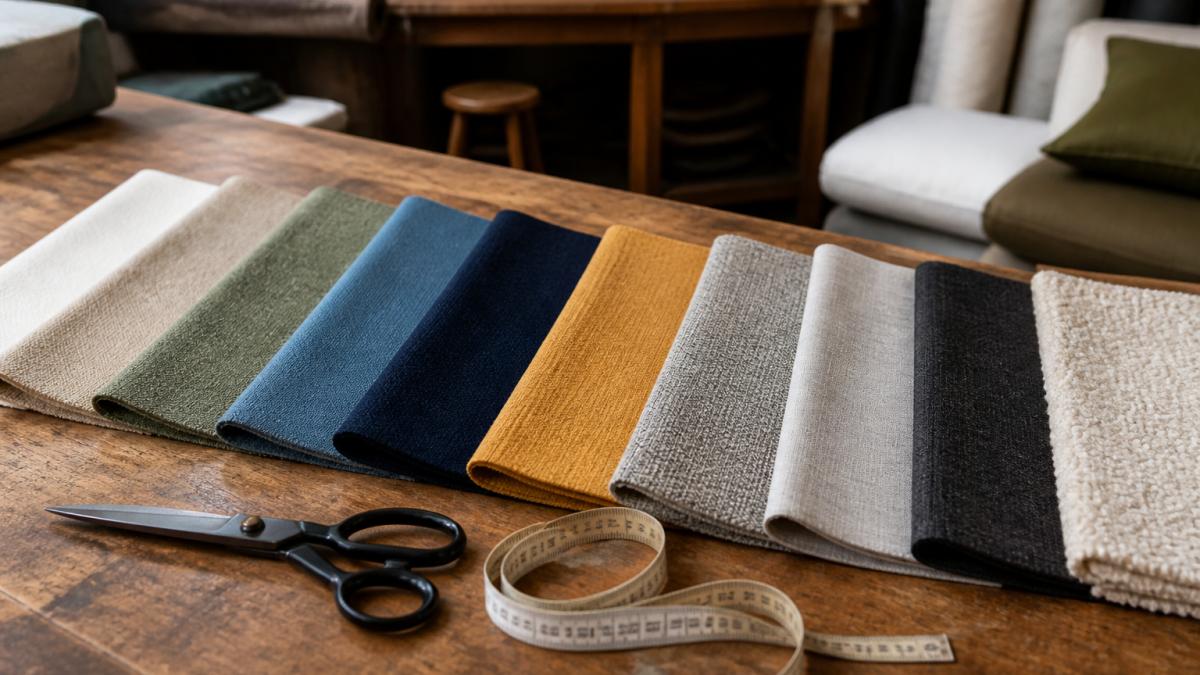
These ten fabrics cover most indoor cushion jobs, each with a place where it shines and a place where it struggles. The durability, comfort, and care notes below describe how each fabric generally behaves on an indoor cushion, which takes more direct contact, compression, and cover removal.
| Fabric | Durability | Comfort | Care | Best For |
|---|---|---|---|---|
| Cotton | Medium | High | Easy | Everyday sofa cushions |
| Linen | Medium-low | High | Moderate | Low-traffic, decorative cushions |
| Wool | High | Medium | Moderate | Cool-weather seating |
| Polyester | High | Medium | Easy | Busy family rooms |
| Microfiber | High | High | Easy | Homes with kids and pets |
| Chenille | Medium-high | High | Moderate | Soft, plush sofas |
| Velvet | Medium | High | Delicate | Accent cushions |
| Jacquard | Medium-high | Medium | Moderate | Patterned statement pieces |
| Bouclé | Medium | High | Delicate | Textured accent cushions |
| Leatherette | High | Low | Easy | Wipe-clean seating |
1. Cotton
Cotton is a natural fiber that breathes well and feels soft against skin, and it takes dye beautifully. On an indoor cushion, the practical limit is compression: cotton fibers pack down where a seat cushion creases, so a daily-use cushion can thin sooner than a synthetic. Best for living room cushions with moderate use.
2. Linen
Linen comes from flax and has a crisp, natural look, and it breathes better than almost any other fabric. But it creases easily and has weaker abrasion resistance; on a cushion, its real weakness is seam strength under repeated compression. Save it for decorative cushions and low-traffic seating, and consider a linen-cotton blend where you want the look with more resilience.
3. Wool
Wool is a durable natural fiber with natural stain resistance and warmth. The trade-offs are cost and care: it needs gentle cleaning and can feel scratchy.
4. Polyester
Polyester resists wrinkles, stains, and fading, is budget-friendly, and cleans with a damp cloth. It can feel warm and less soft than natural fibers. Where sun exposure is a concern, look for solution-dyed polyester, whose color is set in the fiber rather than applied to the surface.
5. Microfiber
Microfiber is a finely woven synthetic with a suede-like feel that repels spills and stands up to heavy use. It can show oil marks from hands and needs brushing to keep its nap.
6. Chenille
Chenille has a soft, fuzzy pile that feels plush and hides wear patterns, but the pile can flatten over time and snag on pet claws. It works best on seating that gets regular but gentle use, and a chenille with a tight backing wears better than a loose, lofty one.
7. Velvet
Velvet has a dense pile that gives a rich, deep look and holds color intensely, but it shows crush marks and water spots and needs careful cleaning. Its pile is directional, so it can look different depending on which way it is brushed. Use it on accent cushions rather than the seat everyone lands on.
8. Jacquard
Jacquard is woven with a raised pattern built into the fabric itself. On an indoor cushion, durability depends on the yarns used, not just the pattern.
9. Bouclé
Bouclé has a looped, nubby texture that adds warmth and style and feels soft on accent cushions, but the loops can snag, making it a poor match for homes with cats or rough use.
10. Leatherette
Leatherette is a synthetic leather alternative that wipes clean and resists spills and stains, suiting dining chairs and benches. It does not breathe and lacks the softness of fabric.
The Best Fabric for Indoor Cushions Depends on the Room
There is no single best fabric for indoor cushions. The right pick changes with the room. A sunroom needs fade resistance. A playroom needs stain resistance. A formal living room can handle a delicate fabric that a family den cannot.
Match the fabric to the household, not the other way around:
- Kids and pets: microfiber, polyester, or leatherette
- Sun-heavy rooms: solution-dyed polyester or acrylic blends
- Formal or low-traffic spaces: linen, velvet, or bouclé
Picking a Durable Fabric for Cushion Covers
Durable fabric for cushion covers comes down to three things: fiber content, weave tightness, and abrasion rating. A tight weave resists snags. A strong fiber resists thinning. A high rub count resists wear.
Fiber content matters most: synthetics like polyester, nylon, and microfiber generally outlast natural fibers under heavy use, and blends can give you the softness of cotton with the strength of polyester.
Construction matters too. Our guide on how to identify quality upholstery craftsmanship shows what to look for in the stitching, seams, and finish. If you want to go deeper on this, see our guide on the best fabric for high-traffic seating.
How to Read Rub Test Ratings Before You Buy
A rub test rating, or abrasion rating, measures how many rubs a fabric withstands before it shows wear. The higher the number, the more durable the fabric.
Here is how the ranges generally sort out:
- Under 15,000 rubs: decorative use only, light traffic
- 15,000 to 25,000 rubs: moderate use, bedrooms and formal rooms
- 25,000 to 30,000 rubs: heavy residential use
Check the rating before you commit, and match it to the traffic the cushion will see.
Finding an Easy-Clean Upholstery Fabric
Easy-clean upholstery fabric resists stains and wipes down quickly; polyester, microfiber, and leatherette are commonly chosen for this. But "easy-clean" is not a single property: it combines how the fabric repels liquid, how it releases soil, and how it tolerates the cleaning method you will actually use.
What makes a cushion fabric easy to clean
Three mechanisms matter on an indoor cushion:
- Liquid repellency: a tight weave or a finish that makes spills bead on the surface rather than soak in. Microfiber's fine fibers do this without a coating; many performance polyesters do it with a finish.
- Soil release: how readily a stain lifts when cleaned. Solution-dyed polyester and tightly woven synthetics release soil more easily than loose natural weaves.
- Cleaning tolerance: whether the fabric can take water, a solvent, or only a vacuum. Leatherette wipes clean but can crack if scrubbed with harsh products; velvet needs a solvent or a dry method and shows water spots.
Indoor-specific care cautions
Care labels on cushion covers usually use a code system: W for water-based cleaning, S for solvent-based, WS for either, and X for vacuum only. Check the code before you buy, because it tells you what you can realistically do at home.
- Blot, do not scrub. Scrubbing pushes stains deeper into the weave and can fuzz the surface of microfiber and chenille.
- Test on a hidden spot. Any cleaner, even a mild one, can change the color or hand of a fabric.
- Watch for fading. Cushions near windows fade from UV exposure; solution-dyed polyester and acrylic blends resist this better than dyed natural fibers.
- Expect pilling on some fabrics. Wool, cotton blends, and chenille can pill where a cushion rubs against a frame or another cushion. A fabric shaver removes pills, but frequent pilling is a sign the fabric is not suited to the use.
Matching the fabric to the household
Easy-clean advice only helps if it fits the household. Kids and pets: microfiber and tight-weave polyester are the most forgiving. Sun-heavy rooms: solution-dyed polyester or an acrylic blend resists fading better than a dyed natural fiber. Formal or low-traffic spaces: linen, velvet, or bouclé are fine if you accept the care. Everyday comfort: cotton or chenille work well when the weave is tight and the cover is removable.
Cotton vs Polyester Upholstery Fabric: Which Wins
Cotton tends to win on comfort and feel. Polyester tends to win on durability and easy care.
Cotton breathes, feels soft, and takes color well, suiting living room cushions with moderate use and owners who do not mind a bit of care.
For a family sofa, polyester or a cotton-poly blend is a common choice.
Request a Quote for Custom Indoor Cushions
Choosing the fabric is only part of the job; fit, fill, and finish matter too. Before you order, work out how much fabric you need with our guide on how to calculate upholstery fabric yardage so you do not run short halfway through.
When you are ready, you can book custom furniture upholstery service with Creative Custom Upholstery, a family-owned and operated business with more than 45 years of experience.
Frequently Asked Questions
What is the best fabric for indoor cushions?
There is no single winner, because the right upholstery fabric depends on the room. For a sofa used every evening, a tight-weave polyester blend or microfiber holds up well and wipes clean. For a formal living room that sees little traffic, linen or velvet gives a richer look. Families with pets usually do better with chenille or a performance blend than with silk or bouclé. Match the fiber and weave to how often the cushion is sat on, not just to the color you like.
Which upholstery fabric is most durable for cushions?
Wool, tight-weave polyester blends and microfiber tend to outlast loose weaves and delicate fibers. Durability comes from two things: fiber strength and weave density. A tight weave resists pilling and snags, while a loose weave wears through faster no matter how strong the yarn is. Ask for the rub test result before you commit. A rating above 15,000 double rubs suits most household seating, and higher numbers help on cushions that get daily use.
Is cotton or polyester better for cushion covers?
Cotton breathes well, feels soft and takes dye beautifully, but it stains more easily and can stretch over time. Polyester resists stains, holds its shape and costs less, though it feels less breathable. A cotton-polyester blend often gives the best of both: the softness of cotton with the strength and easy care of polyester. For a heavily used family couch, lean toward polyester or a blend. For a low-traffic accent chair, cotton works well.
What fabric is easiest to clean for indoor cushions?
Microfiber, leatherette and tight-weave polyester blends are the simplest to keep clean. They resist spills, and most marks wipe off with a damp cloth and mild soap. Velvet and bouclé look luxurious but trap dust and need careful brushing. Linen wrinkles and can shrink, so it needs gentle handling. If the cushion sits in a busy room, choose a fabric you can spot clean without worrying about water rings or pile flattening.
Picking fabric for indoor cushions is a balance of comfort, durability, and care, and it is easy to get wrong when you shop on looks alone. Creative Custom Upholstery brings over 45 years of experience to every cushion, with custom fabrication, quality workmanship, and a family-run approach that treats your furniture like it matters. Get started with Creative Custom Upholstery and request a quote for cushions built to fit your space and last.