 Listicle
Best Fabric for High Traffic Seating: A Practical Guide
Last Updated: October 29, 2026
Quick Summary
Tightly woven, solution-dyed synthetic fabrics with a high abrasion rating and a stain barrier are generally the strongest choices for high traffic seating. Polyester is the best all-around value, while nylon is the toughest against abrasion. Always confirm whether a double rub rating came from Wyzenbeek or Martindale before comparing fabrics.
- You cannot compare a Wyzenbeek double rub number to a Martindale number; confirm the test method first.
- For busy households, 50,000+ Wyzenbeek double rubs is commercial grade and the safest starting point.
- Olefin resists stains inherently because the fiber repels moisture, but keep it away from high heat.
- Avoid lightweight viscose and rayon in busy rooms; choose a performance velvet or nylon blend instead.
- Vacuum weekly with a soft brush attachment and rotate removable cushions monthly to spread wear evenly.
Table of Contents
- What Separates High Traffic Seating Fabric From Everyday Upholstery
- How to Read a Double Rub Count for Upholstery
- Synthetic Fibers Built for Heavy Use: Polyester, Nylon, Olefin and Acrylic
- Natural Fibers and Blends: Where Cotton Canvas and Linen Fit In
- Stain-Resistant Fabric Options for Spills, Pets and Busy Households
- Upholstery Fabric Maintenance Tips That Add Years to a Seat
- Fabrics to Avoid in High Traffic Seating and What to Choose Instead
- Choosing Your Fabric With a Professional Upholstery Assessment
- Frequently Asked Questions
What Separates High Traffic Seating Fabric From Everyday Upholstery
Tightly woven, solution-dyed synthetic fabrics with a high abrasion rating and a stain barrier are generally the strongest choices for high traffic seating. That combination separates a sofa that holds up over years of daily use from one that looks tired early.
Thread count tells you almost nothing. A dense weave and the right fiber matter far more than a fancy label.
High traffic seating fabric is upholstery built to resist abrasion, staining, fading and structural fatigue at once. Miss one and the seat fails early.
The Four Qualities That Decide Longevity
Four measurable qualities determine whether a fabric holds up under daily use:
- Abrasion resistance, how many rubs the weave survives before the yarn wears through
- Tensile strength, how much pulling force the fibers take before they tear or stretch out
- Colorfastness, how well the dye resists sunlight, cleaning agents and friction
- Weave density, how tightly the yarns interlock, which controls pilling and seam slippage
A fabric can score well on one and fail on another. A loose, soft chenille might feel wonderful and still pill within a year in a busy living room, which is why we assess all four together.
How to Read a Double Rub Count for Upholstery
A double rub count for upholstery measures how many back-and-forth abrasion cycles a fabric withstands before showing visible wear. It is the most quoted durability number in the industry and the most misunderstood, because the two dominant test methods are not interchangeable.
Wyzenbeek vs. Martindale: Two Tests, Two Scales
The Wyzenbeek test is the North American standard. A mechanical arm rubs fabric back and forth against an abrasive medium under controlled tension, and one back-and-forth motion equals one double rub.
The Martindale test is the European standard, increasingly cited on imported fabrics. A circular motion traces a Lissajous figure against the fabric under specified pressure. Results are reported on a much higher scale, a fabric that scores 20,000 Wyzenbeek might score 40,000 or more on Martindale.
What the Numbers Actually Mean in a Busy Room
Use these ranges as a practical filter, and confirm the test method before you rely on them:
| Double Rub Range (Wyzenbeek) | Duty Rating | Best For |
|---|---|---|
| Under 15,000 | Light duty | Occasional chairs, bedrooms |
| 15,000-30,000 | Residential | Low-traffic living rooms |
| 30,000-50,000 | Heavy residential | Family rooms, dining chairs |
| 50,000+ | Commercial grade | Restaurants, waiting areas, busy households |
For a household with kids, pets and daily use, a higher rub rating is a safer starting point than a light-duty fabric. Confirm the test method and the rating with your supplier before you choose.
The Caveats the Number Does Not Capture
A high double rub count on a loosely woven fabric still pills and snags. The rating assumes the weave is sound and does not measure:
- Seam slippage, yarns pulling apart at stitched seams, which is often the first failure point on a sofa
- Pilling, fiber balls forming on the surface, common in low-twist spun yarns regardless of abrasion score
- UV fading, a fabric can pass abrasion with flying colors and still bleach out in a sun-facing room
- Stain behavior, abrasion resistance says nothing about how the fabric handles a spilled glass of red wine
A double rub count is a starting filter, not a final answer. Pair it with weave density, fiber type and finish before you commit. If you are buying fabric for a specific piece, work out your yardage first: how to calculate upholstery fabric yardage.
Synthetic Fibers Built for Heavy Use: Polyester, Nylon, Olefin and Acrylic
Synthetic fibers dominate high traffic seating because they are engineered, not grown.
Polyester is the workhorse: high tensile strength, resists shrinking and stretching, and takes color well across a huge range of textures.
Nylon is the toughest against abrasion and holds its shape thanks to high elasticity.
Olefin, or polypropylene, is inherently stain-resistant because the fiber itself repels moisture.
Acrylic mimics wool's soft hand while resisting sunlight and fading better than natural wool does. It suits comfort-focused spaces that still see steady use.
For sun-exposed rooms, solution-dyed acrylic is the standout. Readers weighing durable synthetics for outdoor or sun-heavy seating will find more detail in our guide to choosing outdoor cushion fabric.
Natural Fibers and Blends: Where Cotton Canvas and Linen Fit In
Natural fibers can work in high traffic seating, provided you pick the right weave and treat it properly. The mistake is assuming "natural" means "delicate."
Cotton canvas and heavyweight duck cloth are the strongest natural options.
Linen is where we get cautious.
Velvet deserves a mention because buyers either love it or avoid it. Traditional cotton velvet is not a high traffic fabric.
Natural fibers generally suit high traffic seating only when the weave is dense and the fabric carries a stain treatment.
Stain-Resistant Fabric Options for Spills, Pets and Busy Households
Stain-resistant fabric options fall into three groups: fibers that repel stains inherently, fabrics with a built-in barrier, and fabrics treated with an applied finish. Knowing which you are buying prevents surprises at cleaning time.
Inherent resistance comes from the fiber itself. Olefin and solution-dyed synthetics resist stains without any added treatment, and the protection never washes or wears away.
Built-in barriers are engineered into the fabric during manufacture.
Applied finishes are sprayed or bonded onto the fabric. Alta performance finishes provide a total liquid barrier and repel oil-based stains while preserving the fabric's original texture.
For pet households, prioritize cleanability over stain resistance alone.
Upholstery Fabric Maintenance Tips That Add Years to a Seat
Upholstery fabric maintenance tips matter more than most buyers expect, and the reason is economic. A performance fabric that costs more upfront but lasts twelve years costs less per year than a cheaper fabric replaced every four.
The Cost-per-Year Math Behind Maintenance
Consider two paths for a busy family room sofa. A mid-grade fabric at a lower upfront cost may need replacing or reupholstering in four to five years under daily use. A heavy-duty performance fabric at a higher upfront cost, maintained properly, can run ten to twelve years.
The maintenance routine protects that math. Skip the vacuuming and cushion rotation, and even a 50,000 double rub fabric will show wear at the armrests years ahead of schedule. Follow it, and a 30,000 fabric can outlast a neglected 50,000 one.
Start With the Cleaning Code
Every fabric carries a cleaning code from the manufacturer. Using the wrong method can void a performance finish or set a stain permanently:
- W, water-based cleaners are safe
- S, solvent-based cleaners only; water can leave rings that never come out
- WS, either water or solvent is acceptable
- X, vacuum only; no liquid cleaners
When in doubt, test any cleaner on a hidden area first. A small patch under the seat cushion will tell you more than any label.
The Routine That Protects the Investment
- Vacuum weekly with a soft brush attachment. Grit is abrasive; lifting it before it works into the weave is the cheapest durability upgrade there is.
- Rotate and flip removable cushions monthly so wear distributes evenly rather than concentrating at the front edge.
- Blot spills immediately, working from the outside in. Never rub, rubbing drives the stain into the fiber and abrades the surface.
- Keep seating out of direct sun or use blinds during peak hours. UV fading is cumulative and irreversible.
- Address pilling with a fabric shaver rather than pulling at the fibers, which loosens the weave.
- Deep-clean on the manufacturer's schedule, not on impulse. Over-cleaning wears a finish as surely as under-cleaning.
When Maintenance Is Not Enough
Some wear is structural, not cosmetic. If seams are pulling, the cushion fill has collapsed, or the fabric has worn through at a flex point, cleaning will not fix it. That is the signal to assess the piece rather than the surface, and often when reupholstering with a heavier-duty fabric pays for itself against replacing the furniture. To judge whether a piece is worth saving, our guide on how to identify quality upholstery craftsmanship walks through what to look for in seams, pattern matching and cushion construction.
Fabrics to Avoid in High Traffic Seating and What to Choose Instead
Some fabrics simply do not belong in a busy room, and knowing them saves an expensive reupholstery job.
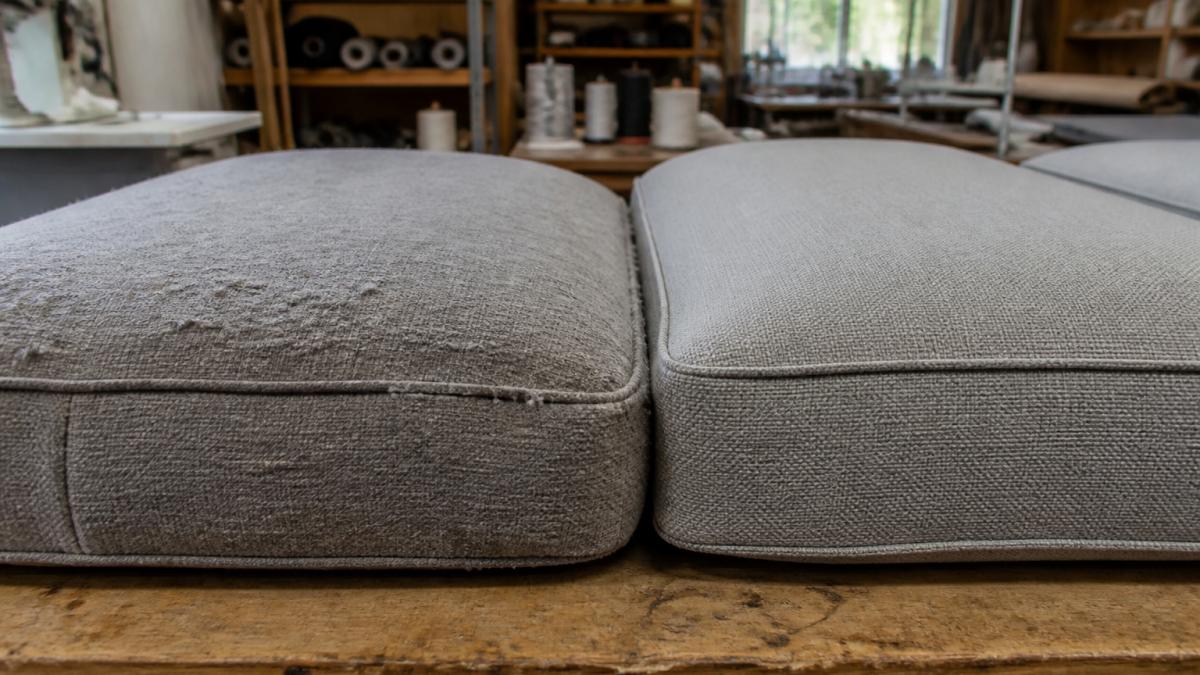
Avoid loose, low-density chenille. It pills, snags and flattens at armrests.
Avoid untreated linen in family rooms. It absorbs and wrinkles.
Avoid white or pale piece-dyed fabrics in sun-exposed rooms. They fade unevenly.
Avoid heavy looped weaves in pet households. Claws catch in the loops and pull threads.
Avoid stretchy knit-backed fabrics on fixed seat cushions. They sag at the front edge.
Choosing Your Fabric With a Professional Upholstery Assessment
A professional upholstery assessment closes the gap between a fabric's spec sheet and how it will actually perform on your piece.
A useful fabric assessment considers the frame and fill condition, the seat's exposure to sun and traffic, the cleaning routine the household will realistically follow, and the look the owner wants.
When you are ready to move from fabric samples to finished seating, you can book custom furniture upholstery service and we will match the fabric to the piece and the way you actually live with it.
The hardest part of this decision is not finding a durable fabric.
Frequently Asked Questions
What is the most durable fabric for high traffic sofas?
Solution-dyed synthetic fibers generally hold up best. Nylon and high-grade polyester resist abrasion and keep their shape, while solution-dyed acrylic resists fading. Fiber content, weave density and backing matter as much as the headline double rub number, so check all three before deciding.
How do I maintain high-traffic upholstery to extend its life?
Vacuum regularly with a soft brush attachment to lift grit that acts like sandpaper on fibers. Blot spills immediately rather than rubbing. Rotate and flip loose cushions periodically so wear spreads evenly. Keep seating out of direct sun where possible, and follow the cleaning code on the fabric label.
Is synthetic or natural fiber better for busy households?
Synthetics win on durability and cleanability. Polyester, nylon and olefin resist stains, moisture and abrasion far better than untreated cotton or linen. Natural fibers offer breathability and a softer hand, but cotton canvas and linen absorb spills and need a performance finish to compete. A blend often gives the best balance: natural feel with synthetic strength. For a family room with kids and pets, lean synthetic.
What is the double rub count and why does it matter?
A double rub is one back-and-forth pass of a mechanical arm across fabric under standard testing. The count tells you how much abrasion the fabric survived before showing wear. Rub ratings vary by use, and higher-traffic settings generally call for higher ratings. It is a useful filter, but weave and fiber quality still decide real-world performance.