 Listicle
Is Antique Furniture Worth Reupholstering? A Practical Guide
Last Updated: November 4, 2026
Quick Summary
Antique furniture is usually worth reupholstering when the frame is solid hardwood with quality joinery, since a good frame can outlast three or four fabric lives. Compare the restoration quote against a new piece of comparable construction, not a mass-market replacement. If the frame is failing or the piece is highly collectible, get an appraisal first.
- Rack the frame, press every joint, inspect the legs, and smell the wood before committing.
- A solid hardwood frame can outlast three or four fabric lives; particleboard cannot survive one.
- Add labor, fabric and foam, and a frame repair allowance to build your project budget.
- Get a written appraisal before touching museum-grade or highly collectible pieces.
- Ask upholsterers how they handle hidden damage and calculate fabric yardage.
Table of Contents
- The Real Question: Is the Frame Worth Saving?
- Structural Condition: What to Check Before You Commit
- The Cost of Professional Furniture Reupholstery vs. Replacement
- Antique Sofa Upholstery Fabric Ideas and Material Choices
- Sentimental Value, Style, and Fit for Your Home
- Resale Value and Appraisal: Does Reupholstering Help or Hurt?
- Questions to Ask an Upholsterer Before You Hand Over the Piece
- Request a Quote for Your Antique Restoration
- Frequently Asked Questions
The Real Question: Is the Frame Worth Saving?
Ask whether antique furniture is worth reupholstering and most people start with fabric. That is backwards. The frame decides everything.
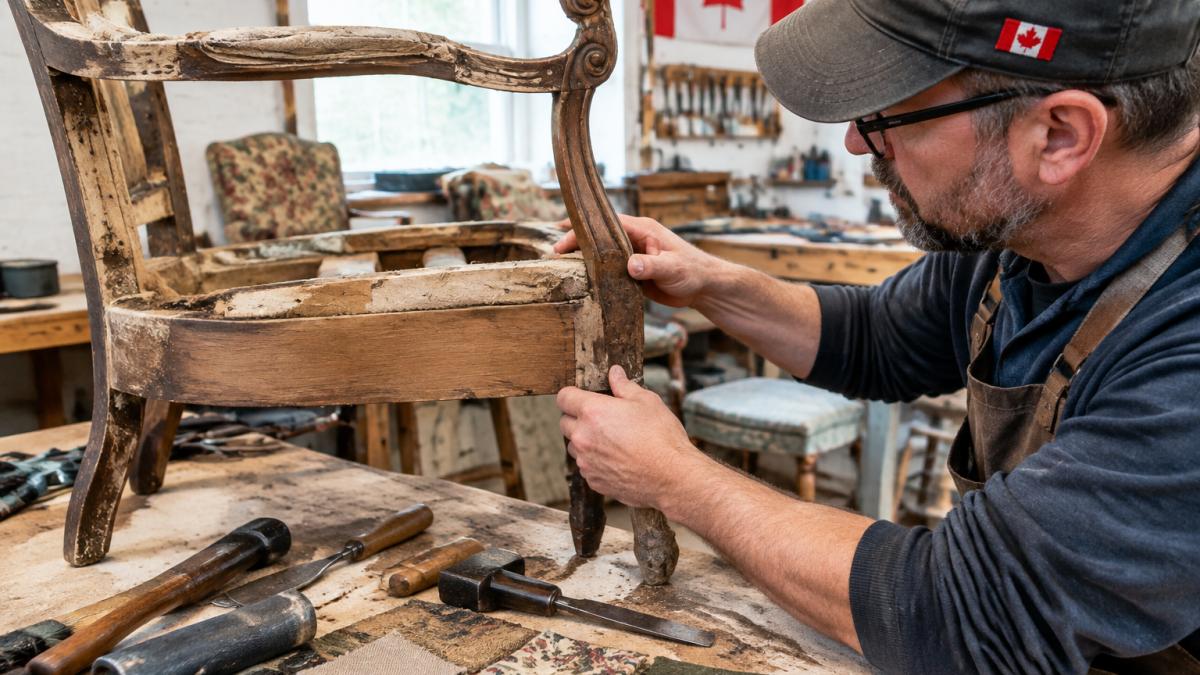
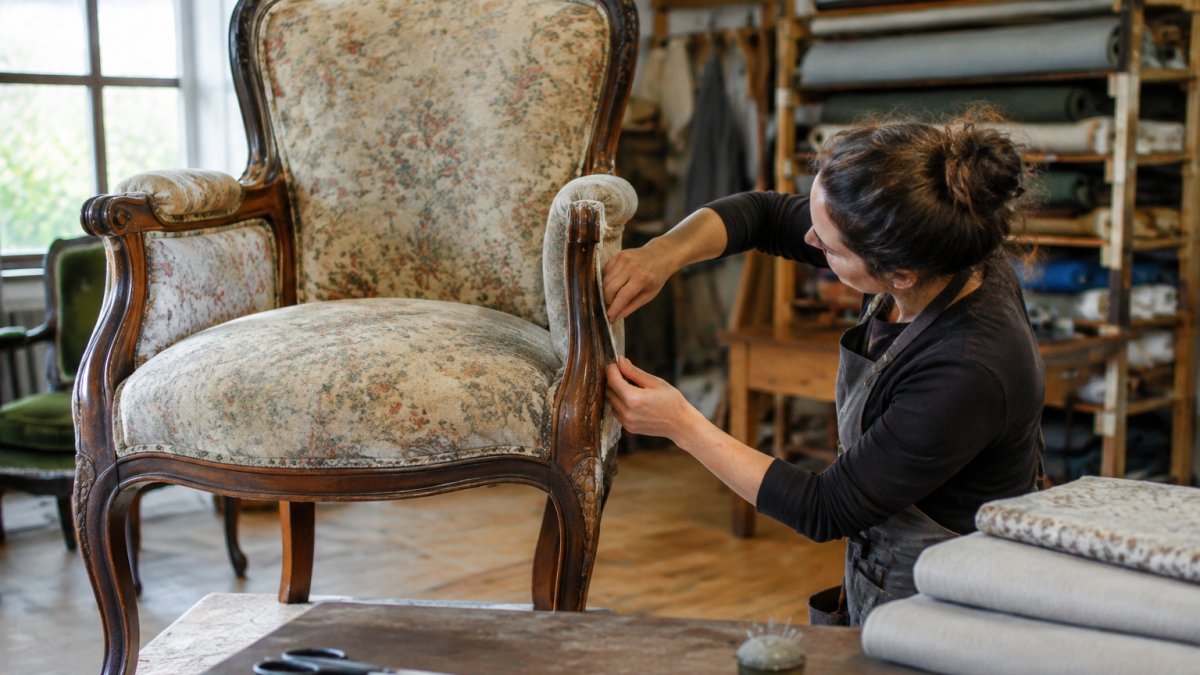
Reupholstering is the process of replacing a piece's fabric, padding, and support materials while keeping its original frame.
Below, we walk through the checks that separate a worthwhile restoration from a money pit, plus the cost logic, fabric choices, and resale questions to settle first.
How to Identify Quality Antique Furniture Frames
Start with how to identify quality antique furniture frames: look for kiln-dried hardwood, corner blocks, doweled or mortise-and-tenon joints, and hand-set springs. These four signals tell you more about long-term value than any label.
- Wood type: Oak, mahogany, walnut, and maple hold screws and staples for decades. Softwood and particleboard crumble on the second reupholstery.
- Joinery: Dovetail, mortise-and-tenon, and doweled joints signal hand construction. Staples and glue alone signal mass production.
- Corner blocks: Solid triangular blocks screwed into the corners brace the frame. Their presence usually means the maker expected the piece to last.
Structural Condition: What to Check Before You Commit
Run a structural check before you pay anyone: rack the frame, press every joint, inspect the legs, and smell the wood. If the frame wobbles, creaks, or shows fresh sawdust, stop and get a professional opinion first.
Here is a common inspection sequence:
- Rack test. Hold the piece by opposite corners and apply gentle twisting pressure. A frame that flexes is loose somewhere.
- Joint check. Press each corner and listen for creaks. Loose joints are fixable, but they add to labor.
- Leg and foot inspection. Wobbly legs often mean split wood at the base, which is repairable but costly.
- Wood condition. Look for rot, active woodworm, and water staining. Soft, crumbly wood cannot hold new upholstery.
- Smell test. A musty odor usually points to moisture damage inside the padding.
Springs, Cushions, and Wear and Tear
Worn springs and flat cushions are normal, not disqualifying. Sagging seats usually mean tired webbing or broken ties, both of which a professional can rebuild. Torn fabric is cosmetic.
Watch out: hidden damage under old fabric is the most common surprise in restoration. A piece that looks sound on the surface can reveal a spliced leg or a repaired rail once stripped.
The Cost of Professional Furniture Reupholstery vs. Replacement
The cost of professional furniture reupholstery depends on labor hours, fabric yardage, and frame repairs, so pricing depends on the specific piece and is best confirmed with a written quote from Creative Custom Upholstery.
A common mistake is comparing a hand-built antique against a mass-market replacement on price alone. They are not the same product.
If you are weighing a specific antique chair, our guide to antique chair upholstery cost breaks down what to expect. For a broader comparison across furniture types, see our upholstery repair vs furniture replacement cost guide.
A Practical Cost Calculator by Furniture Type
The ranges below are typical planning figures in Canadian dollars, not quotes; your fabric choice and frame condition can move a job well outside them.
| Furniture type | Typical labor range (CAD) | Fabric and foam (CAD) | Frame repair allowance (CAD) |
|---|---|---|---|
| Dining chair seat | $150-$350 | $40-$120 | $0-$150 |
| Occasional or accent chair | $450-$900 | $150-$400 | $100-$350 |
| Wingback or club chair | $800-$1,600 | $250-$600 | $150-$500 |
| Loveseat | $1,100-$2,000 | $350-$800 | $200-$600 |
| Three-seat sofa | $1,600-$3,200 | $500-$1,200 | $300-$900 |
| Sectional | $2,500-$5,000+ | $800-$2,000 | $400-$1,200 |
When comparing, weigh the restoration quote against the price of a new piece built to the same standard as your antique, rather than a mass-market sofa.
Watch out: fabric yardage is the line item most likely to blow a budget.
When the Numbers Say Replace
There are clear cases where the math favors replacement even for a piece you love. If the frame needs major reconstruction, if the spring system must be fully rebuilt, or if the piece is a common mid-century import with a particleboard core, the restoration quote can exceed the cost of a well-built new equivalent.
If the estimate is well below that threshold and the frame is solid, restoration is the better financial and environmental choice.
Antique Sofa Upholstery Fabric Ideas and Material Choices
Fabric choice drives both the look and the lifespan of a restored piece. For antique sofa upholstery fabric ideas, match the material to how the piece will actually be used, not just how it photographs.
- Wool and wool blends: Durable, period-appropriate, and resistant to pilling. A strong default for daily-use seating.
- Linen and linen blends: Beautiful texture, but prone to wrinkling and staining. Better for low-traffic rooms.
- Cotton velvet: Rich look with moderate durability. Good for formal parlors and bedrooms.
Foam density matters as much as the cover. A high-resilience foam holds its shape far longer than cheap polyurethane, and it is worth specifying. For a deeper walkthrough, read our guide on how to choose upholstery fabric for indoor cushions.
Sentimental Value, Style, and Fit for Your Home
Sentimental value is a legitimate reason to restore a piece, even when the math does not favor it. A sofa that has been in the family for decades carries meaning no showroom can replicate.
That emotional case still deserves a clear-eyed check. Ask yourself three questions:
- Will the restored piece actually get used in your home?
- Does its scale suit the room, or will it crowd the space?
- Are you restoring it to preserve it, or to flip it?
If the answer is preservation, our guide to restoring vintage family heirloom furniture covers the deeper process. If the piece is a thrifted find with no history, treat the decision as purely financial.
Resale Value and Appraisal: Does Reupholstering Help or Hurt?
Reupholstering can protect resale value or destroy it, depending on the piece. For collectible antiques, original fabric and patina often carry more value than fresh upholstery.
A sound rule of thumb: if the piece is museum-grade or highly collectible, get an appraisal before touching it. Replacing original materials can wipe out provenance. For everyday antiques, professional rework usually adds appeal.
- Collectible pieces: Preserve original fabric where possible; consult an appraiser first.
- Mid-tier antiques: Restoration generally supports resale.
- Thrifted or common pieces: Value is mostly functional, so restore for use.
How Appraisal and Provenance Affect the Decision
An appraisal is a written opinion of a piece's value, prepared by a qualified appraiser who examines construction, condition, age, maker's marks, and provenance. Provenance is the documented history of ownership, receipts, auction records, family papers, maker labels, and even photographs.
The appraisal question generally splits into three tiers:
- Museum-grade or rare pieces: Get a written appraisal before any work. If the piece is a documented example of a known maker or period, original upholstery is part of its historical record. Replacing it can reduce value even if the new work is beautiful.
- Mid-tier antiques with some collector interest: A professional restoration generally supports resale, but keep the original fabric and labels if they are intact and remove them carefully so a future buyer can see them. Document the work with before-and-after photos.
- Common or thrifted pieces: Resale value is mostly functional. Restore for use, and do not over-invest relative to what similar restored pieces actually sell for.
Watch out: a fresh, professionally upholstered piece can sell for less than a worn original if the buyer is a collector.
When to Preserve Original Materials
Original fabric, horsehair padding, hand-tied springs, and maker labels are the physical record of how a piece was made. If the piece is a candidate for collector interest, preserve them.
The resale question ultimately comes down to who the likely buyer is. A collector pays for originality and provenance. A homeowner pays for a sound frame and fresh, durable upholstery.
Questions to Ask an Upholsterer Before You Hand Over the Piece
Ask these questions before you commit: what is your experience with antique frames, how do you handle hidden damage, and what is your written quote policy? A good upholsterer welcomes them.
- How many years have you worked with antique and vintage furniture?
- Will you inspect and report on the frame before quoting final labor?
- What happens if you find hidden damage after stripping?
- How do you calculate fabric yardage, and who absorbs overages?
- Can I see recent examples of similar restoration work?
- What is your turnaround time, and is it in writing?
- What warranty do you offer on labor and materials?
A common mistake is choosing the lowest quote without asking these questions. Compare quotes on scope, not just the bottom line. Competition Bureau guidance on getting and comparing quotes offers useful consumer protection context for comparing service estimates.
Request a Quote for Your Antique Restoration
The decision comes down to the frame, the cost comparison, and what the piece means to you. If the frame is solid hardwood and the piece still fits your home, restoration usually wins on both value and sustainability.
At Creative Custom Upholstery, we bring over 45 years of family-owned experience to our upholstery work, including furniture, marine, and automotive seating. When you are ready, book a custom furniture upholstery service and request a quote from Creative Custom Upholstery to discuss your piece.
Frequently Asked Questions
How can I tell if my antique furniture has a solid frame?
Lift one corner of the piece and see if the opposite corner lifts at the same time; a solid frame stays rigid. Check the joints at the corners and under the seat for wobble, cracks, or gaps. Look for kiln-dried hardwood, dovetail or mortise-and-tenon joinery, and corner blocks that are screwed or glued firmly in place. If the frame flexes or you hear creaking when you shift the weight, have an upholsterer inspect it before you spend money on fabric and labor.
What is the average cost to reupholster an antique sofa in Canada?
The cost of professional furniture reupholstery in Canada depends on the size of the piece, the condition of the frame and springs, the fabric you choose, and the labor involved. A small chair costs far less than a full sofa, and a piece that needs new springs or frame repair costs more than one that only needs new fabric. Because pricing is project-based, ask for an itemized quote that separates labor, materials, and any structural repair so you can compare fairly.
Does reupholstering antique furniture decrease its value?
It can, depending on the piece. For museum-quality or highly collectible antiques, replacing original fabric, horsehair stuffing, or hand-tied springs can reduce resale value, and collectors often prefer original patina. For most family heirlooms and vintage furniture, professional reupholstery protects the frame, makes the piece usable again, and can raise its practical value. Have a piece appraised first if you suspect it is rare, signed, or from a notable maker before any work begins.
What should I look for when choosing upholstery fabric for antiques?
Match the fabric weight and texture to the period and the frame's strength. Wool, linen, mohair, and tightly woven cotton blends suit traditional pieces and wear well; heavy textures and bold modern prints can overwhelm a delicate frame. Check the rub count for daily-use pieces, and ask for a sample to view in your own light. Order enough yardage in one dye lot, with extra for pattern matching, so you avoid running short mid-project.
How do I know if the springs in my antique chair need replacing?
Press down firmly on the seat. If you feel the frame through the cushion, hear a clunk, or the seat sags to one side, the springs or webbing are failing. Sit for a minute and note whether the seat stays level and quiet. Hand-tied coil springs can often be retied or replaced individually, while sagging webbing is usually re-stretched or replaced. An upholsterer can confirm whether the springs are repairable or need a full rebuild once the old fabric is removed.
Restoring an antique is a decision about what you want to keep. If you have a piece with a solid frame and a story worth preserving, our team can tell you honestly whether it is worth the investment. Get started with Creative Custom Upholstery and give your antique furniture a second life with craftsmanship built to last.