 How-to
Is Restaurant Booth Upholstery Repair Worth the Cost?
Last Updated: November 6, 2026
Quick Summary
Booth upholstery repair is worth the cost when the frame is sound and the damage is limited to the cover or foam. Replacement wins when the structure is failing, the booth no longer fits the room, or repair costs approach the price of new seating.
- Test the frame first: if it moves, creaks, or flexes, stop before repairing.
- One or two affected panels on a sound booth is a repair candidate.
- If the seat bottoms out, the foam has collapsed and adds cost to repairs.
- Cracked vinyl that spreads means reupholstery is the honest fix, not patching.
- Ask each upholsterer to price the same scope for a fair comparison.
Table of Contents
- How to Inspect Commercial Restaurant Booth Upholstery Before You Repair
- Repair vs. Replacement: When Booth Upholstery Repair Makes Sense
- Restaurant Booth Reupholstery: What the Process Involves
- Restaurant Booth Vinyl Repair: Fixing Cracks, Tears, and Worn Surfaces
- Restaurant Booth Foam Replacement: Restoring Comfort and Support
- Restaurant Booth Upholstery Cost: What Drives the Price
- Request a Quote for Your Booth Upholstery Repair
- Frequently Asked Questions
How to Inspect Commercial Restaurant Booth Upholstery Before You Repair
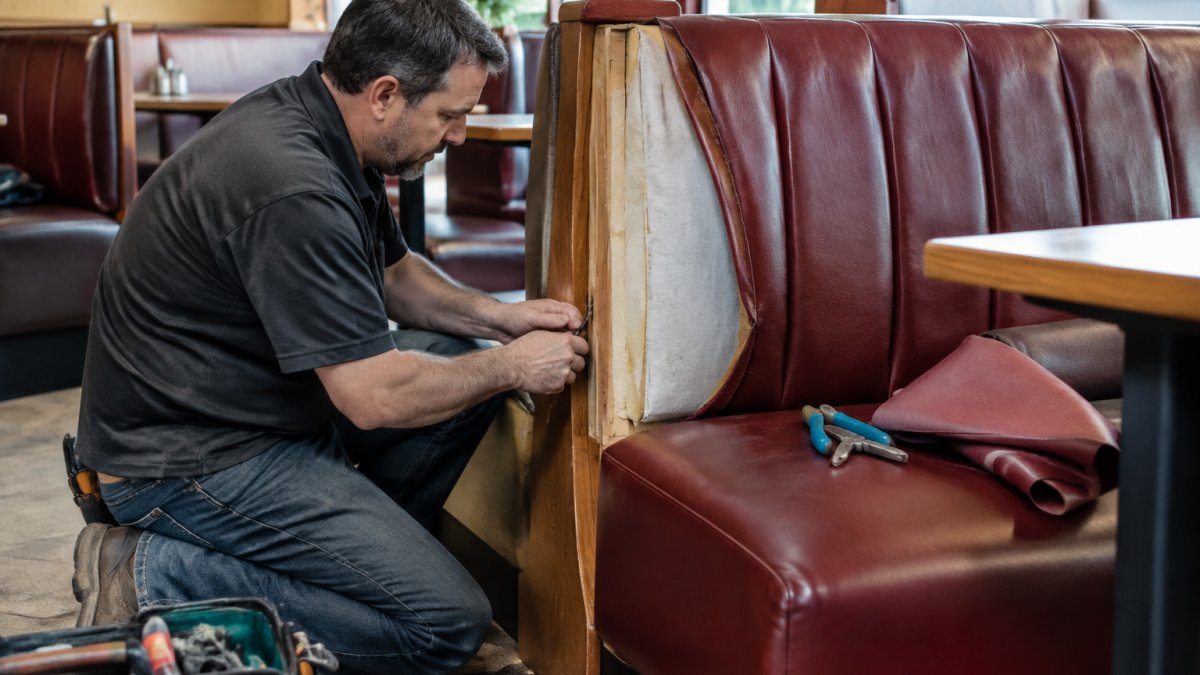
Commercial restaurant booth upholstery repair starts with an honest inspection, not a quote. Before you spend a dollar, you need to know whether the damage sits in the cover only or has reached the foam and frame underneath.
Here is the inspection sequence we would run on any booth seating:
- Press the seat with an open palm. A soft, bottoming-out feel means the foam has collapsed.
- Lift the seat edge and look at the seam. Separated seams point to thread failure, not fabric failure.
- Run a fingernail across cracked vinyl. If the crack spreads, the vinyl has lost its plasticizers and will keep splitting.
- Check the frame at the base. Rock the booth gently. Movement means loose fasteners or a failing frame.
- Look under the table and along the wall side. Hidden tears and moisture damage are common in fixed seating.
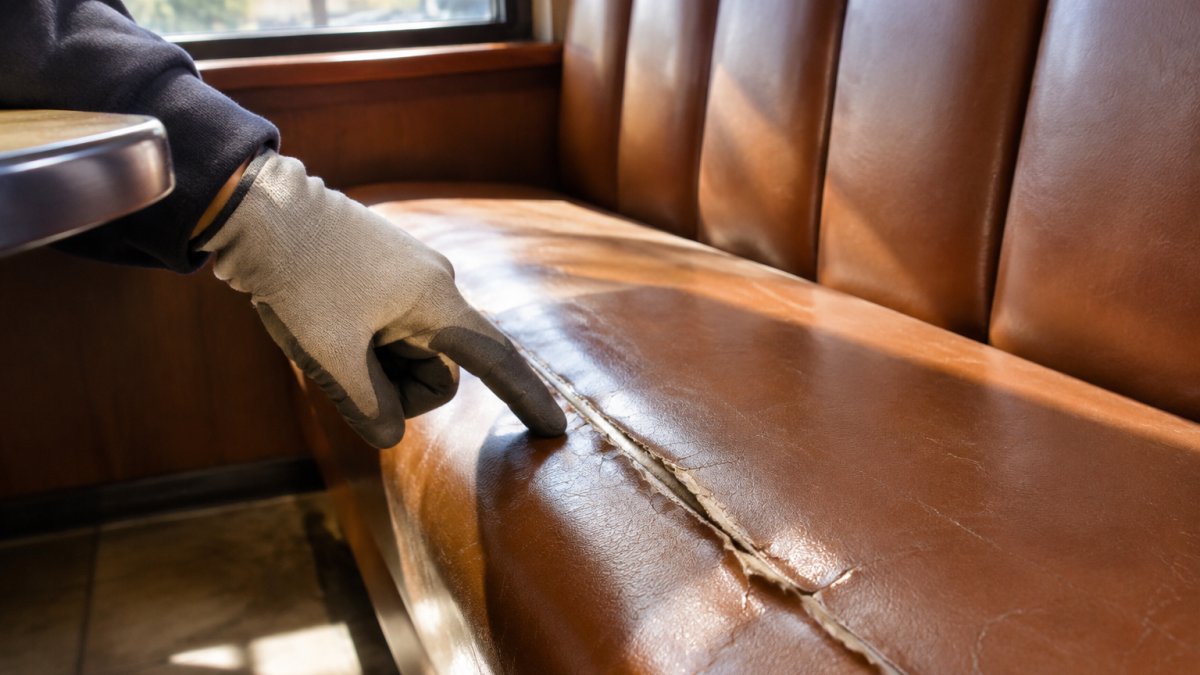
What most guides miss is that the cover rarely fails alone. Worn upholstery usually signals a foam problem underneath. If you judge craftsmanship honestly, you will know whether the existing build is worth saving. Our guide on how to identify quality upholstery craftsmanship walks through the stitching, frame and material checks that separate a booth worth repairing from one that is not.
Repair vs. Replacement: When Booth Upholstery Repair Makes Sense
Booth upholstery repair makes sense when the frame is sound and the damage is limited to the cover or foam. Replacement wins when the structure is failing, the booth no longer fits the room, or repair costs approach the price of new seating. The gap most guides leave is the middle ground: how to decide, case by case, which of those situations you are actually in.
Work through the decision in this order, because each step can end the conversation early:
- Test the frame first. Rock the booth gently at the base and press down on the seat deck. If the frame moves, creaks, or flexes independently of the wall, stop here. Frame repair or replacement changes the economics, and reupholstery on a failing frame is money thrown away.
- Map the damage by panel. Count how many seat and back panels are affected and whether the damage is surface-level (scuffs, small cracks, seam splits) or structural (torn through to foam, collapsed cushion, separated seams along a fold line). One or two affected panels on an otherwise sound booth is a repair candidate. Damage across most panels points to reupholstery.
- Check the foam. Press an open palm into the seat. If it bottoms out or you feel the deck through the cushion, the foam has collapsed. Foam replacement is routine during reupholstery but adds cost and time to a spot repair, so factor it in before you decide.
- Assess the rest of the unit. Look at the back panels, the wall-side seams, and the base. If the booth is already at the end of its service life, repairing one panel just moves the failure to the next one.
- Compare repair cost to replacement cost, not to zero. A localized vinyl repair is cheap, but it buys months, not years, on a high-traffic booth. Full reupholstery restores the original structure for a fraction of the disruption of demolition and a new build, and it keeps your floor plan and lead time intact.
A common mistake is replacing seating because the vinyl looks tired. In practice, most booths that look worn are reupholstery candidates, not replacement candidates, because the frame and layout are still sound. The reverse mistake is patching a booth that has already failed structurally, which produces a repair that looks acceptable for a few months and then fails again at the same seam.
Watch out: if a quote recommends replacement without inspecting the frame, ask what was actually checked.
For a cost comparison framework, see our guide to upholstery repair versus furniture replacement cost.
Restaurant Booth Reupholstery: What the Process Involves
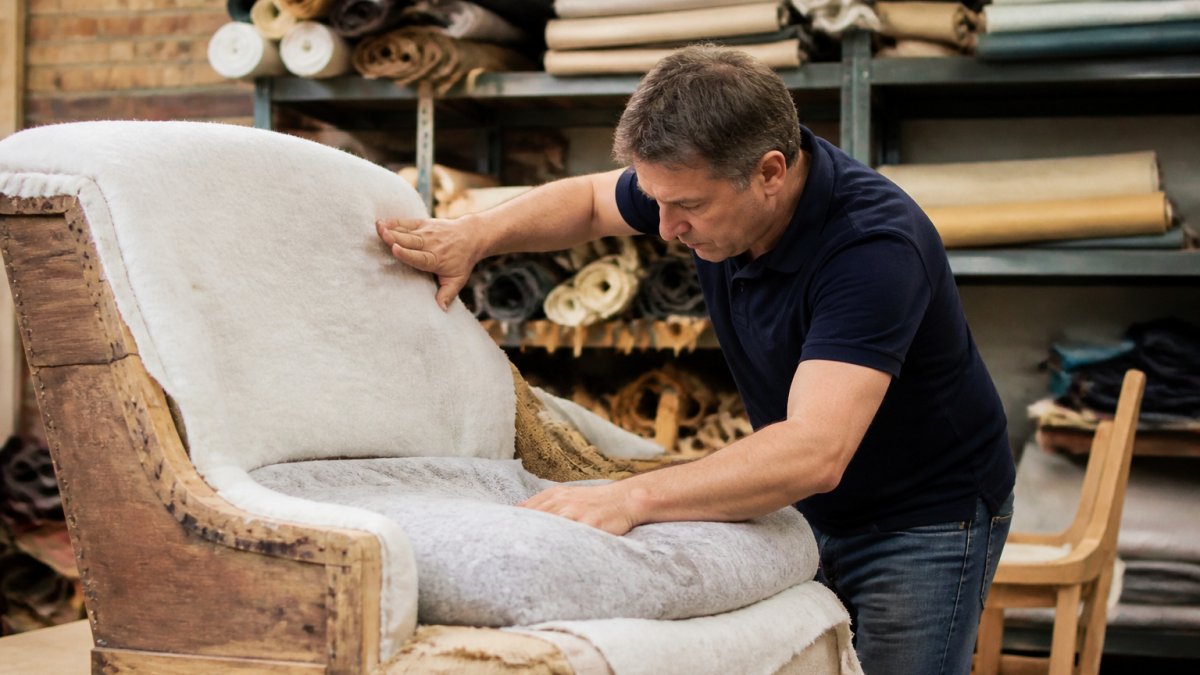
Restaurant booth reupholstery is the full replacement of the cover material on existing seating, usually combined with new foam. The booth structure stays in place, which means no downtime for demolition and no change to your floor plan.
The process typically runs in this order:
- Remove the seat cushions and back panels.
- Strip the old cover and inspect the foam and frame.
- Replace sagging foam and repair any frame issues.
- Cut and sew new covers from commercial-grade fabric or vinyl.
- Reinstall the cushions and check the fit.
Material choice drives durability more than anything else. High-traffic seating needs commercial vinyl or a tightly woven fabric rated for heavy use, not residential upholstery. Our guide to the best fabric for high traffic seating explains which materials hold up in a busy dining room.
Restaurant Booth Vinyl Repair: Fixing Cracks, Tears, and Worn Surfaces
Restaurant booth vinyl repair can address small cracks and tears, but only when the damage is caught early. Once cracked vinyl spreads across a panel, patching becomes cosmetic and short-lived.
Where vinyl repair stops working:
- Cracks that run along a seam or fold line. These reopen under flex.
- Widespread cracking across a panel. The vinyl has dried out and will keep splitting.
- Tears larger than a coin. These need a new panel, not a patch.
Watch out: patching cracked vinyl on a booth that sees constant use buys you months, not years. If the damage is broad, reupholstery is the honest fix.
Restaurant Booth Foam Replacement: Restoring Comfort and Support
Restaurant booth foam replacement restores the support that makes a booth comfortable to sit in. Sagging foam is the reason a booth feels worn even when the cover still looks acceptable.
Foam fails in two ways. It compresses and loses height under constant use, and it breaks down at the front edge where guests slide in and out. Both show up as a seat that bottoms out, a dip in the cushion, or a backrest that no longer holds its shape.
Replacing foam is typically done once the cover is off. Higher-density foam generally lasts longer in commercial seating.
Restaurant Booth Upholstery Cost: What Drives the Price
Restaurant booth upholstery cost depends on the size of the booth, the material you choose, the condition of the foam and frame, and whether the work is done on-site or in a shop. There is no single price, and any quote that ignores these factors is a guess. What most guides skip is how those factors actually move the number, so here is the mechanic behind each one.
| Cost Driver | What It Covers | How It Moves the Price |
|---|---|---|
| Booth size and count | Number of seats and backs | Priced per panel or per linear foot of seating; more panels mean more material and labor, and the relationship is roughly linear |
| Material grade | Commercial vinyl or heavy fabric | Commercial-grade vinyl and heavy woven fabric cost more per yard than residential material, but they are the only grades rated for high-traffic food-service use |
| Foam replacement | New cushioning | Adds material and labor per cushion; higher-density foam costs more up front and lasts longer, so the per-year cost can be lower |
| Frame repair | Structural fixes | Usually unknown until the cover comes off; loose fasteners are minor, cracked or rotted frame sections are not |
| On-site vs. shop work | Where the job happens | On-site work reduces downtime and transport but can carry a premium for setup and access; shop work can be cheaper per unit but takes the booth out of service |
| Access and prep | Clearing the area, protecting finishes | Tight dining rooms, wall-anchored booths, and limited work windows add labor time |
Because pricing depends on quantity, dates, and delivery, request a quote from Creative Custom Upholstery for current prices. The reliable way to compare is to ask each upholsterer to price the same scope: same panel count, same material grade, same foam specification, and same on-site or shop assumption. A quote that is far below the others usually differs in scope, not in efficiency.
Questions that expose scope gaps in a quote:
- Does the price include new foam, or only the cover?
- Is the material commercial-grade and rated for heavy use, or residential?
- Is frame repair included, or billed separately if damage is found?
- Is the work done on-site, and if so, what is the downtime per booth?
- Are seams, welting, and color matching included in the finish?
If a quote comes in far below others, ask what it leaves out. Professional upholstery costs more because it includes proper materials, correct foam density and a finish that lasts. Our article on why professional upholstery costs more explains the difference in detail.
Request a Quote for Your Booth Upholstery Repair
Booth upholstery repair is worth the cost when the frame is sound and the damage sits in the cover and foam. The inspection tells you which job you are facing, and the material and foam choices decide how long the result lasts.
Creative Custom Upholstery brings over 45 years of experience to upholstery work. As a family-owned and operated business, we focus on getting the work right the first time. We also handle furniture, marine and automotive upholstery.
Get started with Creative Custom Upholstery and restore your booth seating without replacing the structure.
The challenge is deciding whether to repair or replace before the damage spreads. Bring us photos of your booth seating and we will help you plan the right fix. Creative Custom Upholstery offers commercial upholstery repair, custom fabrication and material matching for restaurant seating, backed by more than four decades of craftsmanship and a commitment to doing the job right the first time.
Frequently Asked Questions
Can restaurant booth seats be reupholstered?
Yes. Most booth seats can be reupholstered without replacing the frame or structure. Reupholstery restores the look and feel of the seating at a lower cost than full replacement. Contact Creative Custom Upholstery to discuss your booth seating.
How do you repair a torn restaurant booth seat?
Small tears in vinyl can sometimes be patched with a color-matched repair kit, but this is a temporary fix. For larger tears or cracked vinyl, the cover usually needs to be replaced. A professional will assess the damage, check for underlying foam issues, and recommend either a targeted vinyl repair or full reupholstery.
Is it better to repair or replace restaurant booth upholstery?
Repair or reupholstery is usually the better choice when the booth frame is solid and the damage is limited to the cover and foam. Replacement makes sense only when the structure is compromised or the design needs a full change. Reupholstery costs less, reduces waste, and keeps the original booth footprint. A professional inspection will confirm which option fits your situation.
What upholstery material is best for restaurant booths?
Commercial-grade vinyl is the most common choice for restaurant booths because it resists stains, moisture, and heavy use. Leather offers durability but costs more. For high-traffic areas, look for vinyl with a reinforced backing and a warranty rated for commercial seating. Color matching and material matching to your existing decor are possible with most suppliers.