 How-to
How to Estimate Furniture Reupholstery Time
Last Updated: November 3, 2026
Quick Summary
Total reupholstery time is the calendar span from drop-off to pickup, not just the hands-on labor. A simple dining chair may need two to four hours of active work, while a large detailed sofa can run 15 to 30 hours or more, spread across weeks. Your reupholstery time is set by the shop's schedule and your fabric delivery date, not by the size of your piece.
- Active labor covers disassembly, cutting and sewing fabric, rebuilding cushions, and fitting and finishing trim.
- Most calendar time sits in fabric ordering and delivery and the shop queue, not in the labor itself.
- Nailhead trim, hand sewing, piping, and tufting each add hours of hand work to a project.
- Many shops won't strip a piece until fabric is confirmed, since the old fabric is the template for the new.
- Ask the shop to separate active labor hours from calendar weeks and to put the timeline in writing.
Table of Contents
- Turnaround Time vs. Hands-On Labor: What the Clock Really Measures
- Reupholstery Time by Furniture Type: Chairs, Sofas, and More
- How Project Complexity and Detail Work Add Hours
- Upholstery Fabric Lead Times and Fabric Confirmation
- Average Cost of Reupholstering a Chair in Canada
- How to Choose an Upholstery Repair Service
- Request a Quote from Creative Custom Upholstery
- Frequently Asked Questions
Turnaround Time vs. Hands-On Labor: What the Clock Really Measures
Ask how long does furniture reupholstery take and you'll hear two very different answers. One is measured in hours. The other is measured in weeks.
A customer hears "about 12 hours of work" and assumes the sofa returns in two days. Then the fabric hasn't arrived, the shop schedule is full, and week three begins.
Furniture reupholstery is the process of stripping a piece down to its frame, replacing worn padding and suspension, and rebuilding it with new fabric and trim. The total reupholstery time is the calendar span from drop-off to pickup.
Active labor hours vs. calendar weeks
Active labor covers the physical work on your piece:
- Disassembly and removing old fabric and staples
- Cutting and sewing new fabric
- Rebuilding cushions and padding
- Fitting, stapling, and finishing trim
A simple dining chair might need two to four hours of hands-on work. A large sofa with detail can run 15 to 30 hours or more. But those hours are rarely consecutive. They're spread across a shop schedule that includes other customers' projects, drying time, and fabric ordering.
Why a 10-hour job can take three weeks
A ten-hour project doesn't take ten hours of your calendar. It takes ten hours of a specific person's time, slotted around everything else.
Picture the sequence: the piece sits in the queue, gets stripped, waits for fabric confirmation, moves to cutting, waits for the sewer, then returns for assembly. Each handoff adds days.
The key insight most guides miss: your reupholstery time is set by the shop's schedule and your fabric delivery date, not by the size of your piece.
Reupholstery Time by Furniture Type: Chairs, Sofas, and More
Different pieces carry wildly different labor loads. A dining chair and a three-seat sofa are not in the same category, and treating them as one job leads to bad planning.

Chair reupholstery time: dining chairs and armchairs
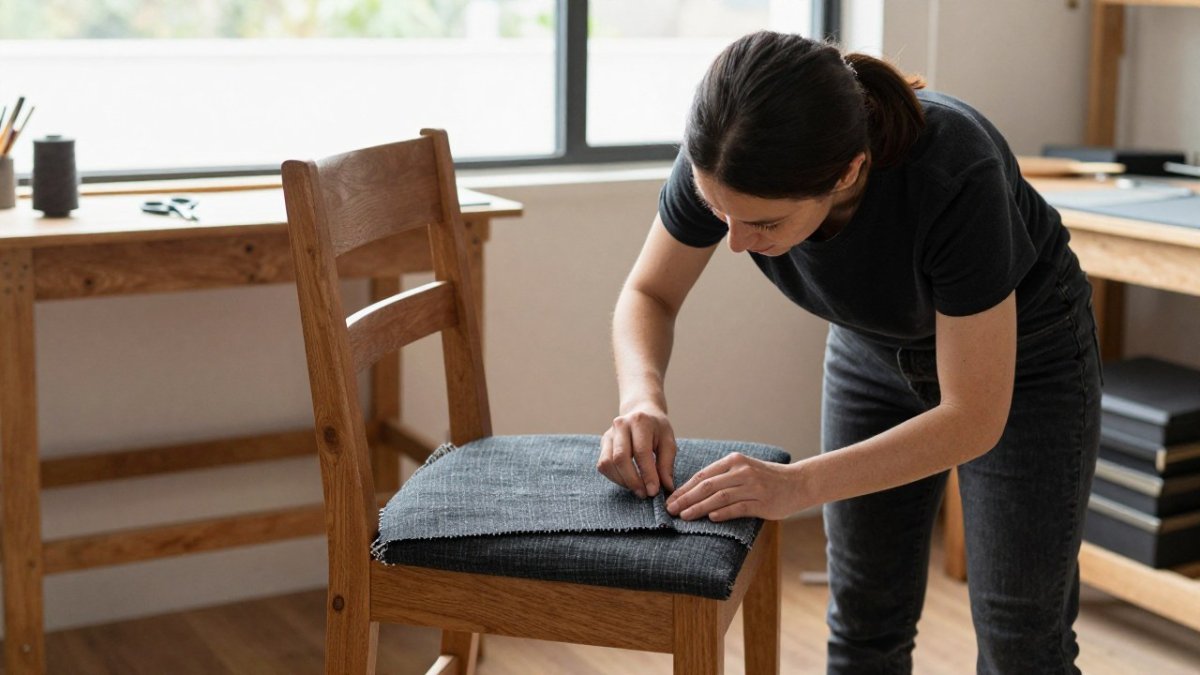
A dining chair is generally among the quicker upholstery projects. A simple seat with a single cushion often takes a few hours of active labor per chair. For a concrete example, see what it costs to reupholster vintage dining chairs.
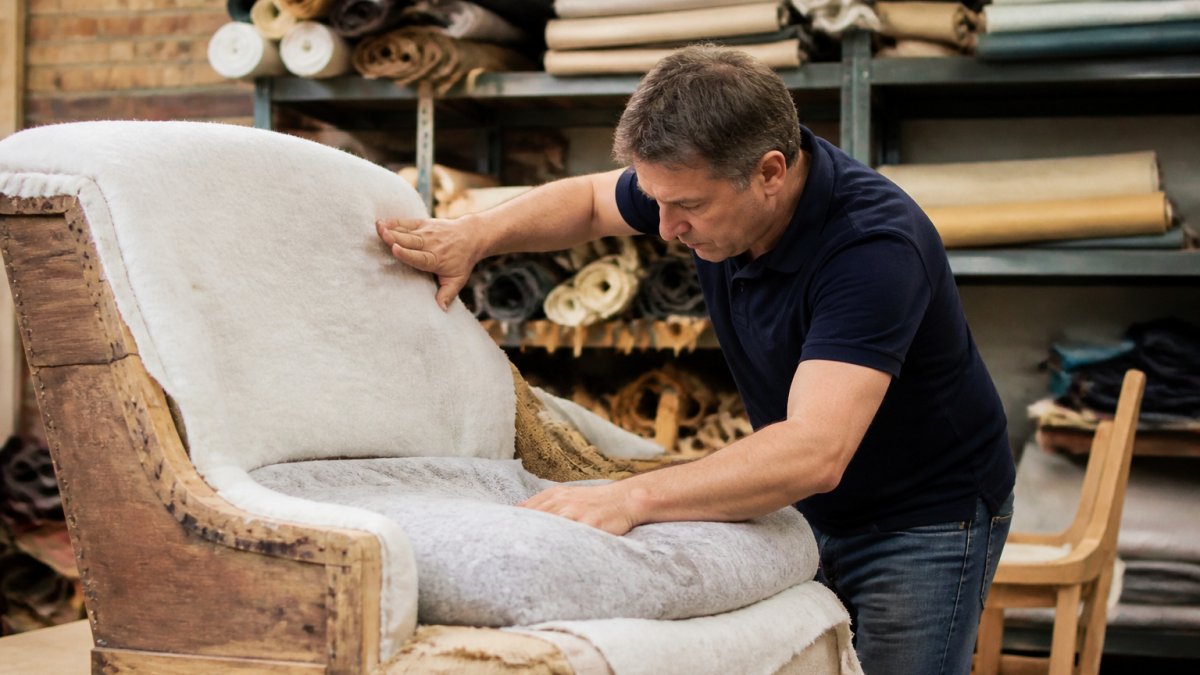
Armchairs sit in the middle. More surface area, more sewing, and often more detail work, so they generally take longer than a dining chair. A wingback or a chair with tufting typically takes longer still.
Sofa and couch reupholstery time
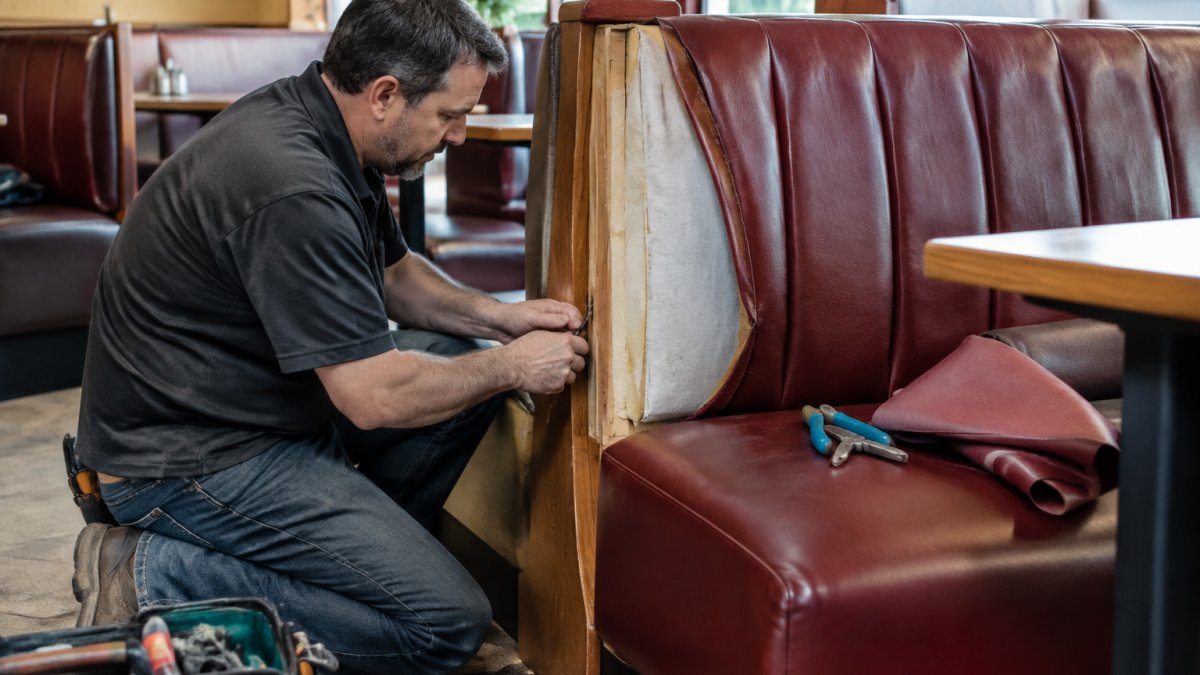
Sofas are the big job. Sofas are the larger job. A simple two-seat sofa with tight seats and plain arms takes noticeably less time than a three-seat sofa with loose cushions, a pillow back, and piping. Sectionals and pieces with skirts or complex arms take longer still, depending on the number of seats and the tailoring.
Calendar time depends largely on whether fabric is in stock and on the shop's current queue, so ask for a written timeline for your piece.
How furniture style and construction affect labor
Style matters as much as size. A few factors change the hours:
- Brass tacks and nailhead trim add hand placement time, often several hours on a large piece
- Hand sewing on welting or trim adds hours over machine work
- Piping and welt cords multiply the sewing load at every seam
- Loose versus tight backs change how fabric is fitted and how much tailoring is needed
- Tufting adds significant hand work, especially diamond or button tufting
A simple project with clean lines and no trim is fast. A traditional piece with tacks and hand finishing is slow. Same footprint, different clock.
Sets and matching pieces
When you reupholster a set, such as six dining chairs or a sofa-and-loveseat pair, the shop can batch cutting and sewing. That usually reduces labor per piece, but it also means the whole set waits for the slowest step. Calendar time for a set is often set by fabric quantity and the shop's ability to run the pieces together, not by the labor on any single chair.
How Project Complexity and Detail Work Add Hours
Project complexity is the hidden variable in any reupholstery estimate. Two sofas of identical size can differ by many hours once you account for detail.
| Complexity level | Typical features | Effect on hands-on labor |
|---|---|---|
| Simple | Tight seat, no trim, plain arms | Shortest labor span |
| Moderate | Loose cushions, piping, standard arms | Adds sewing and fitting time |
| Detailed | Nailhead trim, welting, skirts | Adds hand placement and tailoring |
| Complex | Tufting, hand sewing, curved frames | Longest labor span |
A common mistake is assuming a piece is "simple" because it looks plain. Curved frames, tight inside corners, and visible seams all demand extra fitting time.
Detailed pieces generally take more hands-on time than simple ones. Ask for a written estimate that reflects the detail work on your piece.
Where the extra hours actually go
Complexity adds time in specific places:
- Pattern matching at seams and around corners, which slows cutting and sewing
- Piping and welting on every seam, which multiplies sewing time
- Nailhead trim placed by hand, often one tack at a time
- Tufting, which requires laying out buttons, pulling folds, and adjusting depth
- Frame repairs found after stripping, which add carpentry time before upholstery resumes
- Cushion rebuilding, including new foam and wrap, which adds shaping and fitting
A piece with hidden frame or spring damage is the classic schedule breaker. The shop cannot see the damage until the old fabric is off, and the repair adds days before the rebuild can continue.
A practical project schedule
Mapping the steps shows where delays occur:
- Consultation and quote: photos, measurements, and fabric direction
- Fabric selection and confirmation: you approve the choice and quantity
- Fabric ordering and delivery: the most common bottleneck
- Shop queue: your piece waits for bench time
- Stripping and inspection: hidden damage is found here
- Cutting and sewing: the largest block of active labor
- Assembly and finishing: stapling, trim, and final fit
- Delivery or pickup: scheduling the return
Most of the calendar time sits in steps 3 and 4, not in the labor itself. A shop that explains this schedule clearly is a shop that plans well.
How to get an accurate estimate
Bring photos of the piece from several angles, measurements, your fabric choice or a photo of it, and a list of any known damage. Ask the shop to separate active labor hours from calendar weeks, and ask what happens if fabric arrives late or short. A written timeline that names the steps above is more useful than a single number.
Upholstery Fabric Lead Times and Fabric Confirmation
Fabric is the most common cause of a stalled project. Even a fast shop can't start sewing until the fabric is on the bench.
Here's the sequence that governs your schedule:
- Fabric selection: you choose the fabric, or approve options
- Fabric confirmation: you sign off on the final choice and quantity
- Fabric order: the shop or you place the order
- Fabric delivery: the roll arrives at the shop
- Cutting and sewing: work begins
Many shops won't strip a piece until fabric is confirmed, because the old fabric is the template for the new.
Ordering fabric early is generally one of the most effective ways to keep a project moving.
Watch out: ordering too little fabric is a classic delay. To plan your order, learn how to calculate upholstery fabric yardage.
Average Cost of Reupholstering a Chair in Canada
The cost of reupholstering a chair depends on the piece, the fabric, and the labor involved.
What drives the price:
- Hands-on labor hours for your specific piece
- Fabric choice, from basic to premium
- Detail work like trim, tufting, or hand sewing
- Frame and padding repairs found during disassembly
Reupholstery is skilled hand labor rather than a factory process, and the labor involved is reflected in the quote. For a closer look at what drives the number, see why professional reupholstery costs more than you think.
Get a quote based on your furniture for an accurate picture of cost.
How to Choose an Upholstery Repair Service
Picking the right shop is the best way to protect both your timeline and your heirloom. A vintage couch with 30 years of family history deserves more than a low bid.
Use this checklist before you commit:
- Ask how they handle fabric confirmation and ordering
- Request a written timeline separating labor from calendar time
- Ask what happens if fabric arrives late or short
- Look at recent work photos and references
- Confirm they work on your furniture type, including marine or automotive if needed
- Ask how they protect original details on vintage pieces
A shop that can explain its schedule clearly is a shop that plans well. To judge craftsmanship before you hand over a piece, how to identify quality upholstery craftsmanship shows what to look for in seams, trim, and fit.
Once you're ready to move forward, book custom furniture upholstery service and get your piece into the queue with a clear plan.
Request a Quote from Creative Custom Upholstery
Getting a realistic reupholstery time starts with an accurate quote. Bring us your piece, your fabric ideas, and your deadline, and we'll map out the labor and the calendar schedule before you commit.
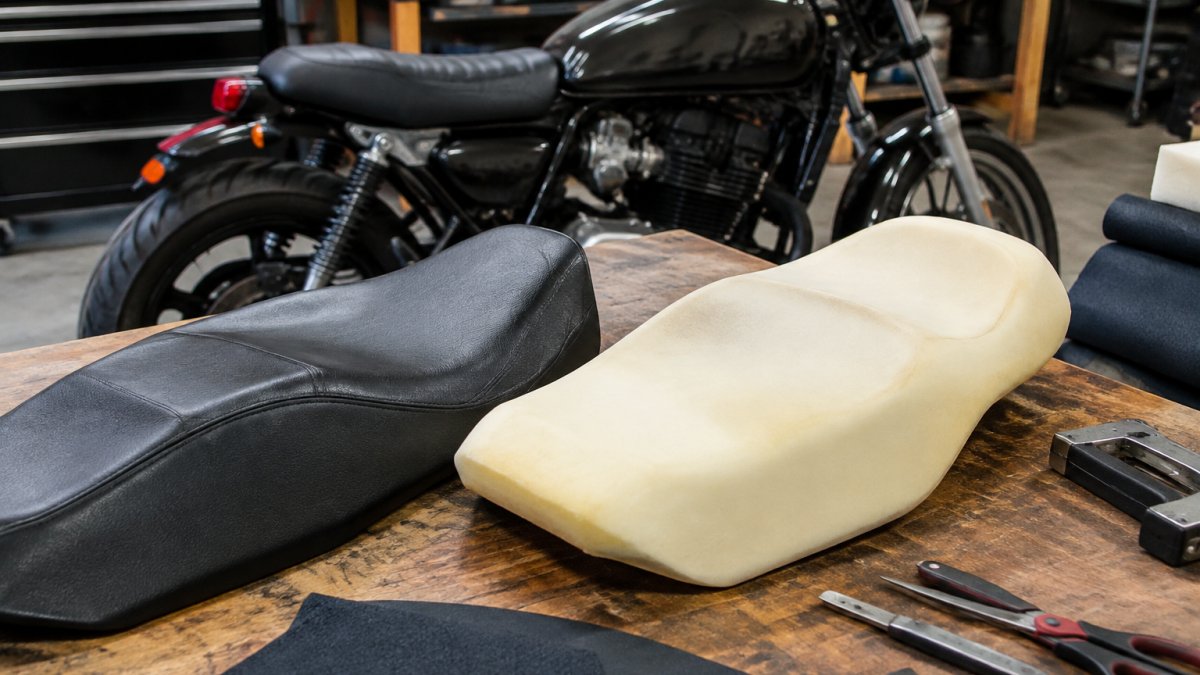
Creative Custom Upholstery has over 45 years of experience in upholstery services for furniture, indoor and outdoor cushions, automotive, marine, and motorbike seats, and awnings.
Want a concrete timeline for your furniture? Request a quote from Creative Custom Upholstery and we'll give you a straight answer on labor, fabric, and turnaround.
Frequently Asked Questions
Why does furniture reupholstery take so long?
The calendar time reflects more than hands-on work. A typical project involves disassembly, removing old fabric and staples, cutting and sewing new fabric, and reassembly. Each step waits its turn in the shop schedule. Fabric order and delivery can add time before work even begins.
Is it faster to reupholster a chair than a full sofa?
Yes, generally. A simple dining chair typically takes less hands-on work than a large sofa with cushion and pillow-back construction. Detail such as brass tacks or hand sewing adds time to any set. Turnaround also depends on shop workload and fabric availability, so ask for a calendar estimate rather than only labor hours.
How far in advance should I book an upholstery service?
Book as early as possible, especially before a deadline like a holiday gathering. Scheduling depends on current shop workload, and custom fabric orders can add time. If you need dining chairs before a specific date, contact the shop well in advance. Confirm the fabric delivery date and ask for a written timeline that separates labor time from calendar time.
Does the availability of fabric affect project duration?
Yes. Upholstery fabric lead times vary, with in-stock fabric generally arriving sooner than special orders. Fabric confirmation, the step where you approve the exact dye lot and quantity, must happen before cutting begins. Delays in approval or delivery push the entire schedule. Ordering fabric early and confirming it promptly is the simplest way to keep a reupholstery project on track.
Your furniture has a story, and the right shop keeps it intact. Creative Custom Upholstery brings over 45 years of family-owned craftsmanship to every piece, from a single dining chair to a full sofa rebuild. Get started with Creative Custom Upholstery and get a clear timeline and a quote built around your furniture.