 How-to
Why Professional Reupholstery Costs More Than You Think
Last Updated: October 30, 2026
Quick Summary
Professional reupholstery costs more because labor is the biggest line on most quotes, covering hours of stripping, pattern matching, cutting, sewing, and hand fitting, while quality fabric, foam, and spring repairs drive the rest of the bill. A proper quote reflects hours and materials, not padding.
- Labor is billed by the hour and driven by panel count and detail, not by the seat.
- Large pattern repeats force upholsterers to buy extra fabric yardage to line up patterns.
- An upholsterer cannot fully inspect the frame, springs, or decking until the old fabric is stripped away.
- Ask for an itemized quote separating labor, fabric, foam, springs, frame repairs, and delivery.
- Never accept a quote that does not state in writing how hidden damage will be handled.
Table of Contents
- The Reupholstery Cost Factors Most Quotes Don't Explain
- What the Professional Reupholstery Process Actually Involves
- The Cost to Reupholster a Chair Versus a Sofa
- How Furniture Condition and Structural Repairs Add to the Bill
- Reupholstery vs Buying New Furniture: The Long-Term Math
- Comparing Quotes Fairly and Spotting Hidden Costs
- Request a Quote for Your Restoration Project
- Frequently Asked Questions
The Reupholstery Cost Factors Most Quotes Don't Explain
A quote that looks high usually isn't padding. It reflects hours of skilled work, quality materials, and a process most shops never break down for you.
Professional reupholstery is the full rebuild of a piece of furniture's soft parts: new fabric, new foam, repaired springs, and a refinished frame, all fitted by a trained upholsterer. It is not a slipcover or a quick patch job.
Labor Hours and Skilled Craftsmanship
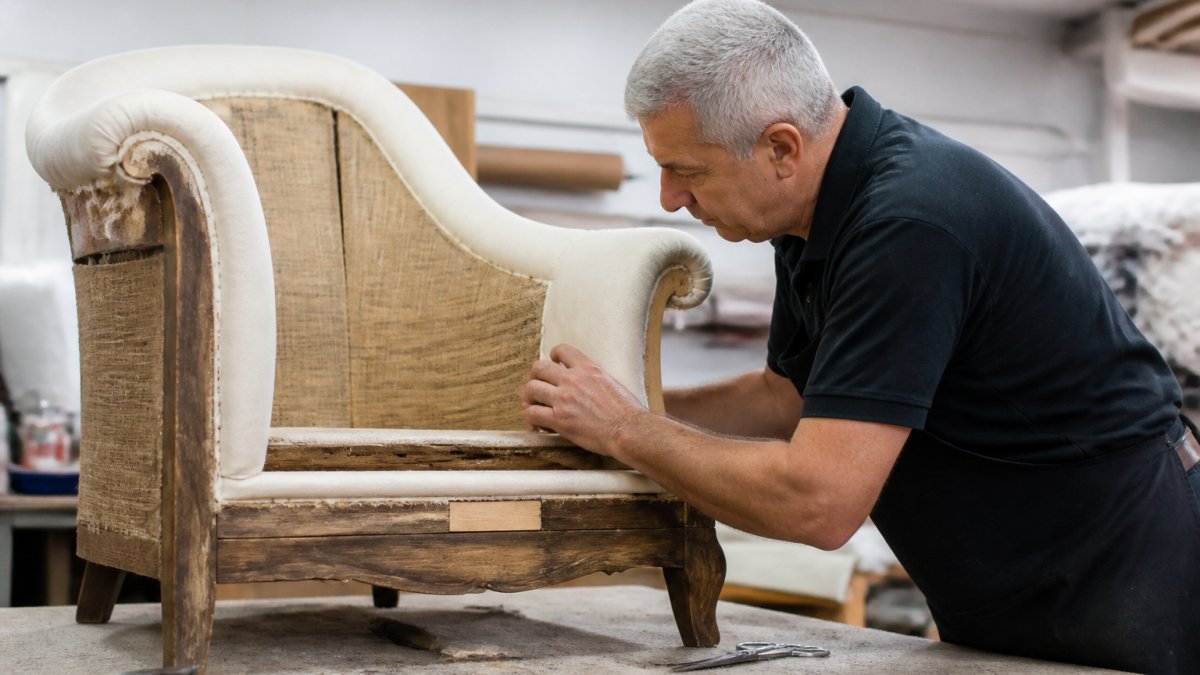
Labor is the biggest line on most quotes, and it's the one customers question most. A skilled upholsterer strips the piece, repairs the frame, cuts and sews fabric, matches patterns, and refits everything by hand.
- Stripping old fabric: removing thousands of staples without damaging the frame
- Pattern matching: lining up stripes and repeats across every cushion
- Cutting and sewing: custom fit for curves, welts, and piping
Detailed workmanship takes time. To see what quality craftsmanship looks like, read how to identify quality upholstery craftsmanship. How to Identify Quality Upholstery Craftsmanship explains what to look for, so the labor charge feels justified rather than mysterious.
Fabric, Foam, and Material Quality
Material quality drives the second half of your bill. Premium fabric costs more per meter, and complex patterns need more fabric yardage to match repeats. Foam density changes both comfort and price. Cheap foam collapses within a few years; good foam holds its shape.
Fabric cost also depends on:
- Durability rating: high-traffic fabric wears longer
- Pattern repeat: larger repeats waste more yardage
- Foam replacement: new cushions versus reusing old ones
For help choosing a fabric that survives daily use, see Best Fabric for High Traffic Seating: A Practical Guide.
What the Professional Reupholstery Process Actually Involves
Most guides skip the workshop floor. Here's what actually happens to your furniture.
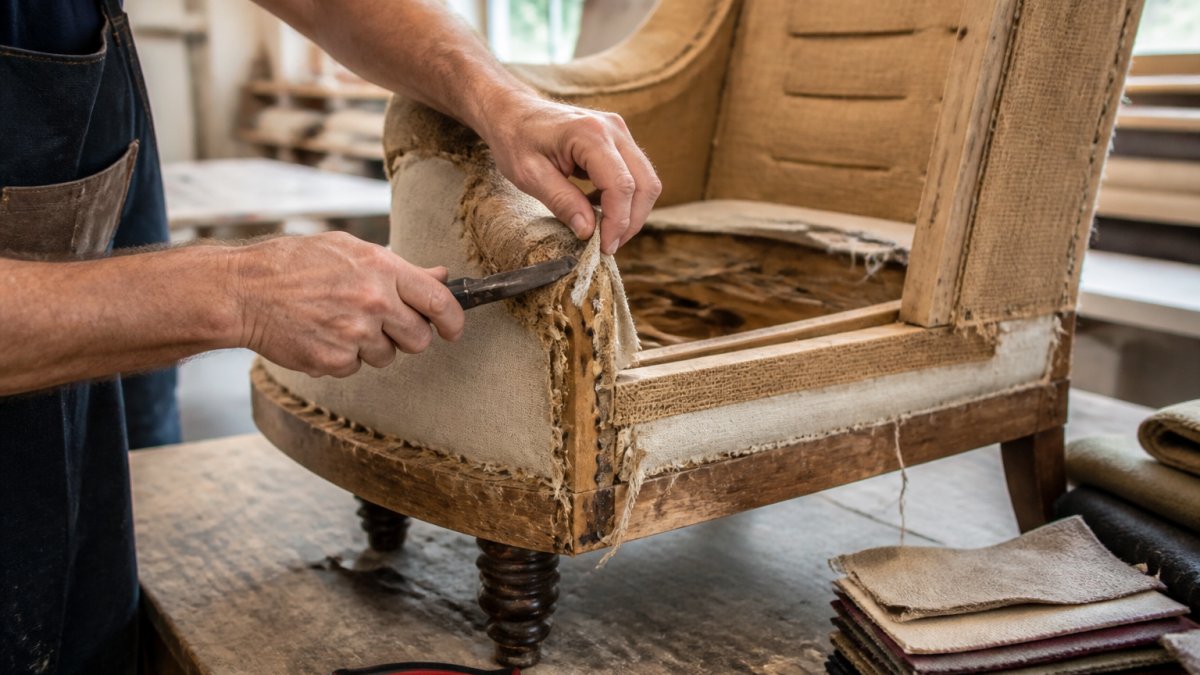
The process is labor-intensive by design. That's why a proper quote reflects hours, not just materials. Canadian upholstery and textile care guidance is a useful starting point for understanding material care and longevity.
The Cost to Reupholster a Chair Versus a Sofa
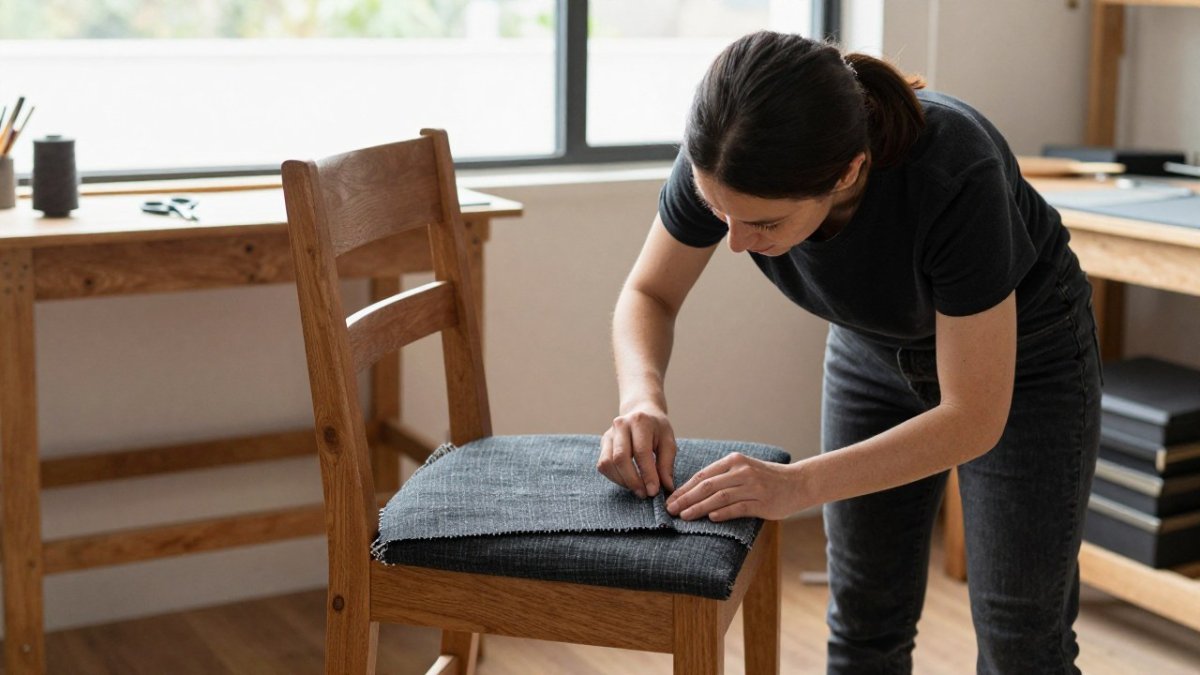
A dining chair and a three-seat sofa are different jobs entirely, and the gap in price comes down to three measurable inputs: fabric yardage, labor hours, and the number of separate panels that must be cut, matched, sewn, and fitted.
Fabric yardage scales with surface area, not seat count
A dining chair generally needs less fabric than a sofa because the visible surface area is smaller and the panels are simpler. A three-seat sofa, by contrast, has large seat decks, back panels, arms, and often a skirt or welting, so the yardage climbs quickly. Pattern repeat makes the difference larger: a solid or small-repeat fabric wastes little, while a large repeat forces the upholsterer to buy extra yardage to line up the pattern across every panel.
Labor hours follow panel count and detail
Labor is not billed by the seat. It is billed by the hour, and the hours are driven by how many pieces must be stripped, cut, sewn, and fitted. A dining chair may involve a seat pad, a back pad, and a small amount of welting, a handful of panels. A sofa may involve a dozen or more panels, plus cushion covers with zippers, piping, and pattern matching across seams.
What an itemized estimate looks like
A transparent quote separates the inputs so you can see where the money goes. A professional estimate can break out:
- Labor: stripping, frame inspection, cutting, sewing, fitting, and finishing, quoted in hours or as a flat rate per piece
- Fabric: yardage required, including pattern-repeat waste, priced per meter
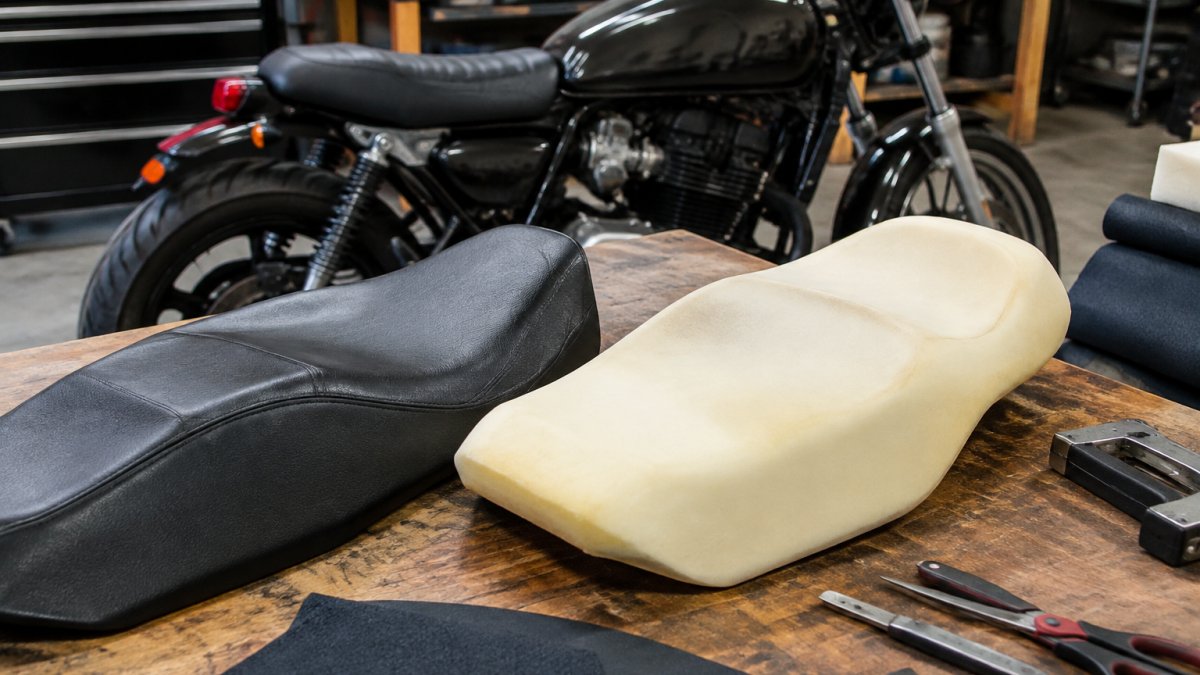
- Foam and batting: new seat cushions, back padding, and wrap, priced by density and thickness
When a quote lists these separately, you can compare two estimates line by line instead of comparing a single bottom-line number that may or may not include foam, springs, or delivery.
Why the same sofa can get two very different quotes
One shop may quote new foam and spring repair as included; another may list them as extras. One may calculate yardage with pattern-repeat waste; another may quote the bare minimum and add fabric later. One may include pickup and delivery; another may not. None of these differences are dishonest, they are differences in scope. The only fair comparison is an itemized one.
The price gap between a dining chair and a three-seat sofa comes down to three measurable inputs.
| Item | What drives the cost | Note |
|---|---|---|
| Dining chair | Smaller visible surface area, simpler panels | Fewer panels: seat pad, back pad, small amount of welting |
| Three-seat sofa | Large seat decks, back panels, arms, skirt or welting | A dozen or more panels, plus cushion covers with zippers and piping |
| Fabric yardage | Surface area and pattern repeat | Large repeats force extra yardage to line up patterns |
| Labor hours | Panel count and detail | Billed by the hour, not by the seat |
| Tufted or channel-stitched back | Every fold and button placed by hand | Adds hours of detailed work |
| Ornate, curved frames | More fitting and more fabric waste | Cost more to cover than simple modern lines |
How Furniture Condition and Structural Repairs Add to the Bill
Furniture condition is the wildcard in any estimate, and it is the single most common reason a final bill differs from the original quote. The reason is structural: an upholsterer cannot fully inspect a frame, springs, or decking until the old fabric and padding are stripped away. Until then, the quote is an educated estimate based on what is visible and how the piece feels when you sit on it.
What stripping actually reveals
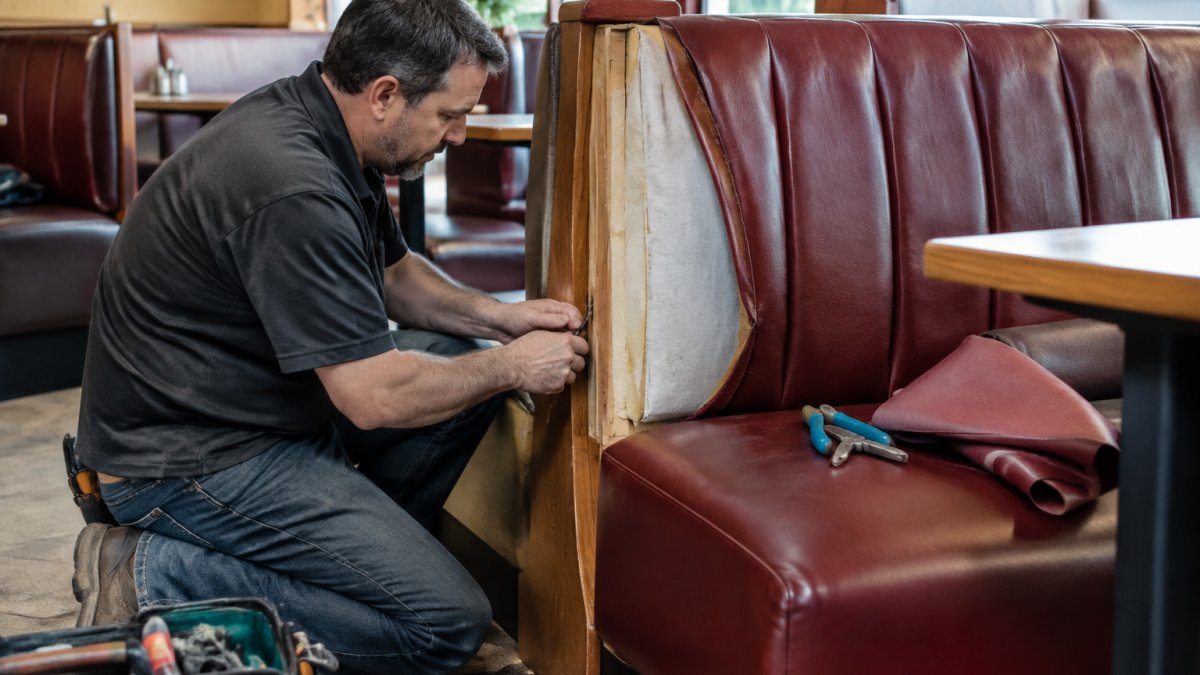
Once the cover comes off, the upholsterer sees the parts that were hidden: joint condition, spring or webbing integrity, decking, and any water damage or pest activity. Common discoveries include:
- Loose or cracked joints: glue failures and split rails that were stable only because the old fabric held them together
- Fatigued springs or webbing: stretched sinuous springs, broken coil ties, or sagging elastic webbing
- Compressed or crumbling foam: foam that has lost its resilience and will not support a new cover properly
Each of these adds labor hours and sometimes materials. A frame repair may mean re-gluing and clamping joints, reinforcing rails, or replacing a section of wood. Spring repair may mean rebuilding the support system rather than simply covering it. Foam replacement may mean new cushions throughout rather than reusing compressed foam that will flatten under a new cover.
How a quote changes, and how to protect yourself
The professional way to handle a discovery is a change order: the shop documents what was found, explains the repair options and their cost, and gets your approval before proceeding.
Ask every shop the same questions before you commit:
- What happens if hidden frame damage turns up after stripping?
- Will you document the damage and give me a written change order before doing the repair?
- Is there a cap or approval threshold before extra work begins?
A shop that answers these clearly is not trying to trap you, it is showing you how it manages the one part of the job that cannot be fully seen in advance.
Why a low quote can become a high bill
The hidden-cost trap is not usually dishonesty. It is scope. A quote based on a quick look may assume the frame is sound and the foam can be reused. When stripping reveals otherwise, the work expands. The customer experiences this as a surprise; the shop experiences it as a normal discovery. The difference between a good and a bad experience is whether the process for handling that discovery was explained up front.
- Frame repair: re-gluing, reinforcing, or replacing joints
- Spring repair: rebuilding or replacing the support system
- Foam replacement: new cushions throughout
Reupholstery vs Buying New Furniture: The Long-Term Math
Reupholstery vs buying new furniture comes down to build quality. For a direct cost comparison between repairing upholstery and replacing furniture, see this upholstery repair vs furniture replacement cost guide.
Replacement furniture is cheaper up front. But it usually wears out faster, so you buy again sooner. Reupholstery is an investment in durability and long-term value, especially for heirlooms and quality frames.
Comparing Quotes Fairly and Spotting Hidden Costs
Two quotes rarely cover the same work. A cheaper estimate may skip foam replacement, spring repair, or pattern matching. That's the hidden cost trap: the low quote looks better until the extras appear.
Ask every shop the same questions:
- Does the quote include new foam and batting?
- Is spring repair included or extra?
- How is fabric yardage calculated?
Line up the answers side by side. The quote that lists everything is easier to trust than the one with blanks. Competition Bureau guidance on comparing service quotes offers general tips on fair comparisons.
Request a Quote for Your Restoration Project
Comparing quotes is the right move, and now you know what to compare. The real challenge is finding an upholsterer who shows the full scope up front and stands behind the work. That's where we come in.
Creative Custom Upholstery brings over 45 years of family-owned experience to every job, from furniture restoration to marine and automotive seating. Ready to see what your project actually needs? Book custom furniture upholstery service and get a clear, itemized quote.
Frequently Asked Questions
Is it more expensive to reupholster or buy new furniture?
It depends on the piece. A quality hardwood frame with good bones is often cheaper to reupholster than replacing it with furniture of similar build quality. Mass-market replacements use particle board and lower-density foam that wear out faster. For a solid frame, professional reupholstery usually delivers better long-term value because you keep the structure and upgrade the fabric and cushioning. For a low-cost flat-pack item, buying new may cost less upfront.
What factors affect the cost of reupholstery the most?
Labor hours, fabric yardage and grade, foam and spring replacement, and structural repairs drive most of the price. Furniture size and style matter too: a tufted wingback with pattern matching takes far more hours than a simple dining chair seat. Local labor rates and the condition of the frame also shift the estimate. Ask for an itemized quote so you can see exactly where the money goes.
Why does reupholstering a sofa cost more than reupholstering a chair?
A sofa uses several times the fabric yardage of a chair and far more labor hours for stripping, cutting, sewing, and fitting. Sofas also typically need new foam, webbing, or spring work across a larger surface. Pattern matching across multiple cushions adds time. The cost to reupholster a chair is lower because the surface area and material volume are smaller, even though the per-hour craftsmanship rate stays the same.
Can I reupholster furniture myself to save money?
DIY is possible on simple pieces like dining chair seats, but complex projects often cost more than expected. Fabric ordering errors, pattern matching mistakes, and inadequate tools can waste material and time. Professional reupholstery includes accurate fabric yardage calculation, proper stripping, and a custom fit that lasts. If the piece has sentimental or structural value, professional work protects your investment.
Your furniture deserves a quote you can actually understand. Get started with Creative Custom Upholstery and restore your piece with craftsmanship that lasts.