 Ultimate guide
Why Does Professional Upholstery Cost More?
Last Updated: November 1, 2026
Quick Summary
Professional upholstery costs more because you are paying for hours of skilled handwork, not a product off a shelf. The price reflects labor, materials, and hidden repair work such as frame, foam, and spring rebuilding that happens under the surface. Fabric alone rarely explains the gap between a quote and your expectation.
- Stripping fabric, pulling staples, cutting panels, and hand-fitting covers cannot be done by a machine.
- A low quote can mean shortcuts such as fewer staples, skipped pattern matching, or old padding left in place.
- A firm quote should follow an in-person inspection, not a photo, because hidden damage appears once the old cover comes off.
- A sofa costs more than a chair because it involves more fabric, cushions, seams, and labor hours.
- Ask the shop to quote yardage for both a solid and your patterned choice before you commit.
Table of Contents
- Why Professional Upholstery Costs More Than You Expect
- Furniture Reupholstery Cost: What Actually Drives the Price
- Cost to Reupholster a Couch: Why a Sofa Isn't a Chair
- Upholstery Fabric Cost and How Yardage Adds Up
- Reupholster Furniture or Buy New: A Decision Framework
- How to Compare Upholstery Quotes Line by Line
- Request a Quote for Your Upholstery Project
- Frequently Asked Questions
Why Professional Upholstery Costs More Than You Expect
A reupholstery quote often lands higher than the number in a homeowner's head, and the gap rarely comes from the fabric alone. Understanding why professional upholstery costs more starts with one fact: you are buying hours of skilled handwork, not a product off a shelf.
Professional upholstery is the craft of stripping a piece of furniture down to its frame, rebuilding its internal structure, and fitting new fabric and filling by hand so the piece performs like new.
Skilled Labor and Craftsmanship You Can't Automate
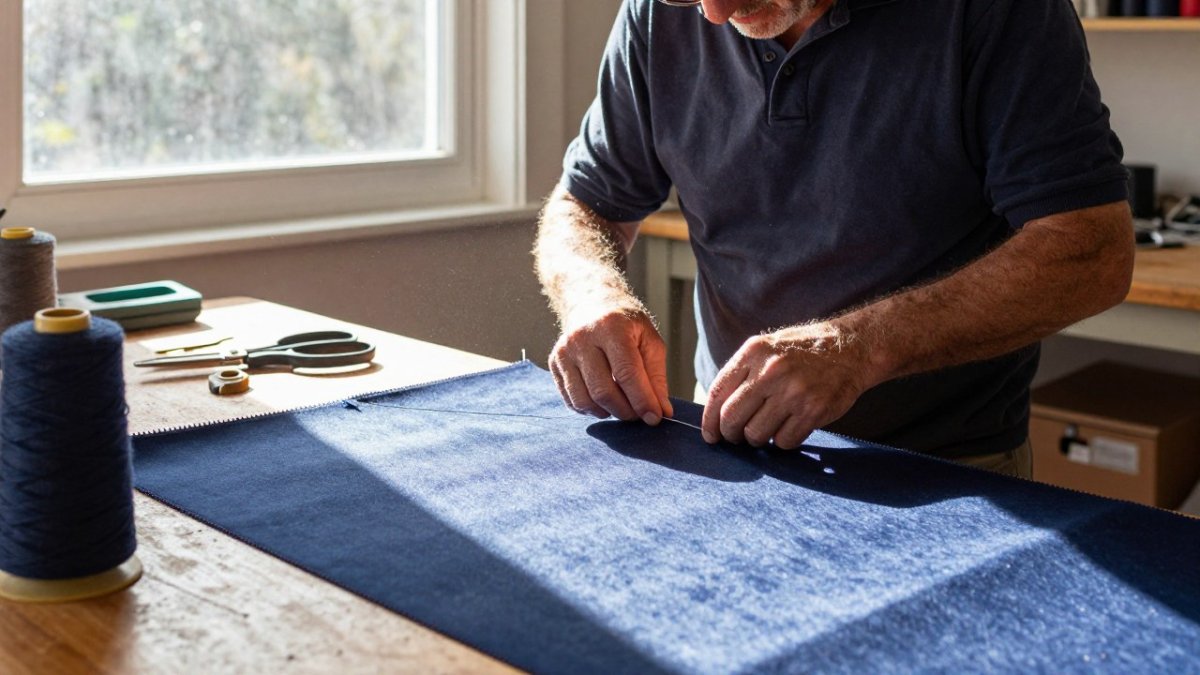
The biggest line on any quote is labor, and it should be. Stripping old fabric, pulling thousands of staples, cutting panels, matching patterns, and hand-fitting covers cannot be done by a machine. An experienced upholsterer works by feel as much as by measurement.
That skill is also why cheap quotes often disappoint. If you are comparing bids, look closely at seams, corners, and frame work before you commit.
The Hidden Work Inside the Frame
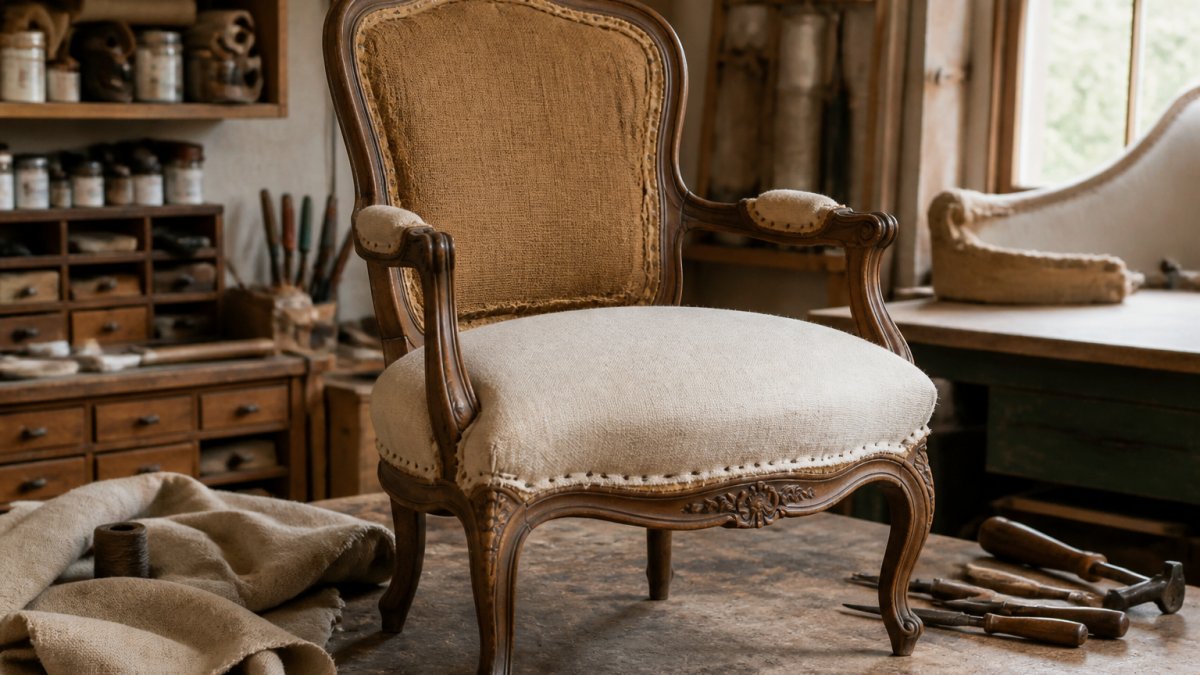
What most guides miss is how much of the job happens where you never see it. A worn sofa usually needs more than new fabric. Frames crack, webbing sags, foam compresses, and springs lose tension.
A common mistake is judging a quote only by the visible fabric. The real difference between a cover that lasts and one that sags in a year is the hidden structural work underneath.
Furniture Reupholstery Cost: What Actually Drives the Price
Furniture reupholstery cost is generally driven by labor hours, fabric yardage, repair work, and design complexity.
Size, Shape, and Design Complexity
A large sectional generally takes far more fabric and labor than a dining chair, and curved arms, tight backs, and skirted bases add hours. Tufting, piping, and pattern matching all slow the work down. Piece type changes the number considerably. For a concrete example, see what it costs to reupholster vintage dining chairs.
Condition and Hidden Damage
Two identical sofas can quote very differently depending on condition. A well-kept frame needs less work; a sagging one with a cracked rail needs structural repair before any fabric goes on. Hidden damage only becomes clear once the old cover comes off, which is why a firm quote should follow an in-person inspection, not a photo.
Cost to Reupholster a Couch: Why a Sofa Isn't a Chair
A sofa generally costs more to reupholster than a chair because it involves more fabric, more cushions, more seams, and more labor hours. A chair is one seat.
Cushion count matters as much as length. A three-cushion sofa with removable covers takes longer than a tight-back bench. Add a skirt, welting, or a pattern that must line up across seams, and the hours climb again.
| Piece | Fabric Use | Labor Time | Main Cost Driver |
|---|---|---|---|
| Dining chair | Low | Low | Number of chairs, pattern matching |
| Armchair | Moderate | Moderate | Shape, cushion style, piping |
| Two-cushion sofa | High | High | Cushions, seams, frame condition |
| Sectional | Very high | Very high | Size, modular pieces, complexity |
Upholstery Fabric Cost and How Yardage Adds Up
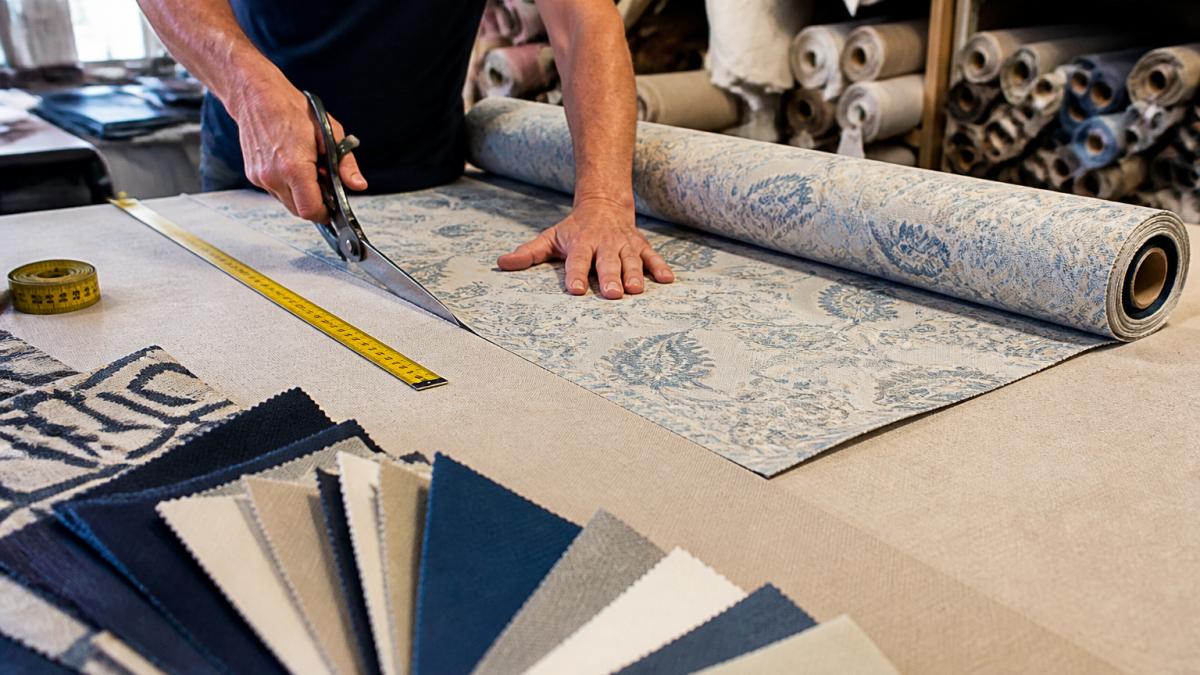
Upholstery fabric cost depends on two things: the price per yard and how many yards your piece needs. Yardage is where budgets go wrong, and it is the part most quotes do not explain. A patterned fabric with a large repeat wastes more material to keep the design aligned, so the same sofa can need noticeably more fabric in a bold print than in a solid.
How Yardage Is Actually Calculated
Most upholstery fabric comes on rolls about 54 inches wide. Upholsterers generally lay out each panel and nest them across that width to use as little length as possible. The total length consumed becomes your yardage. Three variables push that number up:
- Pattern repeat. The repeat is the distance before a motif repeats, measured vertically and sometimes horizontally. A small repeat of 2 inches wastes little. A large floral repeat of 27 inches can force the cutter to skip most of a length to align the next panel, and that skipped fabric is paid for and thrown away.
- Railroaded versus up-the-roll layout. Some fabrics can be run horizontally (railroaded) across the roll width to fit wide panels with less waste. Others have a directional pattern or nap and must run vertically, which limits nesting and increases yardage.
- Panel count and seam matching. Every additional cushion, welt, and skirt piece is another panel that must align with its neighbor. More panels mean more matching and more waste.
A practical rule of thumb many shops use: add roughly one extra repeat per panel that must match. On a sofa with six matching panels and a 27-inch repeat, that alone can add several yards before a single cut is made.
Why Fabric Grade Is Not the Same as Quality
Fabric is often sold in grades that reflect wholesale price, and a higher grade does not always mean greater durability. What matters for a sofa is abrasion resistance (often expressed in double rubs), cleanability, and suitability for the piece. Ask what the fabric is rated for rather than assuming a higher grade means a better buy.
If you want to understand how quantity is calculated, ask your upholsterer to walk you through the measuring method so you order the right amount and avoid paying for a second cut. For a step-by-step walkthrough, see how to calculate upholstery fabric yardage.
Reupholster Furniture or Buy New: A Decision Framework
Reupholstering usually wins when the frame is solid and the piece is well made or has sentimental value. Buying new usually wins when the frame is failing or the repair cost approaches replacement. Use this framework to decide:
- Frame solid, piece well built: reupholster. You keep better construction than most new furniture offers.
- Heirloom or vintage piece: reupholster. The value is in the frame and history, not the cover.
- Frame cracked or sagging badly: compare repair cost against replacement before committing.
Reupholstery also keeps furniture out of landfill, which adds lifecycle value that a new purchase cannot match. For a direct cost comparison, read our upholstery repair vs furniture replacement cost guide.
How to Compare Upholstery Quotes Line by Line
Comparing upholstery quotes means reading past the total and checking what each one includes. A lower number can hide missing work, so ask for an itemized quote that shows labor, fabric, and repairs separately. Two bids that look $400 apart on the headline can reverse once you normalize what each one actually covers.
Normalize the Scope Before You Compare Price
Put both quotes side by side and confirm they cover the same work. The most common gaps:
- Frame inspection and repair allowance. One quote may include stripping to the frame and reinforcing joints; another may assume the frame is sound and bill repairs later as extras.
- Replacement versus reuse of internals. Foam, batting, webbing, and springs are a real cost. A quote that reuses compressed foam is cheaper for a reason.
- Fabric grade and yardage. Confirm both quotes use the same fabric or a comparable grade, and that yardage is listed with the pattern repeat noted. A quote based on a solid at 8 yards is not comparable to one based on a large repeat at 12 yards.
Read the Exclusions and Contingencies
A trustworthy quote states what happens if hidden damage appears once the old cover comes off. Look for a written repair allowance, a stated hourly rate or a capped contingency, rather than an open-ended "additional charges may apply." Ask whether you will be contacted for approval before any work beyond the allowance proceeds. A shop that builds this into the quote is easier to trust than one that surprises you mid-job.
Check the Warranty and Workmanship Terms
Warranty language separates serious shops from casual ones. Ask what is covered, seams, stitching, cushion construction, frame repair, and for how long. Fabric warranties usually come from the mill, not the upholsterer, so confirm who handles a claim. A workmanship guarantee on labor is the part the shop controls, and it should be in writing.
Questions to Ask Before You Sign
- Is the frame inspected, and is any structural repair itemized?
- Are foam, padding, webbing, and springs replaced or reused, and which?
- Is fabric yardage listed, with the pattern repeat noted?
- Are seams, piping, tufting, and trim priced in, not added later?
A quote that answers these clearly is easier to trust than a single lump sum.
Request a Quote for Your Upholstery Project
For an accurate idea of cost, contact us for a quote. Current prices depend on the piece, its condition, and the fabric chosen, so please request a quote or visit our website for current pricing. With more than 45 years of experience as a family-owned and operated business, we are dedicated to getting the job done right the first time, whether it is a family heirloom, a boat seat, or commercial booth seating.
Ready to move forward? Request a quote and get a clear, itemized estimate before any work begins.
Frequently Asked Questions
Why does professional upholstery cost so much?
Professional upholstery is labor-intensive work that combines skilled craftsmanship, quality materials, and structural repairs you can't see from the outside. A single sofa can take many hours of stripping, frame repair, foam replacement, pattern matching, and reassembly. The price reflects that time, the upholsterer's training, and materials built to last years rather than months.
Is it less expensive to reupholster a chair than a couch?
Usually yes. A dining chair or armchair uses less fabric, less foam, and fewer labor hours than a full sofa, so the furniture reupholstery cost is lower. Simple chairs with fixed seats are often the most affordable projects, while wingbacks and tufted pieces add complexity and time. Ask for an itemized quote so you can see exactly where the cost comes from.
How can I compare upholstery quotes fairly?
Compare line by line rather than by the bottom number. Look at whether each quote includes fabric removal, frame repairs, new foam or springs, pattern matching, and finishing. A cheaper quote may skip internal repairs or use lower-grade fabric. Ask each upholsterer what is and isn't included, and request references or photos of recent work.
Is reupholstering furniture worth it compared with buying new?
It often is when the piece has a solid frame, sentimental value, or a shape you can't easily replace. Reupholstering an heirloom or well-built sofa can cost less than a comparable new piece and keeps it out of landfill. For low-cost, particle-board furniture, buying new may make more sense. Weigh frame quality, fabric choice, and how long you plan to keep the piece.
The gap between a cheap quote and a lasting one usually comes down to hidden labor and honest materials. If you want work that holds up, Creative Custom Upholstery brings decades of hands-on craftsmanship to every piece, from marine and automotive seats to awnings and custom cushions. Get started with Creative Custom Upholstery and request a quote for workmanship built to last.