 Ultimate guide
Upholstery Fabric Durability Guide 2026: What Lasts
Last Updated: November 8, 2026
Quick Summary
Upholstery fabric durability is measured by how well a textile resists abrasion, pilling, fading and seam failure under repeated use, with abrasion results quoted in double rubs from Martindale or Wyzenbeek tests. Those two methods are not interchangeable, so confirm which test and lab produced any number before comparing fabrics.
- Martindale results and Wyzenbeek results cannot be compared directly because motions, pressures and pass criteria differ.
- Convention bands run from under 15,000 cycles for light residential to 30,000+ for commercial grade.
- A high rub count on loosely woven linen can still snag, while a moderate count on tight polyester can outlast it.
- Vacuum weekly with a soft brush attachment to lift grit that acts like sandpaper on the weave.
- Skip looped textures like bouclé if there are cats, and treat velvet as decorative, not family, fabric.
Table of Contents
- What Upholstery Fabric Durability Ratings Actually Measure
- Martindale vs Wyzenbeek: How the Two Tests Differ
- How to Read an Upholstery Fabric Rub Count
- Natural vs Synthetic Fibers: Cotton, Linen and Polyester
- Durability Beyond Abrasion: Pilling, Fading and Seam Strength
- The Best Upholstery Fabric for Pets and Busy Households
- Upholstery Fabric Cleaning and Maintenance That Extends Life
- Choosing Fabric for Your Reupholstery Project
- Frequently Asked Questions
What Upholstery Fabric Durability Ratings Actually Measure
Upholstery fabric durability is measured by how well a textile resists abrasion, pilling, fading and seam failure under repeated use. A single lab number tells you less than the marketing suggests. A high rub count on a loosely woven linen still snags. A moderate count on a tight polyester blend can outlast it by years.
Below, we break down what the tests measure, where they mislead, and how to pick a fabric that survives your household rather than a laboratory.
Abrasion Testing, Martindale and Double Rubs
Abrasion testing rubs a fabric sample against an abrasive surface until it shows wear, and the result is expressed in cycles, commonly called double rubs. The Martindale method uses a circular motion with a weighted head; the Wyzenbeek method uses a back-and-forth motion. Neither test tells you how a fabric will handle a spilled coffee, a cat's claws or three years of afternoon sun.
Martindale vs Wyzenbeek: How the Two Tests Differ
The two tests are not interchangeable, which is where a lot of comparison shopping goes wrong. Martindale is the standard method in Europe; Wyzenbeek is more common in North American contract textiles. A Martindale result and a Wyzenbeek result cannot be compared directly, because the motions, pressures and pass criteria differ.
What matters is comparing like with like. If one sofa fabric quotes Martindale cycles and another quotes Wyzenbeek double rubs, you have no reliable basis for saying one is tougher. Ask the supplier which method was used and whether the result came from an accredited lab.
How to Read an Upholstery Fabric Rub Count
Rub count is the number of abrasion cycles a fabric withstands before two yarns break or the surface shows noticeable wear. It is a useful screening number, but it is not a lifespan guarantee, and treating it as one is the most common buying mistake. The convention most buyers encounter:
| Rub Count (cycles) | Typical Grade | Common Use |
|---|---|---|
| Under 15,000 | Light residential | Occasional chairs, decorative pieces |
| 15,000-25,000 | General residential | Sofas in low-traffic rooms |
| 25,000-30,000 | Heavy residential | Family sofas, daily seating |
| 30,000+ | Commercial grade | Restaurants, offices, rental units |
Those bands are conventions, not regulations, and they shift by supplier and by test method. A 30,000-cycle Martindale result and a 30,000 double-rub Wyzenbeek result do not describe the same amount of wear, because the motions, pressures and pass criteria differ. Before you compare two fabrics, confirm both numbers came from the same method and, ideally, from an accredited lab.
What a Rub Count Does Not Tell You
Abrasion testing rubs a fabric sample against an abrasive surface in a controlled pattern. It does not simulate a spilled coffee, a cat's claws, a zipper, a belt buckle or three years of afternoon sun through a window. Real-world failure often arrives through one of those routes before the abrasion limit is reached. That is why a high rub count on a loosely woven linen can still snag, while a moderate count on a tight polyester blend can outlast it by years.
A commercial-grade number does not automatically mean comfortable or attractive. Some high-cycle fabrics feel stiff and look industrial.
A Verification Checklist for Test Claims
Because ratings are quoted inconsistently, ask these questions before you commit to a fabric:
- Which test method produced the number, Martindale, Wyzenbeek or another method?
- Was the result from an accredited lab, and can the supplier produce the test report rather than a marketing summary?
- Does the quoted figure refer to the fabric as supplied, or to a coated or backed version that behaves differently?
- Are other durability results reported alongside abrasion, pilling, colorfastness, seam strength, or is abrasion the only number offered?
- Does the care code and finish match how you will actually use the piece?
A supplier who can answer those questions is giving you more useful information than one who simply quotes the biggest number. For the broader picture, see our section on durability beyond abrasion below.
Natural vs Synthetic Fibers: Cotton, Linen and Polyester
Natural fibers and synthetic fibers fail in different ways, and that difference matters more than any single rating. Cotton is soft and breathes well but can wear thin at the surface and wrinkles. Linen has good tensile strength and a pleasant hand, yet it creases and can abrade in high-traffic use unless blended.
Polyester and polyester blends resist abrasion, hold color and clean up easily, which is why they dominate family furniture and performance fabric lines. The trade-off is feel: cheaper polyester can pill and feel slick. A well-made polyester blend with a tight weave is one of the most practical choices for daily seating.
Government of Canada guide to textile fibre labelling and care
Durability Beyond Abrasion: Pilling, Fading and Seam Strength
Abrasion resistance is only one durability metric, and treating it as the whole picture is the most common mistake we see. Pilling resistance determines whether the surface fuzzes into little balls. Colorfastness governs how the fabric handles UV exposure and cleaning. Seam strength decides whether the cushion holds together at the stress points.
Construction quality matters as much as the fiber. A dense weave with strong backing and generous seam allowances will outlast a loosely woven fabric with a higher rub count. If you want to judge craftsmanship rather than spec sheets, our guide on how to identify quality upholstery craftsmanship covers what to look for in seams, padding and frame joinery.
The Best Upholstery Fabric for Pets and Busy Households
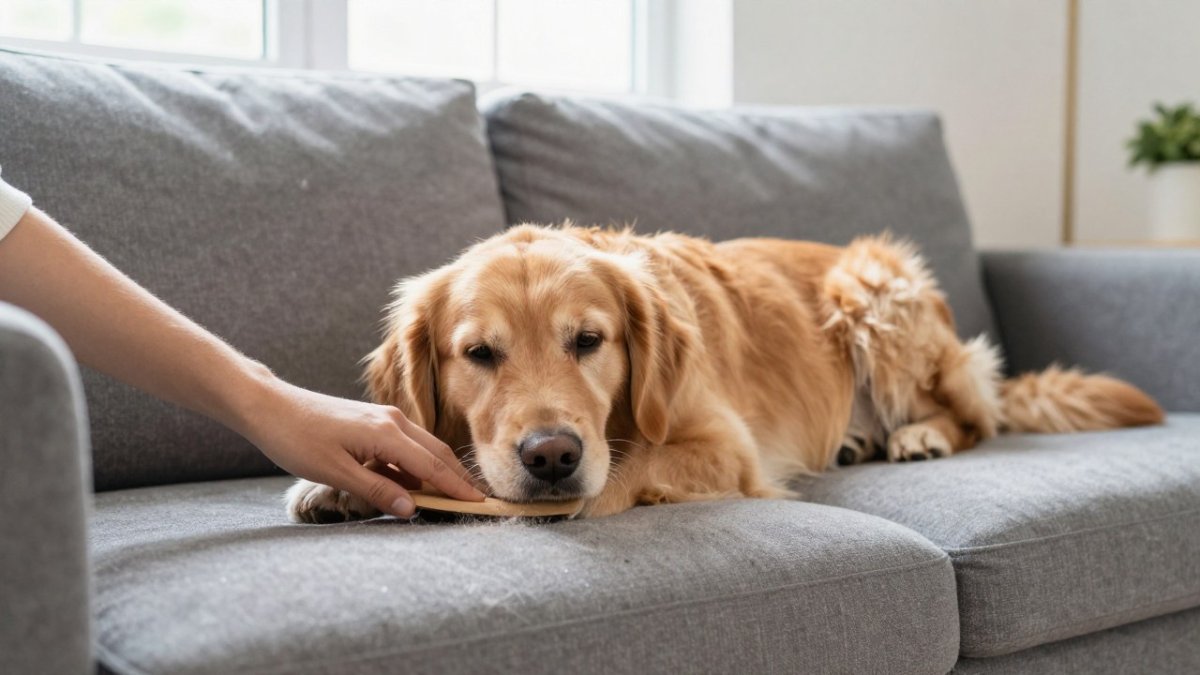
For pets and busy households, the best upholstery fabric is usually a tight, smooth-weave synthetic blend or a performance fabric with a stain-resistant finish, but the right answer depends on which stress your household actually applies. Claws, spills, allergens and mobility needs each favor different materials, and a fabric that solves one problem can worsen another.
Match the Fabric to the Stress
- Claws and snagging: Choose a tight, flat weave with no loops. Bouclé, loose linen and velvet are the wrong answer in a home with cats, because loops and pile catch and pull. A smooth polyester blend or a tightly woven performance fabric sheds hair and resists snags.
- Spills and stains: A stain-resistant finish or a solution-dyed synthetic helps, but cleanability matters more than the label. Ask how the fabric responds to water-based versus solvent-based cleaning, and confirm the care code before you buy.
- Allergies and dust: Tight weaves trap less dust and shed less fiber than deep pile or heavily textured surfaces. Smooth synthetics and leather are generally easier to wipe and vacuum.
- Accessibility and mobility: Smooth, low-pile surfaces are easier to slide along and to clean around, which matters in households with wheelchairs, walkers or frequent transfers.
Practical Selection Rules
- Choose a tight weave over a loose one; you should not see daylight through the fabric.
- Skip looped textures if there are cats, and treat velvet as a decorative fabric, not a family one.
- Ask about cleanability and stain resistance before you fall for the color.
- For high-traffic seating, our deeper guide on the best fabric for high traffic seating walks through the trade-offs.
Watch out: a fabric marketed as pet-friendly can still fail at the seams or pill under daily use. Ask for pilling and seam-strength results alongside any abrasion claim, and test a hidden area with your usual cleaner before the piece is built.
Upholstery Fabric Cleaning and Maintenance That Extends Life
Regular, gentle cleaning extends fabric lifespan more than any single purchase decision. Vacuum weekly with a soft brush attachment to lift grit that acts like sandpaper on the weave. Blot spills rather than rub, and use the mildest cleaner that works.
Watch out: over-wetting foam cushions and aggressive stain removers can set stains and break down backing materials. Always test any cleaner on a hidden area first, and follow the manufacturer's care code. For vinyl and PVC-coated fabric, avoid solvent cleaners that strip the plasticizer and leave the surface brittle, especially in sun-exposed rooms.
Choosing Fabric for Your Reupholstery Project
Choosing fabric for reupholstery comes down to matching fiber, weave and finish to how the piece will actually be used, then buying the right quantity. Our practical guidance on how to choose upholstery fabric for indoor cushions covers selection in detail, and our method for estimating fabric yardage accurately prevents the classic mid-project shortfall.
Once you have settled on a fabric and confirmed the durability requirements, you can book our custom upholstery service and we will handle the fabrication. Pricing depends on the piece, the fabric and the scope of work; request a quote for current figures.
Canadian General Standards Board textile test methods
Fabric choice is where most reupholstery projects succeed or fail, and a spec sheet alone will not get you there. Creative Custom Upholstery brings over 45 years of family-owned experience to furniture, marine, automotive and commercial upholstery, with the craftsmanship to get the job done right the first time. Get started with Creative Custom Upholstery and choose a fabric that still looks right years from now.
Frequently Asked Questions
What is the most durable fabric for upholstery?
Tightly woven synthetic blends, especially polyester blends and performance fabrics, tend to hold up best in high-traffic homes. They resist abrasion, clean up well and hold color. For a family sofa, look for a fabric rated for heavy residential use with a Martindale result of 25,000 cycles or more. Natural fibers like cotton and linen look and feel excellent but wear faster on seats that get daily use, so they suit occasional chairs better than the main couch.
How many rubs should upholstery fabric have for everyday use?
For a sofa used daily, aim for at least 15,000 to 25,000 double rubs on a Wyzenbeek test, or a Martindale rating in the 20,000 to 30,000 cycle range. Higher numbers suit commercial seating and homes with pets or children. A low rub count is not automatically bad, but it belongs on a decorative chair, not the couch everyone piles onto. Ask your upholsterer to match the rating to how the piece will actually be used.
Is polyester or cotton better for upholstery?
Polyester wins on durability and stain resistance, while cotton wins on breathability and softness. Cotton wears and wrinkles faster under daily use, and it stains more readily. Polyester blends combine the strengths of both: the strength and colorfastness of polyester with a softer hand. For a family room or rental property, a polyester blend is usually the safer choice. For a formal chair that sees light use, cotton or a cotton-linen blend is comfortable and looks refined.
How do you maintain upholstery fabric so it lasts longer?
Vacuum weekly with a soft brush attachment to lift grit that grinds into fibers, and blot spills immediately rather than rubbing. Rotate and flip loose cushions so wear is even, and keep furniture out of direct sun to slow fading. Follow the fabric's cleaning code, and have professional cleaning done before soil becomes embedded. For pets, brush hair off regularly and use a washable throw on the seat they favor. Good maintenance can add years of service to any fabric.